CONSTRUCTION-GRADE HPMC · KEHAO CHEMICAL
Kehao Chemical supplies hydroxypropyl methyl cellulose (HPMC) as a white powder for tile adhesive, wall putty, skim coat, dry-mix mortar, gypsum plaster and self-levelling compounds. Grades are chosen by application and target viscosity, and can be reviewed in your own formulation before a bulk order is placed.
CAS 9004-65-3 · Non-ionic cellulose ether · 25 kg bags · reports available for review

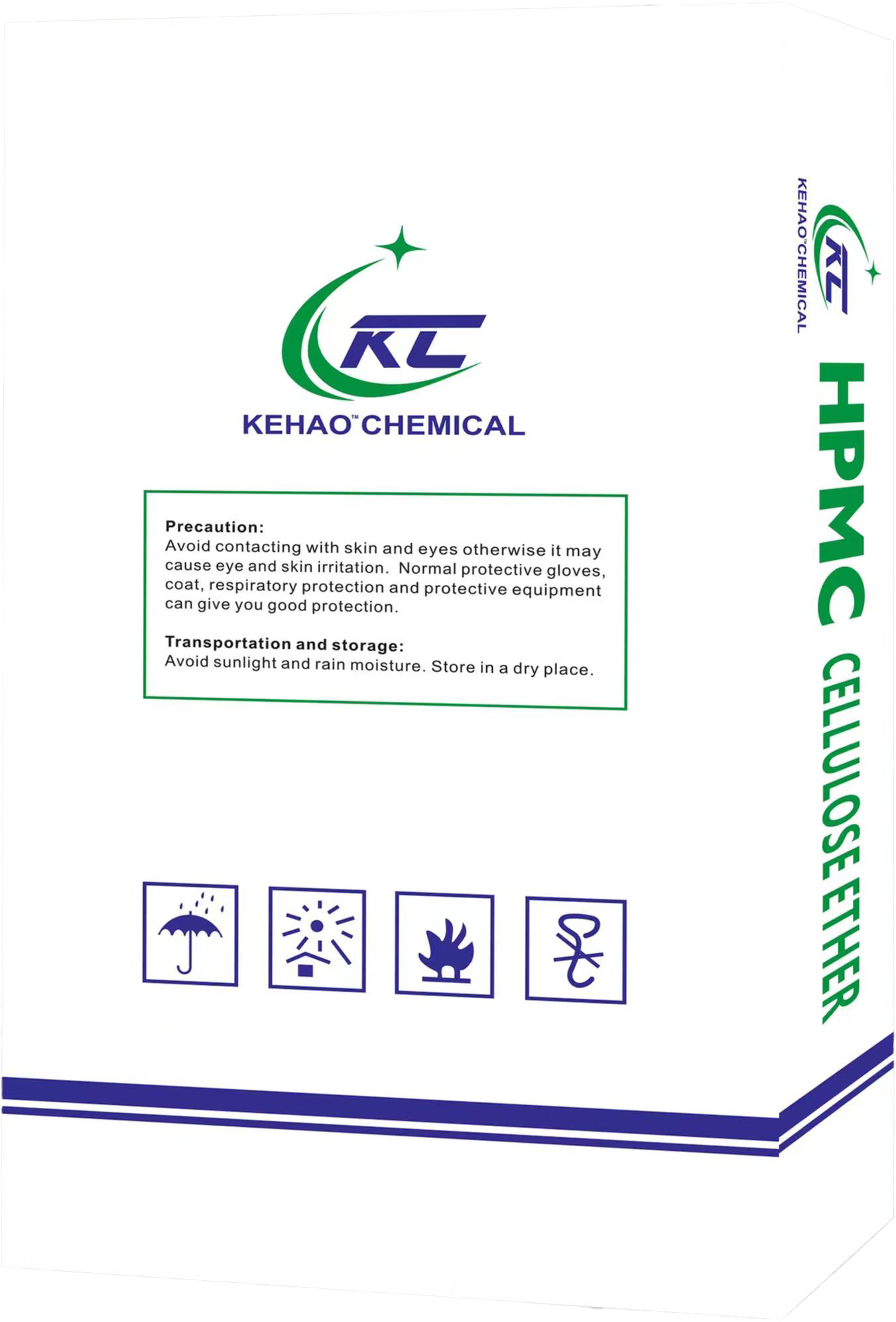
Hydroxypropyl methyl cellulose (HPMC) is a non-ionic cellulose ether. In a dry-mix system it thickens the mixing water, holds water in the mortar while the binder cures, and modifies workability, open time and sag resistance. Kehao Chemical supplies it as a white to off-white powder in 25 kg bags.
Typical specification. The values below are reference ranges for construction grades and depend on the grade selected. Treat them as a starting point, then confirm the target grade, test method and acceptance limits with our technical team before approval.
| Item | Typical value |
|---|---|
| Methoxyl content, % | 20.0-30.0 |
| Hydroxypropyl content, % | 7.0-12.0 |
| Ash content, % | ≤5 |
| pH value | 4.0-8.0 |
| Moisture, % | ≤5 |
| Gelling temperature, °C | 60-75 |
| Viscosity, cps | 5000-200000 (customizable) |
Viscosity can be customized within the range above. Grade name, target viscosity and packaging are fixed per order specification.
Applications are specified first and viscosity second. The six dry-mix systems below are the ones we are asked about most often; for each of them the usable grade range is narrowed down with your formulation.
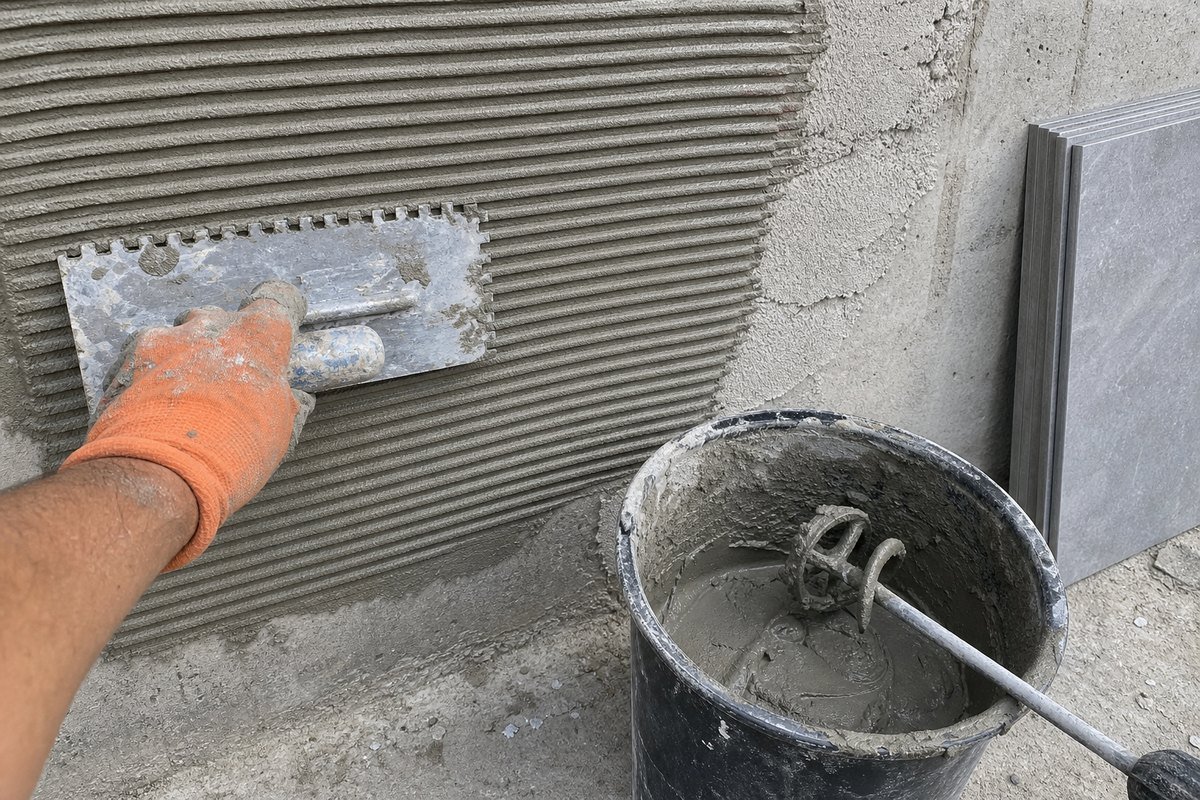
Cement-based C1 and C2 adhesives for thin-bed and large-format tiling. HPMC contributes water retention, workability and sag resistance; the grade and dosage are set by the adhesive formulation, not by tile weight alone.

Gypsum- or cement-based putty and skim coats. It provides thickening, water retention and workability so the paste stays open long enough to trowel and sands to a smooth surface.

Masonry mortar, render, repair mortar and machine-applied plaster. Water retention and lubricity improve application, and the mix stays cohesive on absorbent substrates.
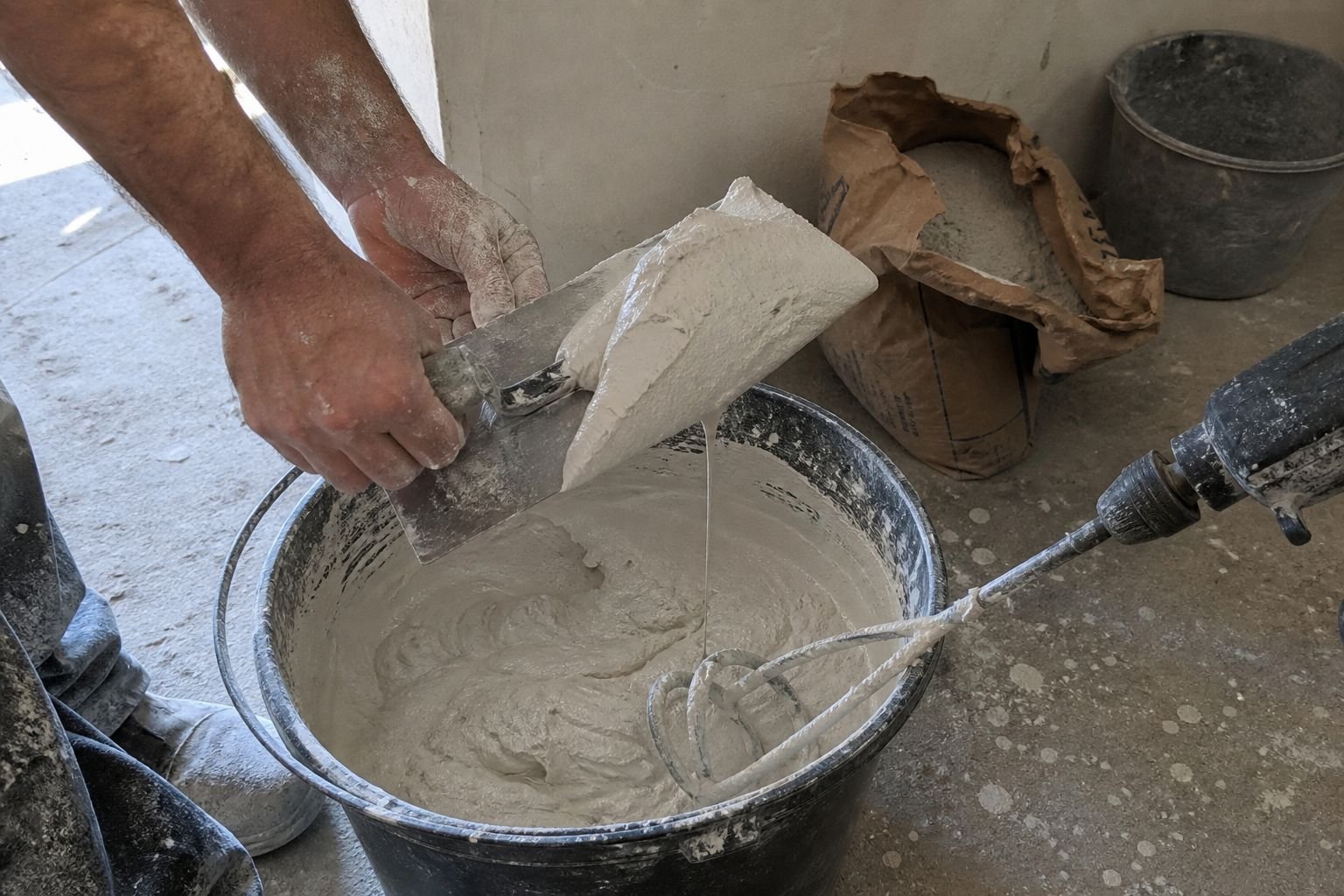
HPMC controls consistency and working time in gypsum-based plasters and joint compounds, and helps keep the mix cohesive during application and finishing.

In self-levelling underlayments it helps control flow, bleeding and segregation so the compound spreads evenly and levels before setting.

Used as a thickener and stabiliser in aqueous systems. In coatings it mainly affects rheology, pigment suspension and application behaviour; the grade has to be checked against the binder system.
Other industries: this page covers construction systems only. For paper, ceramic or other industrial uses, ask us to confirm whether a suitable grade is available before you specify it.
HPMC is not a single performance additive; it sets the water balance and rheology of the whole mix. These are the four effects formulators usually tune first.
HPMC holds the mixing water inside the mortar and limits early water loss into the substrate, which supports cement hydration and adhesion development in thin-bed applications.
It lubricates the mix so trowelling, spraying and pumping run more smoothly. The addition level influences how long the mortar stays workable after mixing, which is what the tiler feels as open time.
At the right dosage the mortar thickens without stiffening too early, so a ribbed adhesive bed keeps its shape on a vertical wall instead of sliding.
A consistent dissolution behaviour keeps water demand and consistency stable from batch to batch, which reduces re-formulation work when a new delivery arrives.
A short clip recorded during a routine material check, showing three Kehao HPMC grades next to a beaker of clear, prepared solution.
There is no single grade that fits every formulation. Send these three items and we can recommend a starting grade and a dosage window to test, instead of a catalogue number.
The dry-mix system you are producing (tile adhesive, wall putty, skim coat, render, gypsum plaster or self-levelling compound) and how it is applied: trowel, spray or pump.
The viscosity you need in the mix, or the viscosity and grade you use today, together with the measuring method and temperature you work to.
Your current dosage, the property you want to change (open time, sag, water retention, workability) and the test you use to judge it.
Send your formulation or use case and we will answer with the grade, dosage range and test method to start from.
REACH-related test reports for our cellulose ether products are kept on file and can be shared for review. Report number, tested scope and validity date should be confirmed with our sales team for the specific product and destination you are buying against, before you rely on them in your own compliance file.
Documents are provided for review; they are not a statement of certification for every grade or every market.

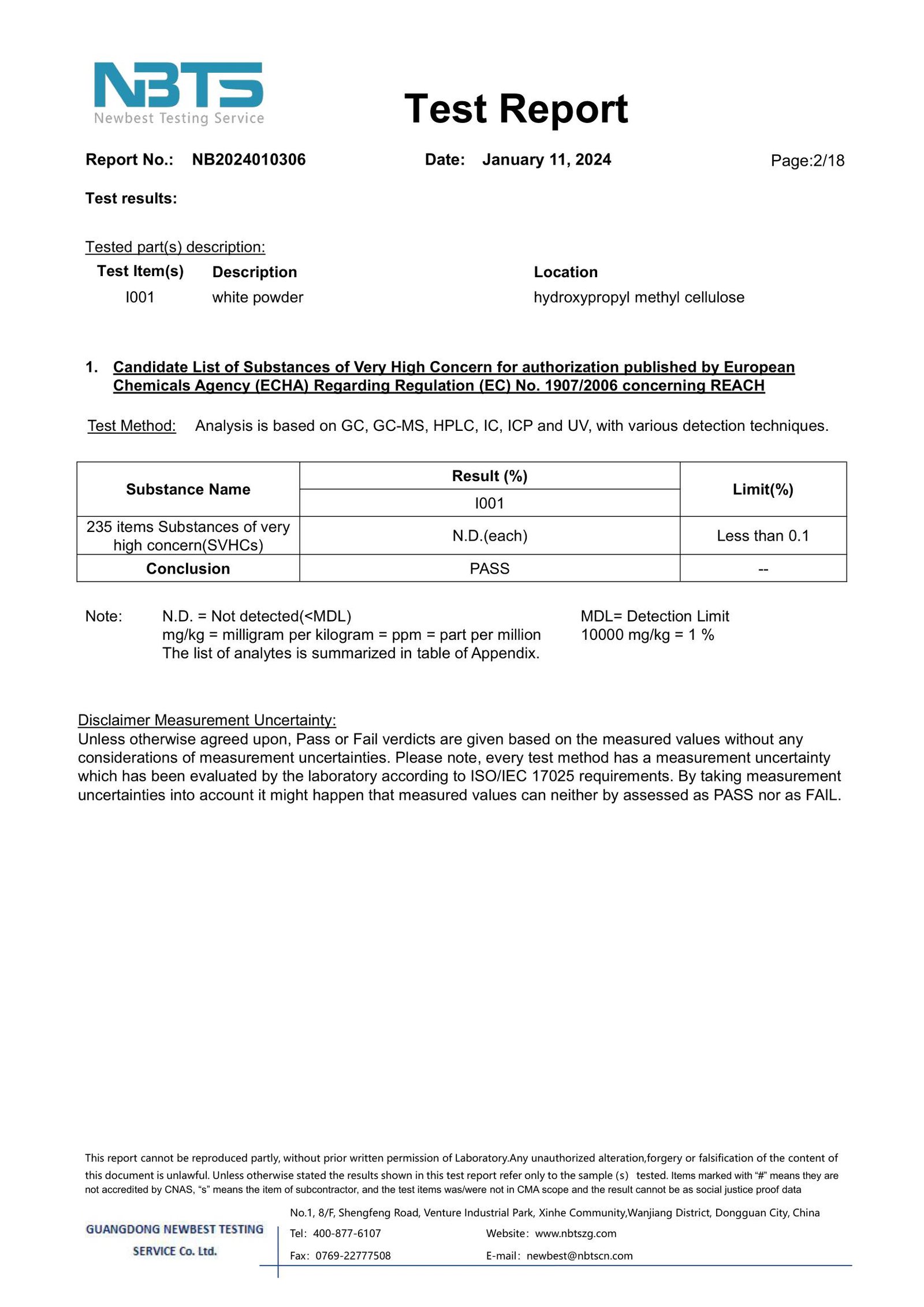
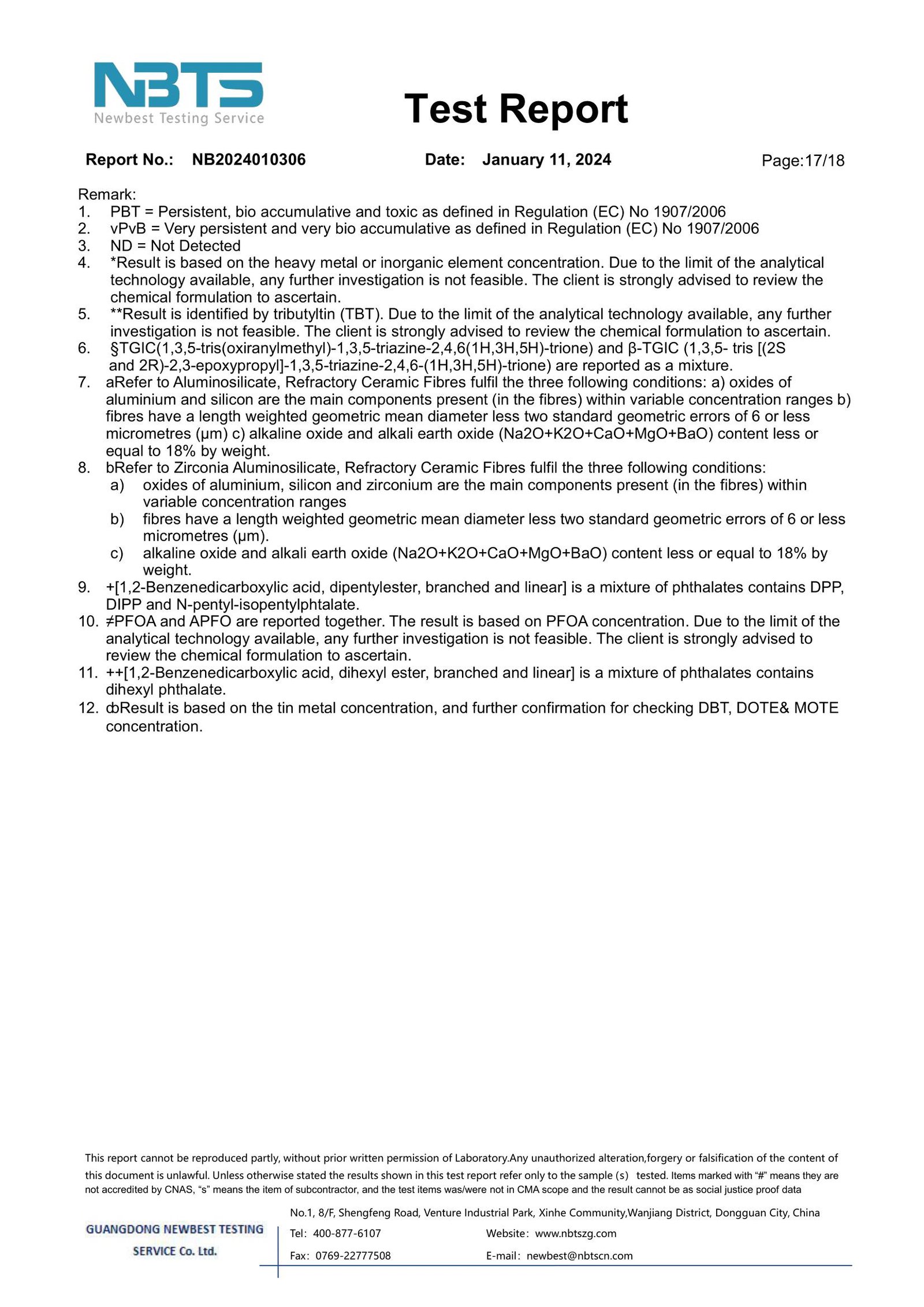
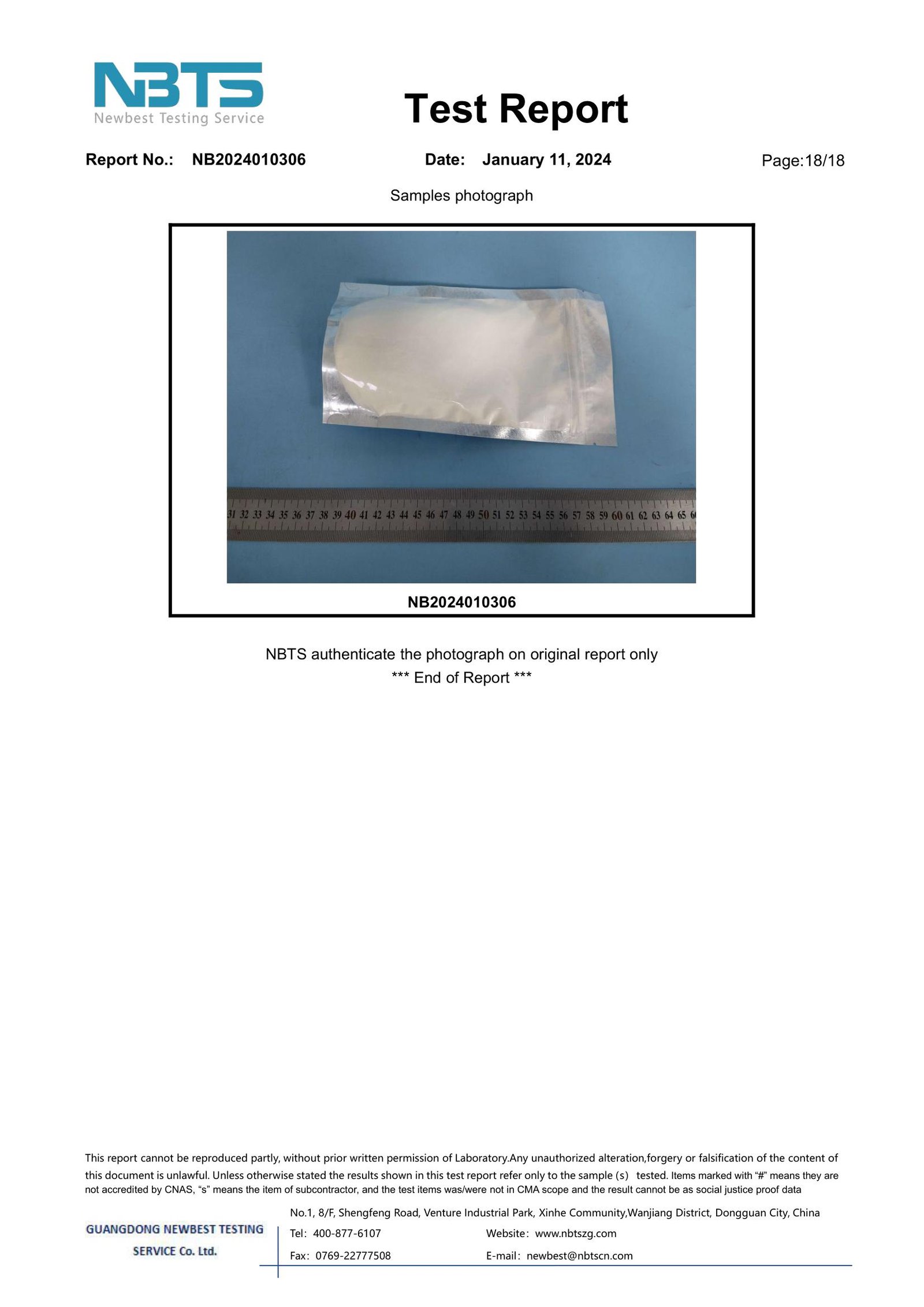
HPMC is packed in 25 kg bags with the product name, batch number, handling and storage instructions. Retained samples from production batches are kept so a delivered lot can be traced back to its production record.
Samples are sent so a grade can be checked in a real formulation before it is ordered in bulk. The four steps below are the full sequence from first enquiry to the order specification.
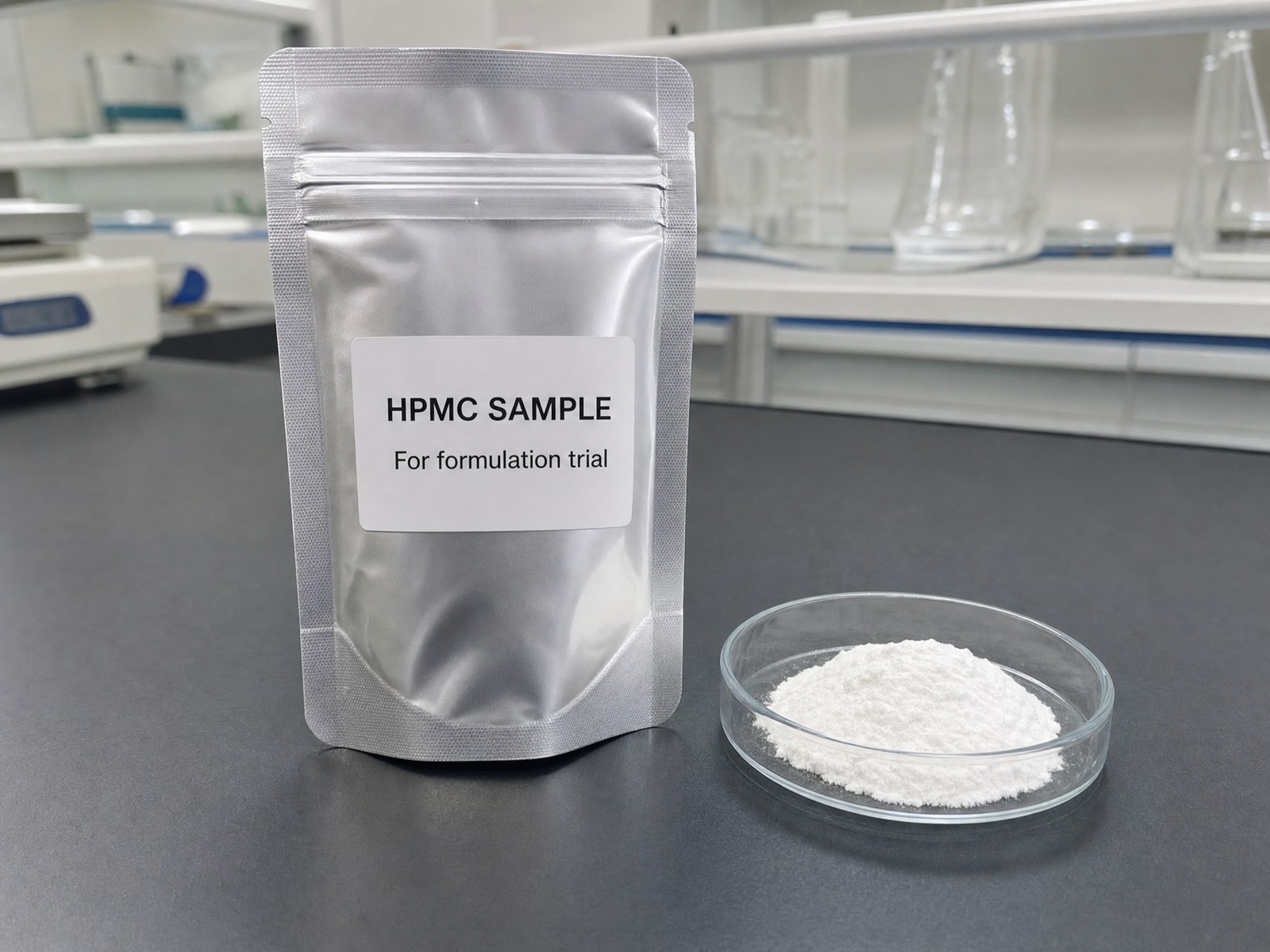
HPMC sample pouch prepared for a formulation trial, with the powder as supplied.
STEP 1
Send the application, your current grade or target viscosity, dosage and the test you run. A photo of the current TDS is enough to start.
STEP 2
Our technical team answers with a starting grade, a dosage window and the property to watch during the trial.
STEP 3
The sample is tested in your own mix at your dosage and compared with your current grade under the same conditions.
STEP 4
Once the trial result is accepted, the grade, viscosity, packaging and acceptance criteria are written into the order specification.
Questions that come up before a first order. If your question is not here, send it with your formulation and we will answer it directly.
Tell us the application (tile adhesive, wall putty, dry-mix mortar, gypsum or self-levelling compound), the viscosity you need in the mix or the viscosity of the grade you use now, and the dosage you plan to test. The test method you use for open time, water retention or sag is equally useful, because it decides which grade is a realistic starting point.
Run the sample in your own formulation at the dosage you intend to use, and compare it with your current grade under the same conditions: mixing time, water demand, open time, sag on a vertical panel, and adhesion after curing. Record the batch you tested so the result can be repeated on the production lot.
Viscosity can be customized within the range shown in the specification table. Confirm the target value, the measuring method and the temperature with our technical team before the order specification is fixed.
Store the sealed bags in a dry, ventilated place away from direct sunlight and rain, as printed on the bag. Close opened bags properly and use older stock first, so the powder does not pick up moisture from the air.
Both come from the same product family, but they are not tuned the same way: tile adhesive formulations usually need water retention and sag resistance, while wall putty usually needs workability and a smooth, sandable finish. Send both formulations and we will recommend a starting grade for each.
A technical data sheet for the grade under discussion, and the REACH-related test reports we hold, can be shared for review. Ask your contact for the documents you need and confirm that the tested scope matches your destination.
Tell us the application, the viscosity you are working to and what you want to improve in the mix. We will reply with a recommended grade and the test to run first.
Useful to include: application and substrate, current grade and dosage, target viscosity, and the test method you use to judge the result.
Prefer email? Write to kehao@kehaohpmc.com.
Send the application and target viscosity; we will reply with a starting grade and the documents you need for review.
Cellulose Ether Manufacturer
Typically replies within minutes
Any questions related to HPMC?

Nancy
🟢 Online | Privacy policy
Chat for quality HPMC & factory prices!
Please tell us what you need and we will contact you as soon as we receive it!