When dry mortar fails, the cost is much higher than replacing a few bags of material. Poor adhesion, low workability, and cracking often come from an incomplete additive system rather than the cement itself.
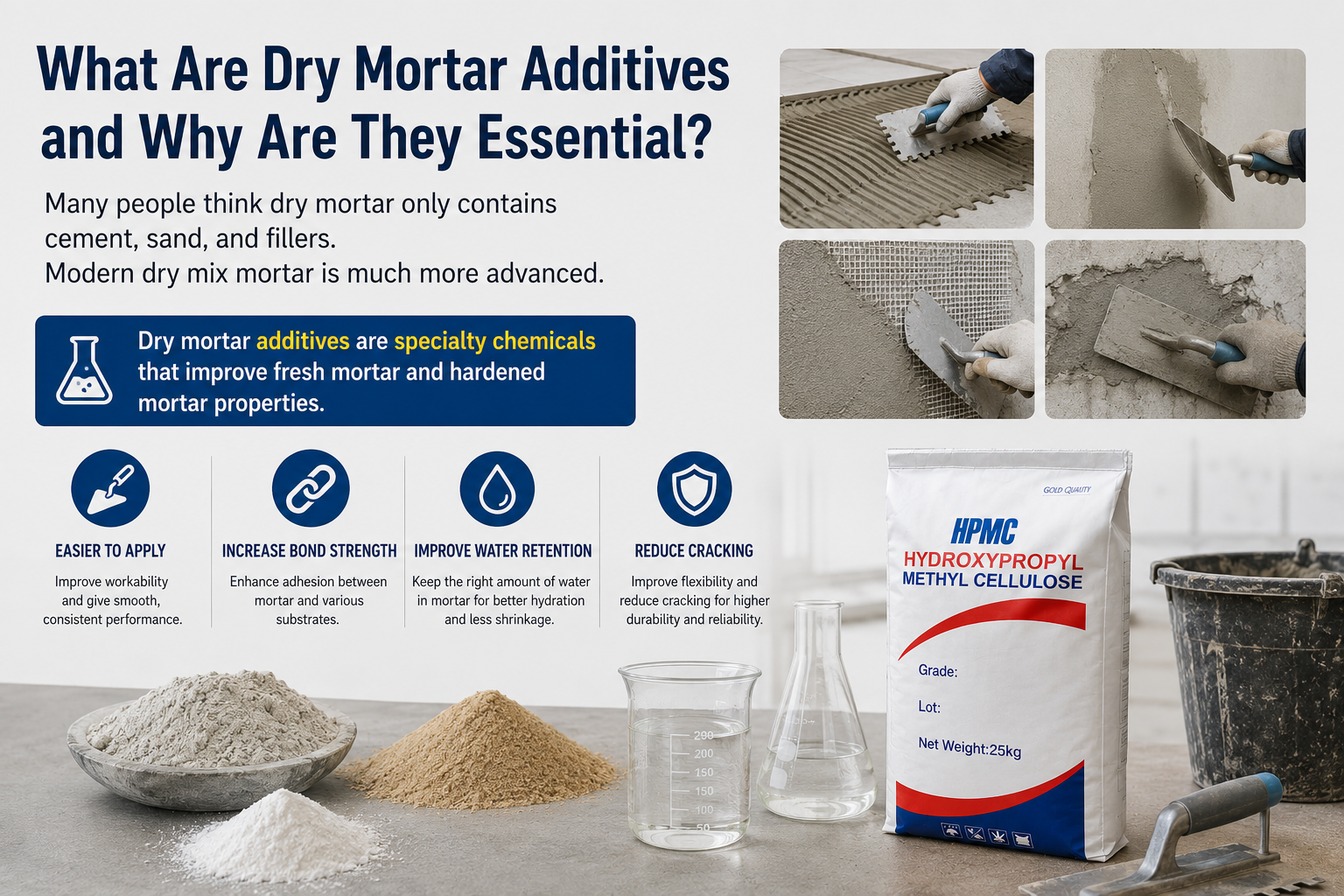
Dry mortar additives are functional materials that improve the performance of dry mix mortar. Polymer additives such as Hydroxypropyl Methyl Cellulose (HPMC) and Redispersible Polymer Powder (RDP) increase water retention, workability, adhesion, flexibility, and long-term durability in construction materials.
dry mortar additives
I often discuss formulations with dry mortar manufacturers. Most of them focus on cement and fillers first. After testing, they usually discover that selecting the right additive package delivers the biggest improvement. Understanding how each additive works makes it much easier to build stable and competitive products.
What Are Dry Mortar Additives and Why Are They Essential?
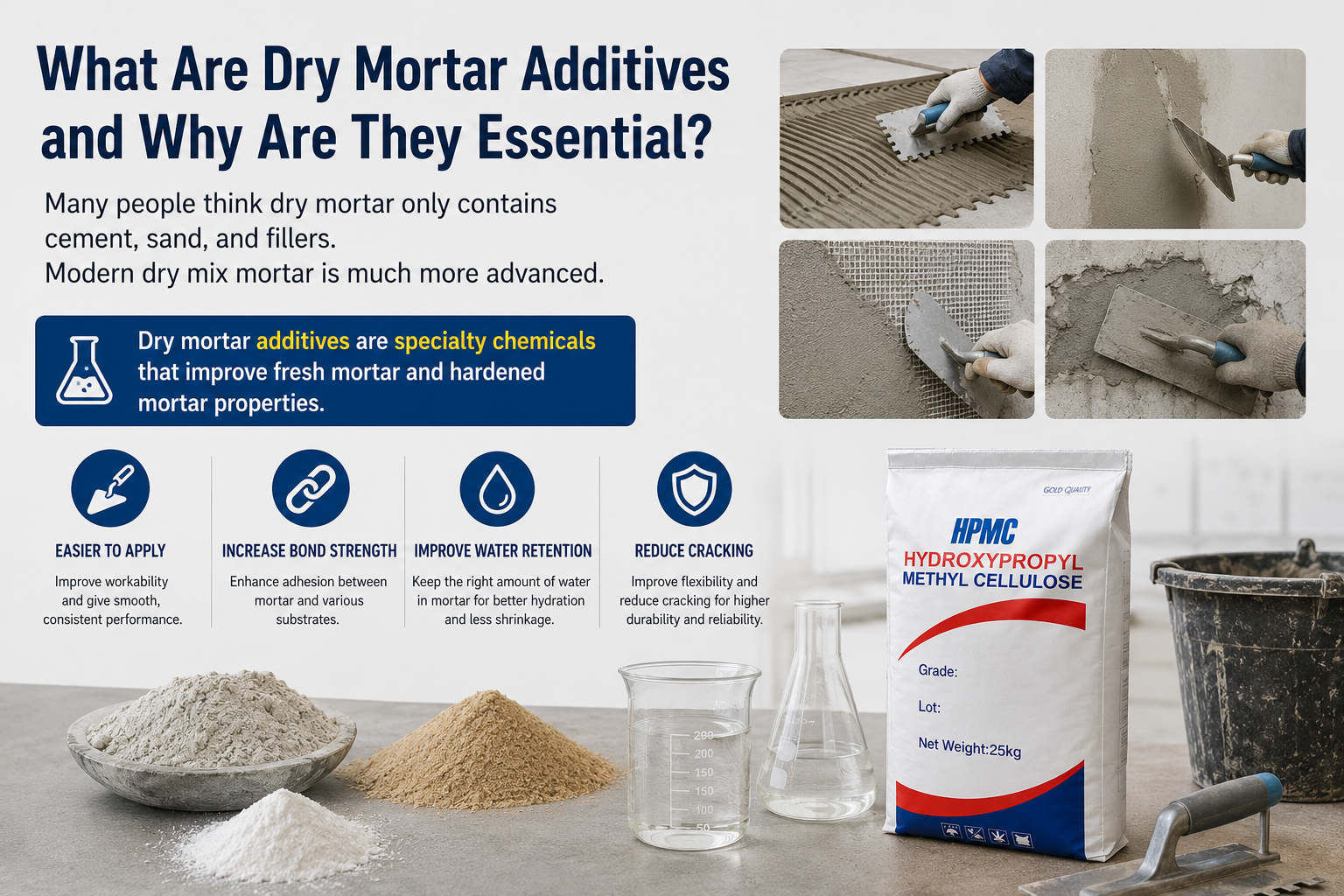
Many people think dry mortar only contains cement, sand, and fillers. Modern dry mix mortar is much more advanced.
Dry mortar additives are specialty chemicals that improve fresh mortar and hardened mortar properties. They make products easier to apply, increase bond strength, improve water retention, and reduce cracking.
dry mortar ingredients
Common Dry Mortar Additives
| Additive | Main Function | Typical Use |
|---|---|---|
| HPMC | Water retention | Tile adhesive, putty |
| RDP | Adhesion & flexibility | Mortar, EIFS |
| Starch Ether | Anti-sag | Tile adhesive |
| Defoamer | Air control | Dry mortar |
| Retarder | Longer working time | Gypsum products |
Each additive contributes to a different performance target. HPMC controls water evaporation and improves workability. RDP forms a flexible polymer film after hydration. Starch ether improves anti-slip performance. Defoamers control entrained air, while retarders extend working time. Using the correct combination creates a balanced product instead of solving only one problem.
Related articles
- What Exactly Is Redispersible Polymer Powder and How Is It Made?
- How Does HPMC Improve Tile Adhesive Performance?
Authority references
How Do Polymer Additives Improve Dry Mortar Performance?
Construction performance depends on more than cement strength.
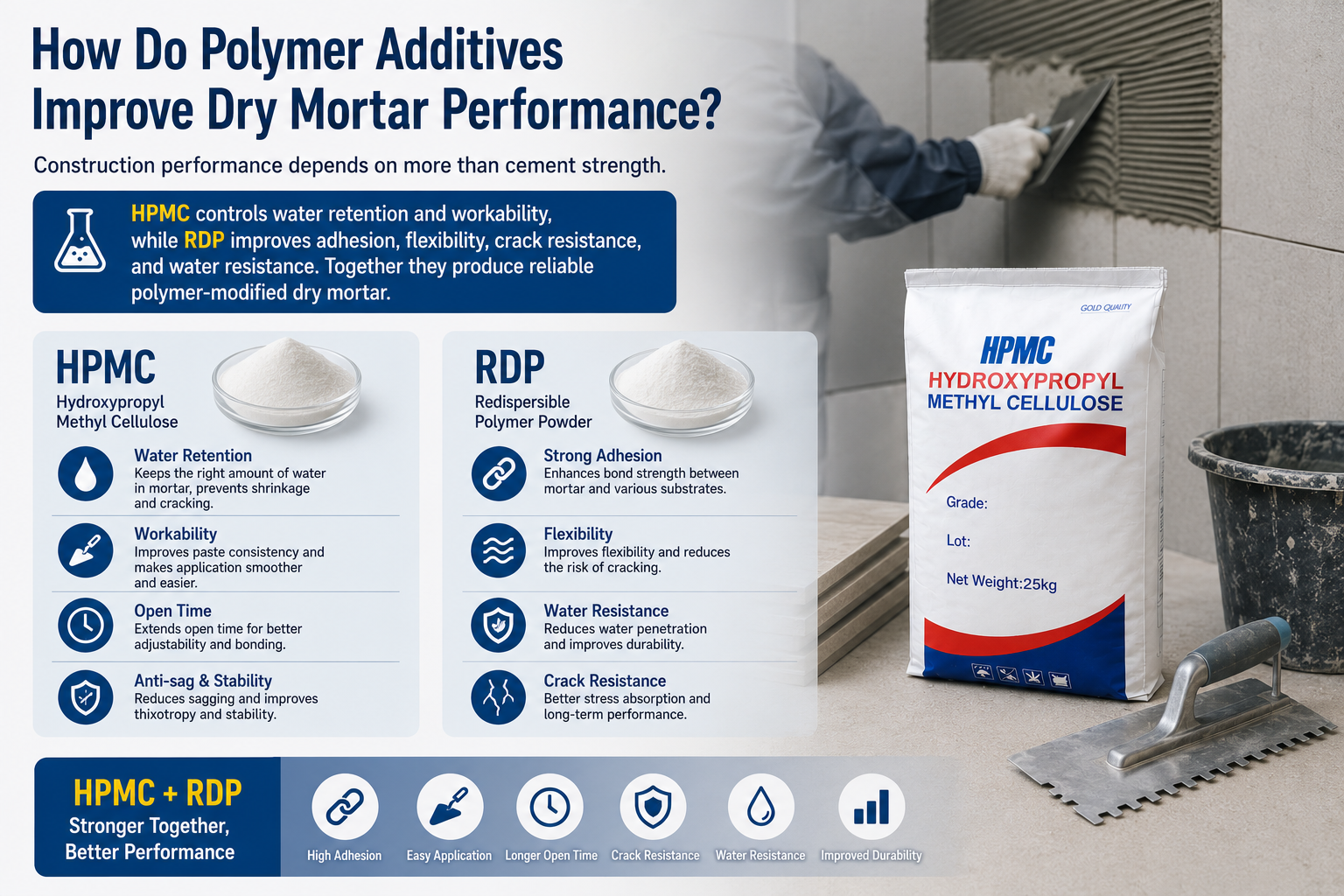
HPMC controls water retention and workability, while RDP improves adhesion, flexibility, crack resistance, and water resistance. Together they produce reliable polymer-modified dry mortar.
polymer additives for mortar
Performance Comparison
| Property | HPMC | RDP |
|---|---|---|
| Water Retention | ✓ | |
| Workability | ✓ | |
| Open Time | ✓ | |
| Adhesion | ✓ | |
| Flexibility | ✓ | |
| Crack Resistance | ✓ | |
| Water Resistance | ✓ |
HPMC gives workers more application time and better consistency. RDP strengthens the bond between mortar and substrate while improving durability under movement and weather changes. In my experience, these two additives complement each other rather than compete. Most premium dry mortar formulations use both.
Further reading:
Which Dry Mortar Applications Benefit Most from Polymer Additives?
Different applications require different performance targets.
Polymer additives are widely used in tile adhesive, wall putty, skim coat, repair mortar, EIFS, and self-leveling mortar because they improve bonding, flexibility, workability, and durability.
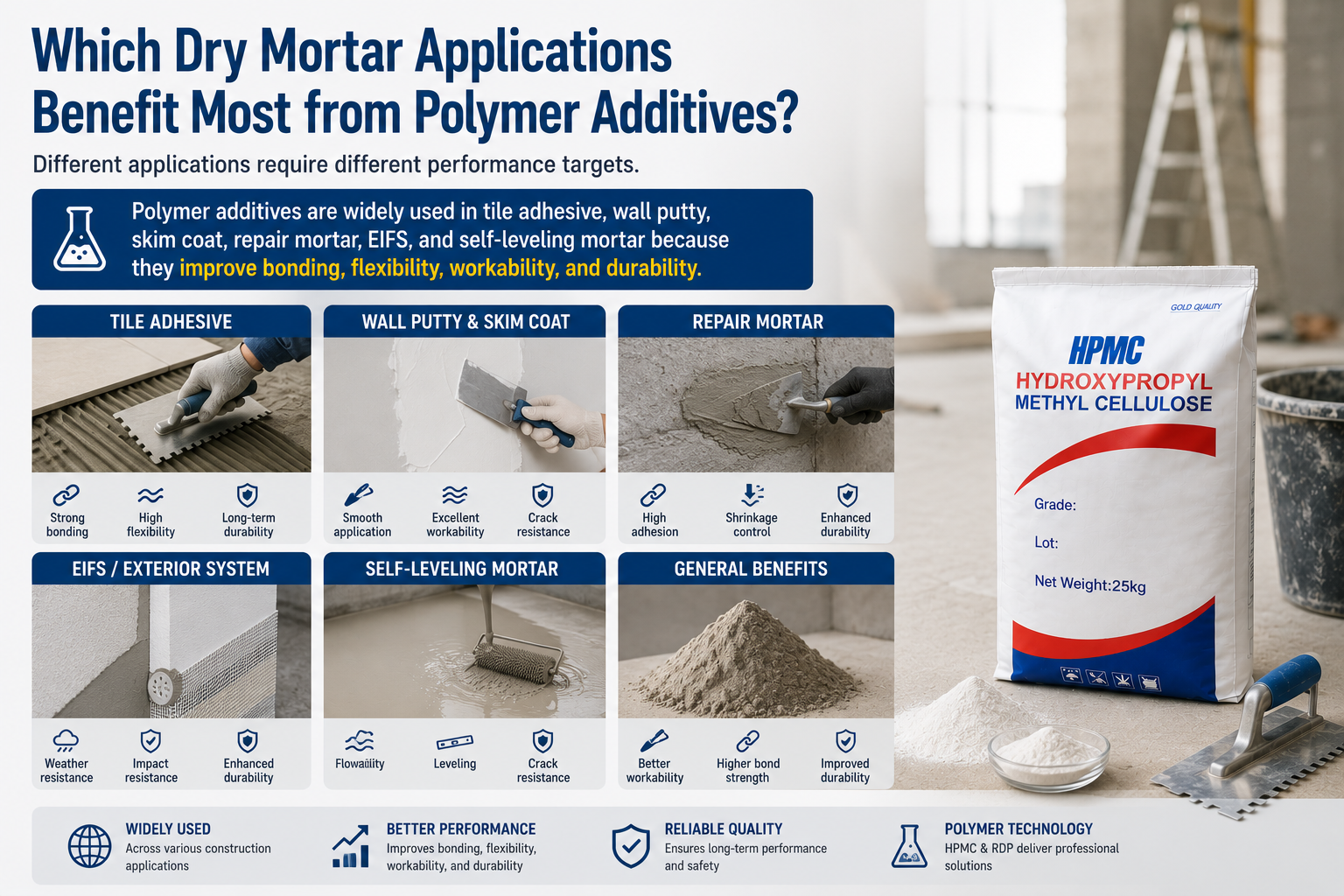
dry mortar applications
| Dry Mortar Type | Recommended Additives | Main Benefits |
|---|---|---|
| Tile Adhesive | HPMC + RDP | High bond strength |
| Skim Coat | HPMC + RDP | Smooth finish |
| Wall Putty | HPMC | Easy application |
| Repair Mortar | RDP | Crack resistance |
| EIFS | HPMC + RDP | Weather durability |
| Self-Leveling Mortar | HPMC + RDP | Stable flow |
Tile adhesive needs excellent adhesion and anti-sag performance. Wall putty depends heavily on water retention for smooth finishing. Skim coat requires workability and crack resistance. EIFS systems must resist weather and temperature changes. Matching additives to the application improves performance while controlling production cost.
Conclusion
Modern dry mortar depends on polymer additives to deliver consistent quality. HPMC and RDP work together to improve workability, adhesion, flexibility, and durability, helping manufacturers produce reliable construction materials for demanding applications.