HPMC manufacturers in China can be difficult to evaluate because factory photos, polished certificates, and one good sample rarely reveal the full supply risk. If buyers rely on one piece of evidence, they can face inconsistent batches, payment confusion, or delayed shipments. I recommend a layered verification process before any volume order.
To verify a real HPMC factory in China, I cross-check the supplier’s legal entity, production address, payment beneficiary, export documents, factory activity, quality records, and delivery capability. I then test multiple batches in the intended formulation. No single certificate, video, sample, or site visit proves that a supplier is reliable.1
I have supported factory-inspection discussions, repeat sampling, document cross-checks, and multi-batch COA reviews. These experiences have shown me that confirming a factory exists is only the first gate. Buyers must still verify whether that factory can deliver consistent, application-suitable HPMC on schedule.
How Should Buyers Verify the Identity of HPMC Manufacturers in China?
Supplier identity can become confusing when a factory, sales company, export agent, and payment beneficiary use different names.2 An unexplained mismatch can increase contractual and payment risk. I therefore start with entity consistency instead of treating a business license or website as sufficient proof.
I verify HPMC manufacturers in China by comparing the legal company name, registered address, production address, bank beneficiary, contract seller, invoice issuer, and exporter shown on shipping documents. The details do not always need to be identical, but every difference should have a documented and commercially reasonable explanation before payment.

Build an entity map before discussing price
I recommend creating a simple entity map for every shortlisted supplier. The map should show which company performs each role:
- The manufacturer produces and tests the HPMC.
- The contract seller signs the sales agreement.
- The invoice issuer issues the commercial invoice.
- The payment beneficiary receives the funds.
- The exporter of record appears on relevant export or shipping documents.
- The brand owner controls the product name and packaging.
- A related trading company may manage international sales.
These roles can belong to one company, but they do not always do so. A manufacturer may legally use an affiliated export company. That arrangement is not automatically a problem. However, I would pause the purchase if the supplier cannot clearly explain the relationship or provide supporting documentation.
Cross-check the core records
I usually ask buyers to compare the following information rather than reviewing each document separately:
| Verification item | What I compare | Issue that requires clarification |
|---|---|---|
| Business registration | Legal name, registration number, address, and business scope | The name or address does not match the contract |
| Production address | Factory address, map location, video details, and shipping origin | The supplier only provides an office address |
| Bank account | Beneficiary name and account country | The beneficiary is an unrelated individual or company |
| Commercial invoice | Seller, buyer, product, quantity, and bank details | The seller changes shortly before payment |
| COA and specification | Manufacturer name, grade, batch number, and test date | The grade or batch cannot be traced |
| Export documents | Exporter, product description, origin, and shipment details | The exporter relationship remains unexplained |
| Compliance documents | Product scope, entity, issue date, and validity | The document covers another product or company |
A red flag means that the evidence is incomplete. It does not prove fraud by itself. I recommend asking for a written explanation, related-company documents where appropriate, and a revised contract that accurately reflects the transaction.
I never treat a logo on a PDF as identity verification. I compare the names, addresses, dates, product grades, and document scope across the complete transaction.
Buyers should also verify certificates and regulatory documents with the issuing body3 or through an appropriate professional where possible. For REACH-related documentation, I recommend confirming that the document is current, relevant to the supplied substance and shipment, and connected to the correct legal entity.4 I do not treat a generic declaration as universal proof of compliance.
Can a Video Tour Prove That HPMC Manufacturers in China Own a Factory?
Factory videos help buyers screen suppliers, but edited footage can omit location, production status, or the relationship between the sales company and the facility. I use video as supporting evidence. I do not use it as the sole basis for approving a supplier or releasing a large payment.
A live video tour can support factory verification, but it cannot independently prove ownership, control, capacity, or quality consistency.5 I ask the supplier to show identifiable production activity, current date references, exterior signage, equipment, raw-material areas, laboratory operations, packaging, warehouse stock, and staff interaction during one continuous call.
Request a buyer-directed live tour
I prefer a live call in which the buyer controls the route. A prerecorded promotional video can introduce the facility, but it provides limited verification value because the footage may be old or carefully selected.
During a live tour, I suggest asking the representative to show:
- The factory entrance and visible company signage.
- A nearby road sign, industrial park name, or location reference.
- The production workshop during identifiable activity.
- Raw-material storage and material labeling.
- Control panels and production records, where confidentiality permits.
- The laboratory and actual testing procedures.
- Packaging equipment and printed batch markings.
- Finished-goods storage and warehouse organization.
- Employees performing normal roles rather than staged demonstrations.
- A specific object or handwritten date requested during the call.
I have found that spontaneous questions are especially useful. For example, I may ask the laboratory employee to explain how the supplier measures viscosity or links a retained sample to a production batch. The quality of the explanation often provides more insight than a wide-angle image of large equipment.
Know what a tour cannot establish
A live tour still has limits. It may show that a facility exists, but it does not automatically establish:
- The legal relationship between the facility and the seller.
- The amount of dependable monthly output.
- The maintenance condition of production equipment.
- The consistency of several production batches.
- The accuracy of every document presented.
- The product’s performance in the buyer’s formulation.
- The factory’s ability to prioritize an urgent order.
For higher-value or strategically important purchases, I recommend an on-site inspection by the buyer or a qualified third-party inspection provider. The inspection scope should be agreed in advance. It can include legal-document review, production-line observation, warehouse checks, laboratory review, batch traceability, and sample collection.
Even an on-site audit provides evidence from a particular date. It does not guarantee future performance. I therefore combine inspection findings with contract controls, application testing, repeat-batch data, and shipment monitoring.
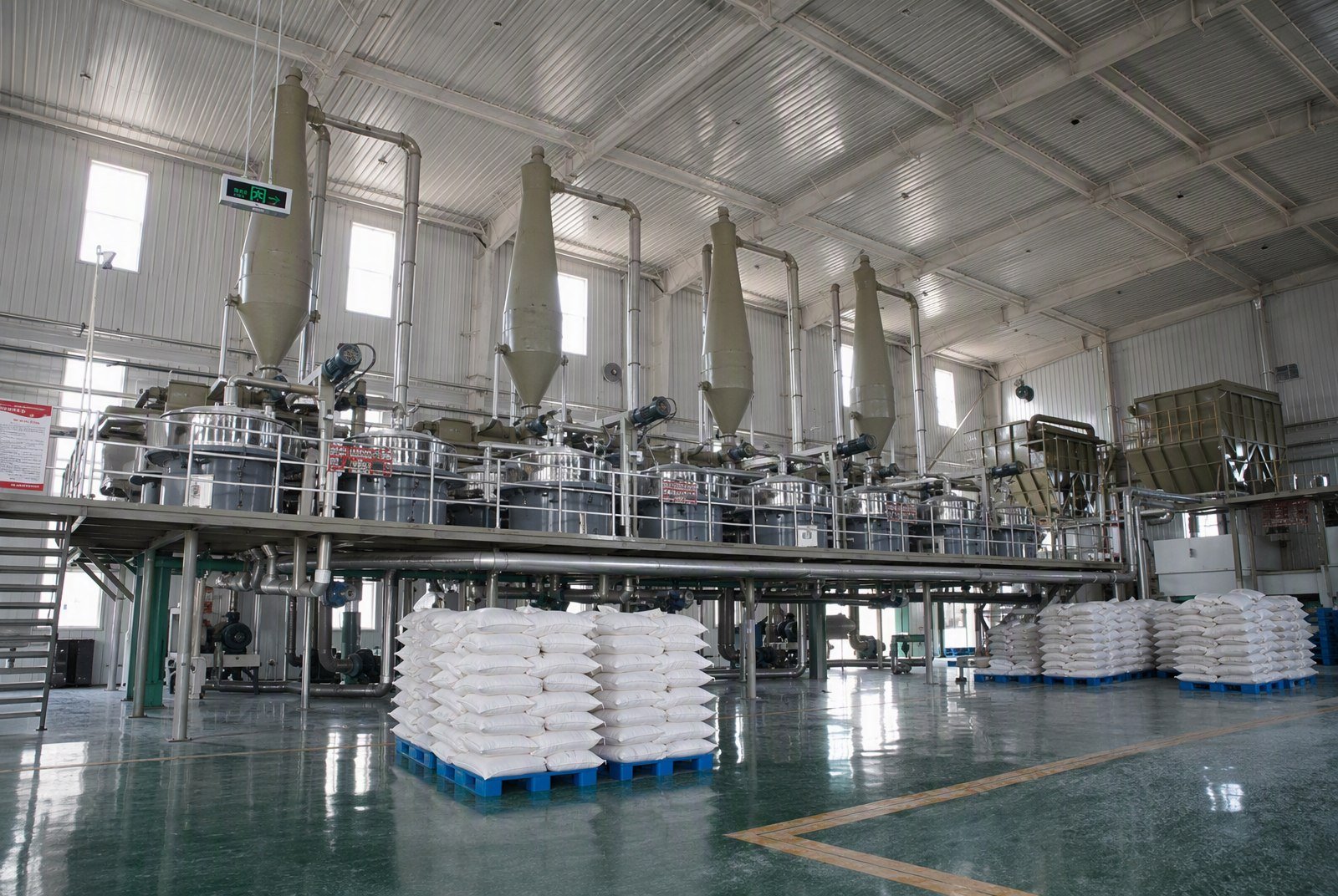
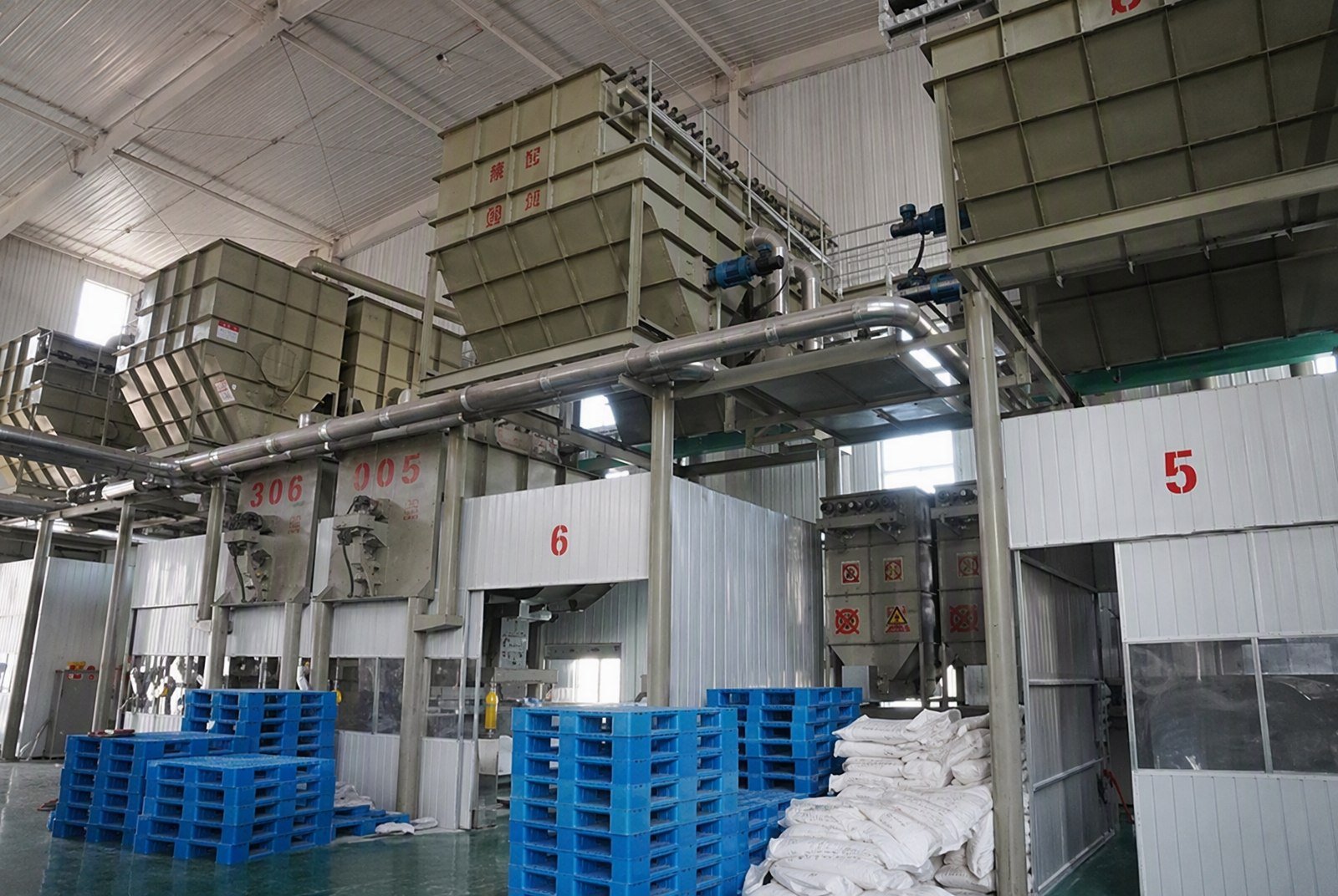
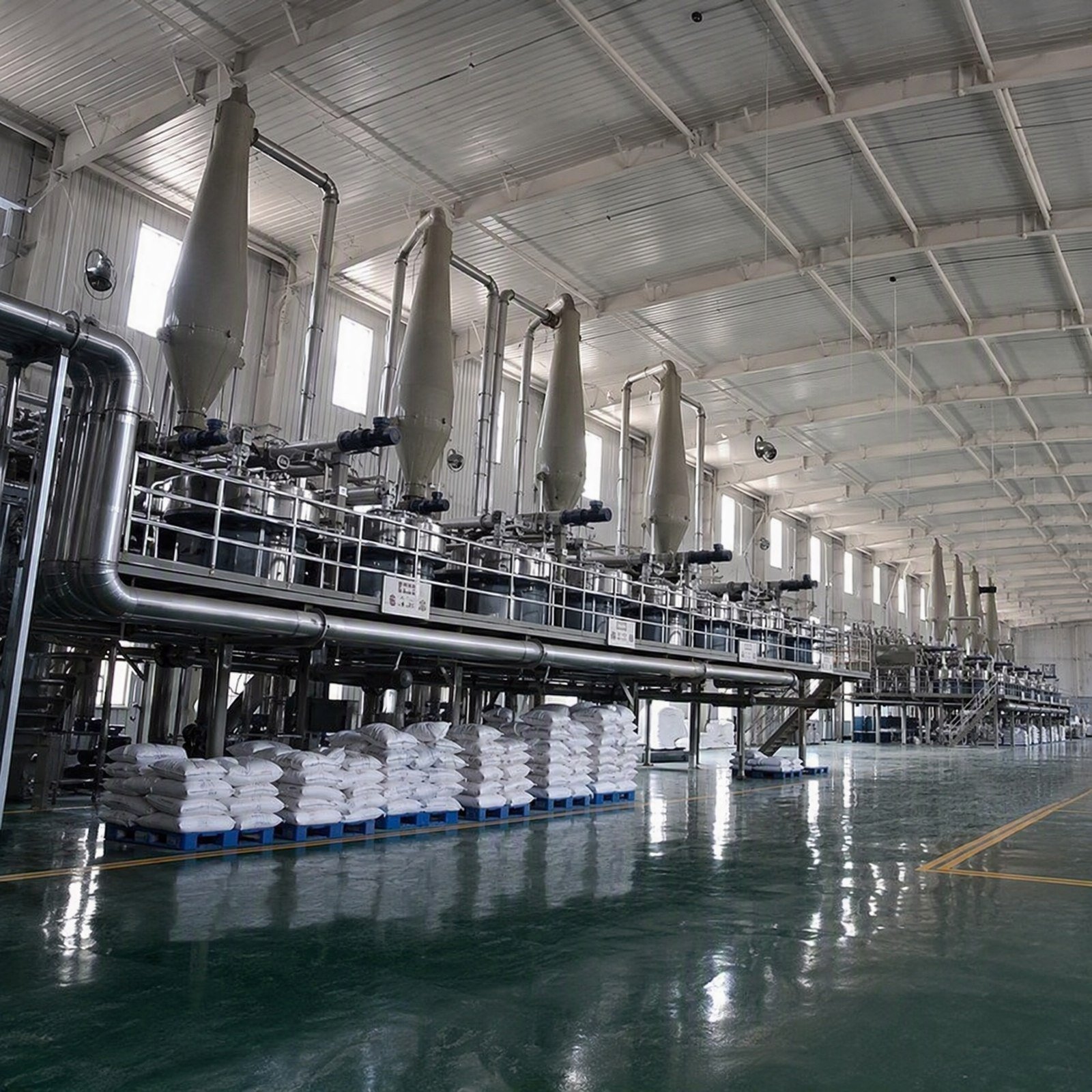
At KEHAO Chemical, we have supported buyer discussions around production facilities, laboratory testing, and factory verification. Our stated facility information includes a 100,000-square-meter plant in Jinzhou City, more than 300 staff, automated production lines, and annual capacity above 60,000 tons. I encourage buyers to verify such supplier-provided figures rather than treating them as self-proving claims.
How Can Buyers Check the Batch Consistency of HPMC Manufacturers in China?
One sample can perform well because it represents only one production lot. A polished COA has the same limitation. If buyers qualify a supplier from a single result, later batches may introduce unexpected changes in workability, water retention, open time, or production efficiency.
I evaluate batch consistency by requesting samples and COAs from multiple production lots, confirming the test methods, and comparing the material in a controlled application formula. I also check whether batch numbers connect the sample, COA, package, retained sample, and production record through a traceable quality-control system.

Compare methods before comparing numbers
Viscosity values are not meaningful unless the test conditions are clear.6 Two suppliers can report the same labeled viscosity while using different concentrations, temperatures, instruments, spindle settings, or measurement procedures.
I recommend asking the supplier to state:
- The solution concentration used for viscosity testing.
- Whether the concentration is calculated on a dry basis.
- The test temperature.
- The instrument type and relevant settings.
- The hydration and sample-preparation procedure.
- The specification range and internal control range.
- The moisture, ash, and other reported test methods.
- The frequency of in-process and finished-product testing.
A buyer should not assume that one laboratory’s viscosity result can be directly compared with another laboratory’s number. If the methods differ, I first standardize the testing conditions or ask a qualified laboratory to conduct comparative testing.
Review several batches
I prefer to review at least three separate batches during serious qualification. This number is not a universal rule, but it offers more information than a single sample.
A basic multi-batch table might look like this:
| Evaluation area | Batch 1 | Batch 2 | Batch 3 | Buyer’s acceptance criterion |
|---|---|---|---|---|
| Viscosity under agreed method | Record result | Record result | Record result | Agreed range |
| Moisture | Record result | Record result | Record result | Agreed maximum |
| Ash content | Record result | Record result | Record result | Agreed range |
| Water retention | Test in formula | Test in formula | Test in formula | Internal target |
| Wet mortar consistency | Observe | Observe | Observe | Controlled range |
| Open time or workability | Measure | Measure | Measure | Application target |
| Package and batch traceability | Pass/fail | Pass/fail | Pass/fail | Full traceability |
I also ask whether the samples came from ordinary production batches or laboratory-prepared material7. A pre-shipment sample collected from the actual order can reduce the gap between qualification material and delivered material. For critical orders, an independent sampling and testing arrangement may provide stronger evidence.
Read the COA critically
A useful certificate of analysis should normally identify the product grade, batch or lot, production or test date, tested properties, results, specification limits, and issuing entity.8 Buyers should clarify whether each value is actually tested or copied from a standard specification.
At our facility, our in-house laboratory tests each batch for viscosity, water retention, moisture, and ash content. We can provide samples with a COA. However, I still advise customers to test those samples under their own formula, raw materials, climate conditions, mixing sequence, and equipment. Our internal result cannot replace the buyer’s application validation.
Why Does Formulation Fit Matter When Selecting HPMC Manufacturers in China?
A genuine factory can still supply the wrong HPMC for a particular formulation. Buyers sometimes select a grade mainly from its viscosity label. That approach can fail because mortar performance depends on the complete polymer characteristics, dosage, cement system, fillers, additives, mixing process, and local conditions.9
I select among HPMC manufacturers in China by testing application fit as well as supplier legitimacy. The same nominal viscosity from two producers may create different wetting, consistency, water retention, sag resistance, open time, air content, or finishing behavior.10 A controlled formulation trial should therefore precede commercial scale-up.

Start with the application, not the catalog
I first define the product and the performance problem. An HPMC grade for tile adhesive may not be the best choice for gypsum plaster, wall putty, self-leveling compound, EIFS mortar, repair mortar, or a coating formulation.
The buyer should provide enough technical context for meaningful grade selection:
- The intended application.
- The binder type and approximate level.
- The filler type and particle-size profile.
- The current cellulose ether grade and dosage.
- The required working time and application method.
- The local temperature and humidity range.
- The mixing equipment and mixing time.
- The main defect that needs correction.
- The presence of starch ether, RDP, PVA, or other modifiers.
I avoid asking suppliers to “send the best HPMC” without this context. The word best has no technical meaning unless the buyer defines the target performance and cost limits.
Use a controlled trial matrix
I recommend changing one main variable at a time. If the buyer changes the HPMC, redispersible polymer powder, cement source, filler ratio, and water dosage in the same trial, the result becomes difficult to interpret.
A practical trial sequence can include:
- The buyer should establish a control using the current formula.
- The buyer should replace only the HPMC at an equivalent initial dosage.
- The buyer should keep water addition and mixing procedures controlled.
- The buyer should record wet consistency, water demand, workability, and application behavior.
- The buyer should adjust dosage only after comparing the first controlled result.
- The buyer should repeat promising trials under realistic temperature and substrate conditions.
- A qualified technical professional should confirm application-specific performance requirements.
Laboratory screening is important, but plant-scale processing can reveal additional differences. The powder may feed differently, disperse at another rate, or respond to the buyer’s mixer and packaging cycle. I therefore prefer a staged process: bench trial, production trial, limited commercial batch, and then routine purchasing.
Evaluate technical communication
Technical support also helps distinguish a suitable supplier from one that only sends quotations. I look for suppliers that can explain why they recommend a grade, which test method supports the specification, and what trade-offs may occur.
At KEHAO Chemical, we provide viscosity-grade selection support and formulation guidance for applications such as tile adhesive, wall putty, self-leveling compounds, gypsum plaster, grout, repair mortar, EIFS, and coatings. I present this support as a starting point. The buyer’s R&D team remains responsible for approving the final formula and local performance.
How Should Buyers Verify Production Capacity and Delivery Capability?
Declared annual capacity can look impressive, but it does not show how much material is available for a specific grade, month, or customer. Maintenance, raw-material availability, production scheduling, packaging, inland transport, export procedures, and port conditions can all affect actual fulfillment.11
I verify delivery capability by comparing declared capacity with recent production schedules, typical lead times, grade availability, order history, packaging resources, warehouse stock, and shipment planning. I also confirm the proposed loading port, Incoterm, contingency plan, and communication process before relying on a supplier for recurring volume.
Separate capacity from dependable fulfillment
A supplier may state an annual nameplate capacity, but buyers need to know the volume that can be delivered consistently. I ask more specific questions:
- How much of the capacity is allocated to HPMC rather than other products?
- Which viscosity grades are produced regularly?
- What is the normal lead time for the required grade and packaging?
- Does the supplier produce against orders or hold finished stock?
- How does the supplier handle peak-season demand?
- What maintenance shutdowns are planned?
- How quickly can the supplier replace a rejected or delayed batch?
- Which port does the supplier normally use?
- Can the supplier provide realistic loading and documentation timelines?
For our own exports, shipments mainly move through Tianjin port. We also maintain an overseas office and warehouse in Iran for local Middle East supply. Buyers should still confirm current stock, grade availability, lead time, and applicable trade requirements for each order because warehouse presence does not guarantee that every grade is immediately available.
Use a staged commercial order
I do not recommend moving directly from a free sample to a full annual contract. A staged order allows both parties to test operational performance.
| Procurement stage | Main purpose | Evidence I review |
|---|---|---|
| Laboratory sample | Initial technical screening | COA, test method, formula performance |
| Repeat samples | Preliminary consistency check | Different batch numbers and comparative data |
| Trial order | Commercial and logistics validation | Packaging, documents, lead time, delivered quality |
| Repeat order | Supplier stability check | Batch consistency and corrective response |
| Volume program | Long-term supply evaluation | Forecasting, capacity, pricing, and contingency plans |
The trial order should use the intended commercial packaging and documentation where possible. Buyers can then evaluate bag strength, palletization, batch labeling, loading quality, shipping documents, customs information, and communication speed.
I also recommend defining complaint procedures before shipment. The contract should identify the agreed specification, sampling method, notification period, evidence required for a claim, and corrective options. A lawyer or qualified trade professional should review important contractual and payment terms.
What Scorecard Should Buyers Use for HPMC Manufacturers in China?
Buyers can collect many documents and still make an inconsistent decision. Price often receives too much weight because it is easy to compare. I use a weighted scorecard so that legal clarity, batch quality, application performance, and delivery risk remain visible during supplier selection.
I score HPMC manufacturers in China across five areas: entity verification, manufacturing evidence, quality consistency, formulation fit, and commercial fulfillment. I treat serious unexplained inconsistencies as approval gates rather than minor point deductions. The final score supports judgment, but it does not replace technical testing, document verification, or professional review.

Apply both gates and weighted criteria
Some issues should stop the process until they are resolved. For example, I would not offset an unexplained payment-beneficiary mismatch with a low price or a strong sample result.
I use the following framework as a starting point:
| Evaluation category | Suggested weight | Example evidence |
|---|---|---|
| Legal and entity consistency | 20% | Registration, contract, bank, exporter relationship |
| Factory and process evidence | 15% | Live tour, inspection, production and laboratory records |
| Batch quality and traceability | 25% | Multi-batch COAs, samples, test methods, retained samples |
| Formulation and technical fit | 25% | Controlled trials, technical explanation, plant test |
| Delivery and commercial capability | 15% | Lead time, packaging, shipment record, contingency plan |
The buyer can adjust these weights according to risk. A distributor that must maintain regional stock may assign more weight to fulfillment. A tile-adhesive producer with a sensitive formula may give application performance and consistency the highest priority.
Define approval gates
I recommend resolving these questions before issuing a volume purchase order:
- Has the supplier explained every material entity mismatch?
- Has the buyer verified the payment instruction through a known contact channel?
- Has the supplier demonstrated a credible connection to the production site?
- Have multiple batches been reviewed or tested?
- Have the buyer and supplier agreed on test methods and specification limits?
- Has the HPMC passed the buyer’s application trial?
- Has the supplier completed a commercial trial order successfully?
- Have both parties agreed on packaging, batch labeling, lead time, and complaint handling?
- Have relevant compliance documents been checked for scope and current applicability?
Price should enter the comparison after these gates. I compare total procurement value, not only the quoted price per ton. A slightly lower HPMC price may not save money if the material requires a higher dosage, increases water demand, reduces production stability, or causes customer complaints.12
A real manufacturer is not automatically the right supplier. I consider the strongest candidate to be the factory that can demonstrate transparent identity, repeatable quality, suitable application performance, and dependable execution at a commercially workable cost.
<h3>Related technical guides</h3> <ul> <li><a href="https://khcel.com/hpmc-manufacturer-quality-standards-supplier-selection-a-comprehensive-b2b-guide/">HPMC Manufacturer: Quality Standards & Supplier Selection: A Comprehensive B2B Guide</a></li> <li><a href="https://khcel.com/the-complete-guide-to-cellulose-ether-manufacturers-quality-standards-and-selection-criteria/">The Complete Guide to Cellulose Ether Manufacturers: Quality, Standards, and Selection Criteria</a></li> <li><a href="https://khcel.com/hpmc/">HPMC</a></li> </ul>
Frequently Asked Questions About HPMC Manufacturers in China
How can I tell whether an HPMC supplier is a manufacturer or trader?
I compare the legal business scope, production address, factory evidence, product traceability, and relationship between the seller and facility. A trader is not automatically unsuitable, but the supplier should accurately disclose its role. I pause qualification when the company claims factory ownership but cannot explain basic production or laboratory processes.
Is a business license enough to verify an HPMC factory?
No. A business license helps verify a registered entity, but it does not prove current production activity, product quality, capacity, or application fit. I combine registration checks with live or on-site inspection, document cross-checking, multi-batch testing, and a controlled commercial trial.
How many HPMC samples should I test before ordering?
I prefer samples or data from at least three production batches during serious supplier qualification. The appropriate number depends on order value and application risk. Buyers should confirm that the samples represent normal production and should test them under the same formula, method, and environmental conditions.
What should an HPMC COA include?
I expect an HPMC COA to identify the supplier, product grade, batch number, test date, specification limits, and actual results. Common properties may include viscosity, moisture, ash content, and other agreed parameters. Buyers should also confirm the test methods because results from different conditions may not be directly comparable.
Does the lowest HPMC price provide the best purchasing value?
No. I compare delivered cost, dosage efficiency, batch consistency, technical support, payment risk, lead time, and application performance. A cheaper grade can become more expensive if it needs a higher dosage, creates production variation, or causes failures in the finished dry-mix product.
Conclusion
Verifying HPMC manufacturers in China requires more than confirming that a production site exists. I recommend cross-checking legal entities and payment details, inspecting real production activity, reviewing several batches, confirming test methods, validating the HPMC in the intended formulation, and completing a trial order before scaling up.
KEHAO Chemical provides free samples with COAs, viscosity-grade selection support, OEM service, and formulation guidance for industrial buyers. Buyers can contact us at kehao@kehaohpmc.com or via WhatsApp at +86 157 3315 6958 to request documents, discuss an application, or arrange a supplier-verification conversation.
"Janeen Skutnik-Wilkinson Director, Quality Strategy Pfizer", https://www.fda.gov/media/82786/download. Quality-management guidance treats external-provider control as a documented, risk-based, and ongoing process; an isolated certificate, audit observation, or sample does not by itself establish continuing supplier performance. Evidence role: expert_consensus; source type: institution. Supports: Quality-management guidance that supplier approval and monitoring rely on documented evaluation criteria, verification, and ongoing performance review rather than a single document or audit event.. Scope note: The guidance is cross-industry and does not specifically validate HPMC suppliers. ↩
"Common Export Documents", https://www.trade.gov/common-export-documents. International-trade due-diligence guidance advises buyers to verify counterparties and reconcile transaction and payment documentation, since parties performing sales, export, logistics, and banking functions may differ within a supply chain. Evidence role: general_support; source type: government. Supports: Official trade guidance describing the importance of verifying counterparties, transaction documents, and payment instructions in international commercial transactions.. Scope note: Such guidance supports document reconciliation as a risk-control practice; it does not mean that every difference in entity names is improper. ↩
"ISO/CASCO - Committee on conformity assessment", https://www.iso.org/committee/54998.html. Conformity-assessment systems provide mechanisms for checking certification status through the issuing certification body or recognized registry, helping distinguish valid, in-scope certificates from unverifiable documents. Evidence role: general_support; source type: institution. Supports: Conformity-assessment guidance and certificate databases that enable verification of certification status through certification bodies or recognized registries.. Scope note: Verification of a management-system certificate does not by itself establish the quality or regulatory status of a particular shipment. ↩
"REACH Regulation - Environment - European Commission", https://environment.ec.europa.eu/topics/chemicals/reach-regulation_en. Under REACH, obligations and information requirements depend on the identified substance and the relevant supply-chain actor; documentation should therefore be evaluated for substance scope and the legal entity to which it applies. Evidence role: definition; source type: government. Supports: ECHA guidance on REACH supply-chain duties, including substance identity and the roles of manufacturers, importers, only representatives, and downstream users.. Scope note: The applicable REACH obligations depend on the material, tonnage, use, and each party's role, and this statement is not legal advice. ↩
"Conducting Remote Regulatory Assessments Questions ...", https://www.fda.gov/regulatory-information/search-fda-guidance-documents/conducting-remote-regulatory-assessments-questions-and-answers. Remote assessments can support oversight by reviewing available records and visual evidence, but inspection authorities recognize that their scope and observations may be constrained relative to an on-site examination. Evidence role: general_support; source type: government. Supports: Guidance explaining that remote assessments can provide information but have constraints compared with direct inspection and review of records and operations.. Scope note: Government remote-assessment guidance is generally written for regulated inspections rather than commercial verification of HPMC ownership or capacity. ↩
"Thermophysical Properties of Fluid Systems", https://webbook.nist.gov/chemistry/fluid/. Viscosity is a method-dependent measurement: reported values vary with factors including temperature, sample concentration and preparation, shear conditions, and the measuring instrument or geometry, so results require stated test conditions for comparison. Evidence role: mechanism; source type: research. Supports: Metrology and rheology sources showing that viscosity measurements depend on temperature, sample preparation, concentration, shear conditions, and instrument geometry or settings.. Scope note: The exact relevant conditions depend on the HPMC grade, solution protocol, and test method agreed by the parties. ↩
"[PDF] Process Validation: General Principles and Practices - FDA", https://www.fda.gov/media/71021/download. Process-validation principles distinguish development evidence from evidence generated under routine commercial manufacturing, because representative production conditions are needed to demonstrate that quality is reproducible at scale. Evidence role: general_support; source type: government. Supports: Process-validation guidance explaining why commercial-scale production and representative sampling are needed to demonstrate reproducible product quality.. Scope note: These principles are most fully developed for regulated pharmaceuticals, but they provide contextual support for evaluating industrial-material samples. ↩
"Q7A Good Manufacturing Practice Guidance for Active ...", https://www.fda.gov/regulatory-information/search-fda-guidance-documents/q7a-good-manufacturing-practice-guidance-active-pharmaceutical-ingredients. Laboratory reporting principles require test reports to identify the tested item and relevant method information and to report results under the responsibility of the issuing laboratory; lot and specification references support product traceability and interpretation. Evidence role: definition; source type: institution. Supports: Laboratory-reporting requirements that call for clear identification of the tested item, methods, results, dates, and the laboratory or authorized issuer.. Scope note: ISO/IEC 17025 governs laboratory reporting generally and does not prescribe one universal commercial COA template. ↩
"Water Retention Mechanism of HPMC in Cement Mortar - PMC", https://pmc.ncbi.nlm.nih.gov/articles/PMC7372461/. Studies of cellulose ethers in cementitious mortars report that fresh-state properties such as water retention, rheology, and workability depend on cellulose-ether characteristics and dosage together with the binder and aggregate system. Evidence role: mechanism; source type: paper. Supports: Peer-reviewed evidence that cellulose ethers affect fresh mortar rheology and water retention and that outcomes depend on polymer characteristics, dosage, and mortar composition.. Scope note: Individual experimental results are formulation-specific and cannot predict the performance of every commercial HPMC grade or mortar recipe. ↩
"Water Retention Mechanism of HPMC in Cement Mortar - PMC", https://pmc.ncbi.nlm.nih.gov/articles/PMC7372461/. Research on cellulose ethers in cementitious materials indicates that application behavior is affected by polymer molecular characteristics and formulation interactions in addition to nominal solution viscosity; equal viscosity labels therefore need not produce identical mortar performance. Evidence role: mechanism; source type: paper. Supports: Research showing that cellulose-ether effects in cementitious systems are influenced by properties beyond a single nominal viscosity grade, including molecular structure and interaction with the formulation.. Scope note: The specific differences observed between two suppliers must be established by testing the actual grades in the intended formulation. ↩
"OECD Supply Chain Resilience Review", https://www.oecd.org/en/publications/2025/06/oecd-supply-chain-resilience-review_9930d256.html. International supply-chain analyses document that disruptions in production inputs, manufacturing operations, inland transport, and ports can delay fulfillment even where nominal production capacity exists. Evidence role: general_support; source type: institution. Supports: International supply-chain analyses documenting that production interruptions, transport constraints, and port congestion can disrupt delivery performance.. Scope note: Macro-level supply-chain evidence does not establish the delivery performance of any particular HPMC supplier or route. ↩
"Supplier's total cost of ownership evaluation: a data ...", https://www.sciencedirect.com/science/article/abs/pii/S0305048315001565. Total-cost-of-ownership approaches to procurement assess supplier decisions using costs beyond the quoted unit price, including quality-related, operational, logistics, and failure costs that may alter the economic comparison. Evidence role: general_support; source type: research. Supports: Procurement research explaining that supplier selection can account for quality, logistics, operational, and failure costs in addition to unit price.. Scope note: A total-cost analysis requires buyer-specific data; it does not establish that a higher-priced HPMC will always be less costly in use. ↩