
RDP / VAE REDISPERSIBLE POLYMER POWDER · KEHAO CHEMICAL
Kehao Chemical supplies redispersible polymer powder (RDP) on a vinyl acetate–ethylene (VAE) base: a white to off-white, free-flowing powder for cement- and gypsum-based dry-mix systems — tile adhesive, EIFS/ETICS, wall putty, self-levelling compounds and waterproof mortar.
CAS 24937-78-8 · Bulk density 450–550 g/l · 25 kg bags · Made in China
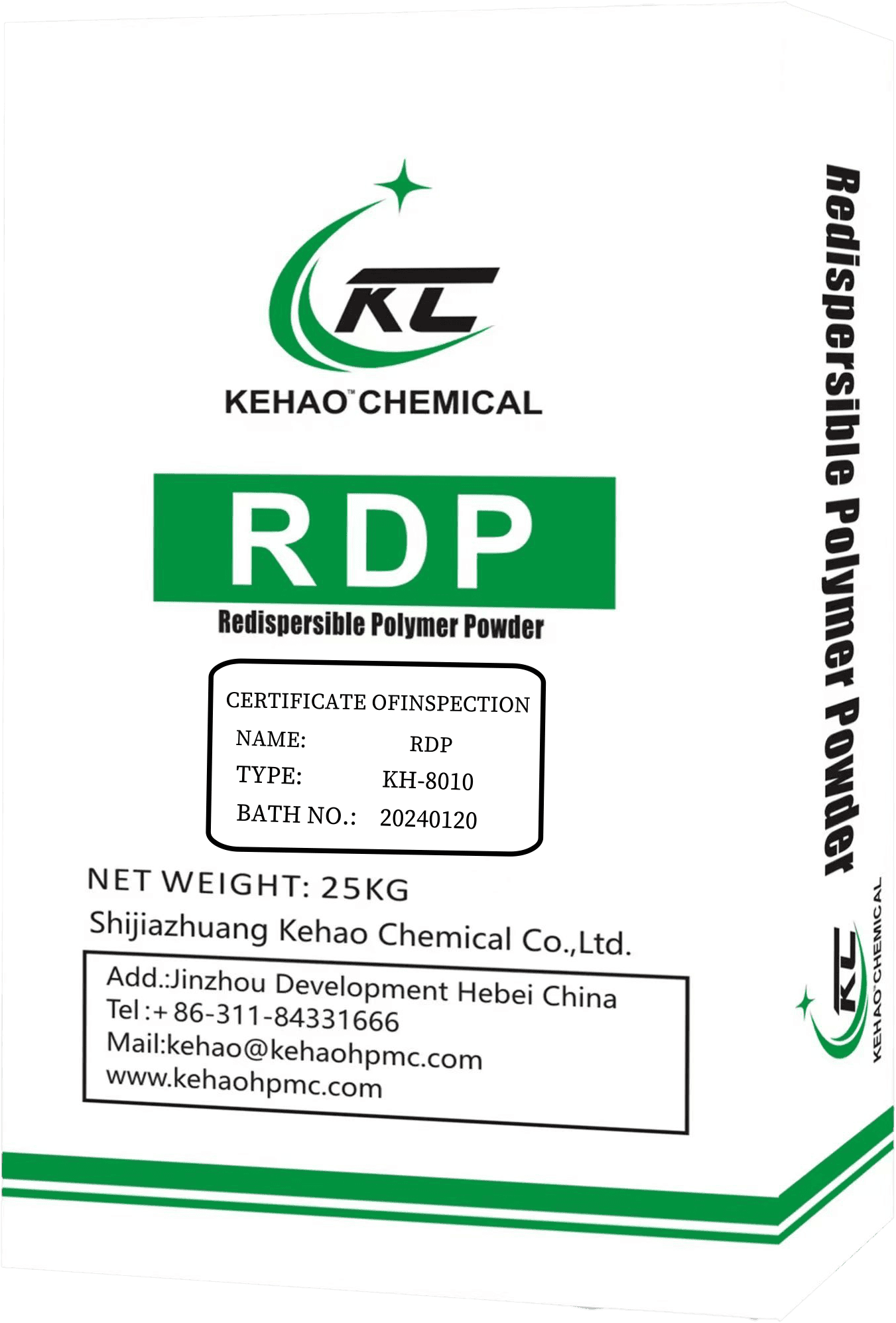
Redispersible polymer powder is a spray-dried copolymer powder. It is dosed into the dry-mix formulation as a powder; when the mortar is mixed with water the polymer redisperses, and while the mortar dries the polymer particles coalesce into a film at the interfaces between cement hydrates, fillers and the substrate. In functional terms that film is what changes adhesion, flexibility and water resistance of the hardened mortar.
Grade, polymer content and dosage are set per application and per formulation — they are not fixed for the product family. The values below come from the current product data sheet; properties that change with grade are stated on the TDS issued for the grade you are evaluating.
| Property | Typical value | Note |
|---|---|---|
| Product name | Redispersible polymer powder | Polymer type given on the TDS of the grade supplied |
| CAS number | 24937-78-8 | Vinyl acetate–ethylene copolymer |
| Appearance | Powder, white to off-white | |
| Odour | Odourless | |
| Solubility in water | Insoluble | Powder as supplied; redisperses when mixed into the mortar |
| Composition content | ≤ 100 % | |
| Bulk density | 450–550 g/l | |
| Storage temperature | Room temperature | |
| Packing | 25 kg/bag | Net weight printed on the bag |
| Applications on the TDS | Dry powder putty, tile binder, outer wall insulation | |
| Transport | Not dangerous goods (ADR/RID, IMDG, IATA); marine pollutant: No |
TDS A002R191028041, Shanghai Fajin Testing Technology, dated 31 October 2019, issued for Shijiazhuang Kehao Chemical Co., Ltd. Minimum film-forming temperature, ash content and polymer content are grade-dependent — ask for the TDS of the grade under discussion before specifying.
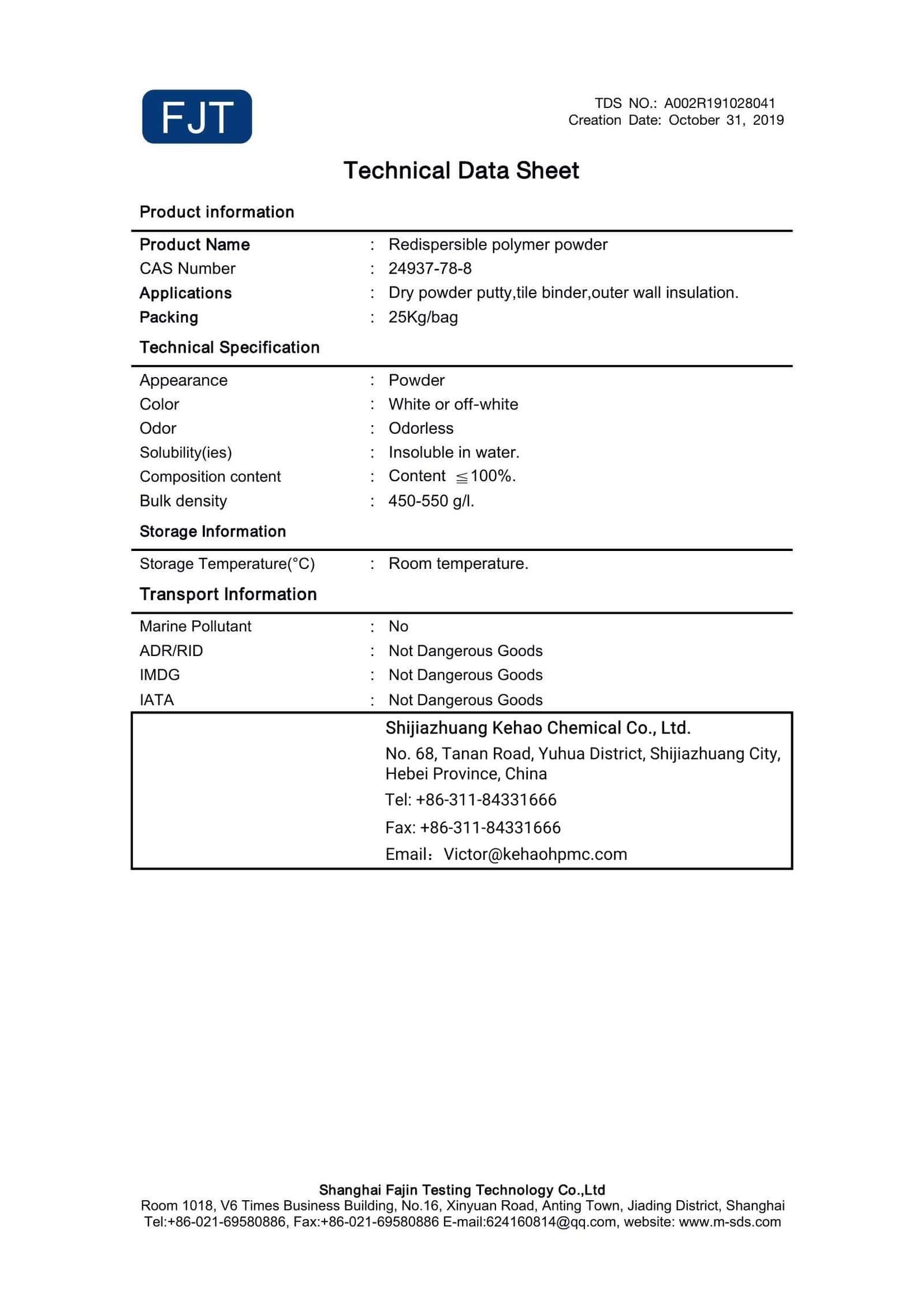
The data sheet issued for the product, with packing and storage conditions for the grade supplied.
RDP is specified through the application first and through dosage second. The six systems below are the construction uses named on the product data sheet and on this site; grade and dosage for each one are confirmed against your own formulation rather than carried over from another product.

Cement-based C1 and C2 thin-bed adhesives for ceramic and porcelain tiles, including large-format and exterior applications. The polymer film contributes adhesion to the substrate and flexibility in the hardened adhesive layer.
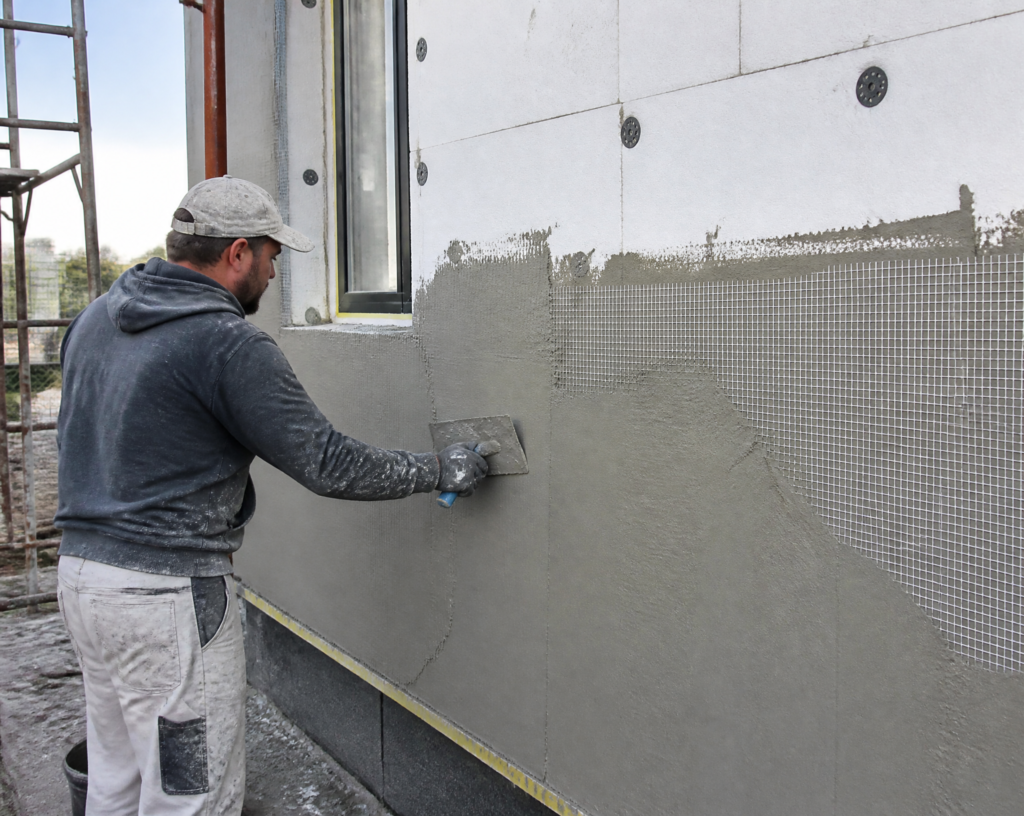
Adhesive and base-coat mortars for external wall insulation systems. The polymer film contributes adhesion between the mortar and the insulation board and flexibility in the reinforced base coat.

Dry powder putty for interior and exterior walls, applied by trowel as a thin finishing layer. The polymer film contributes adhesion to the substrate and limits cracking of the dried layer.

Cement-based self-levelling underlayments and floor levelling compounds. The polymer contributes cohesion and flexibility so the hardened layer can follow normal substrate movement.
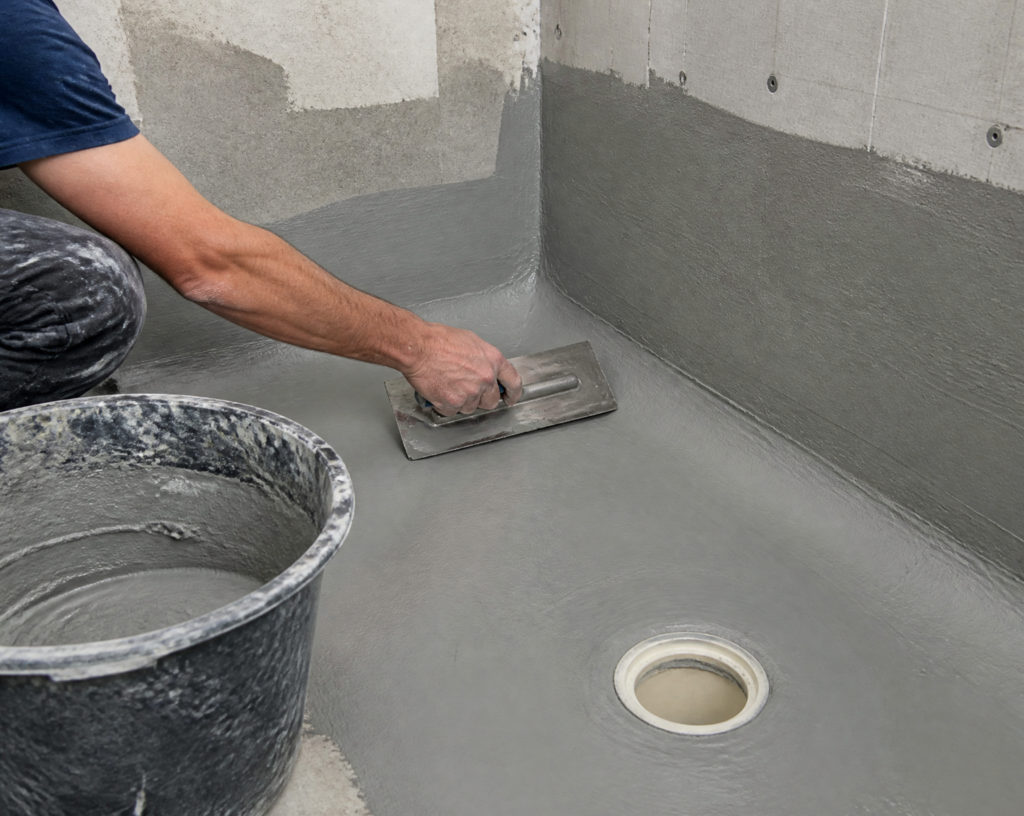
Cementitious waterproofing mortars and waterproof renders for walls, floors and wet areas. The polymer film reduces the continuity of the capillary pore network in the hardened mortar.
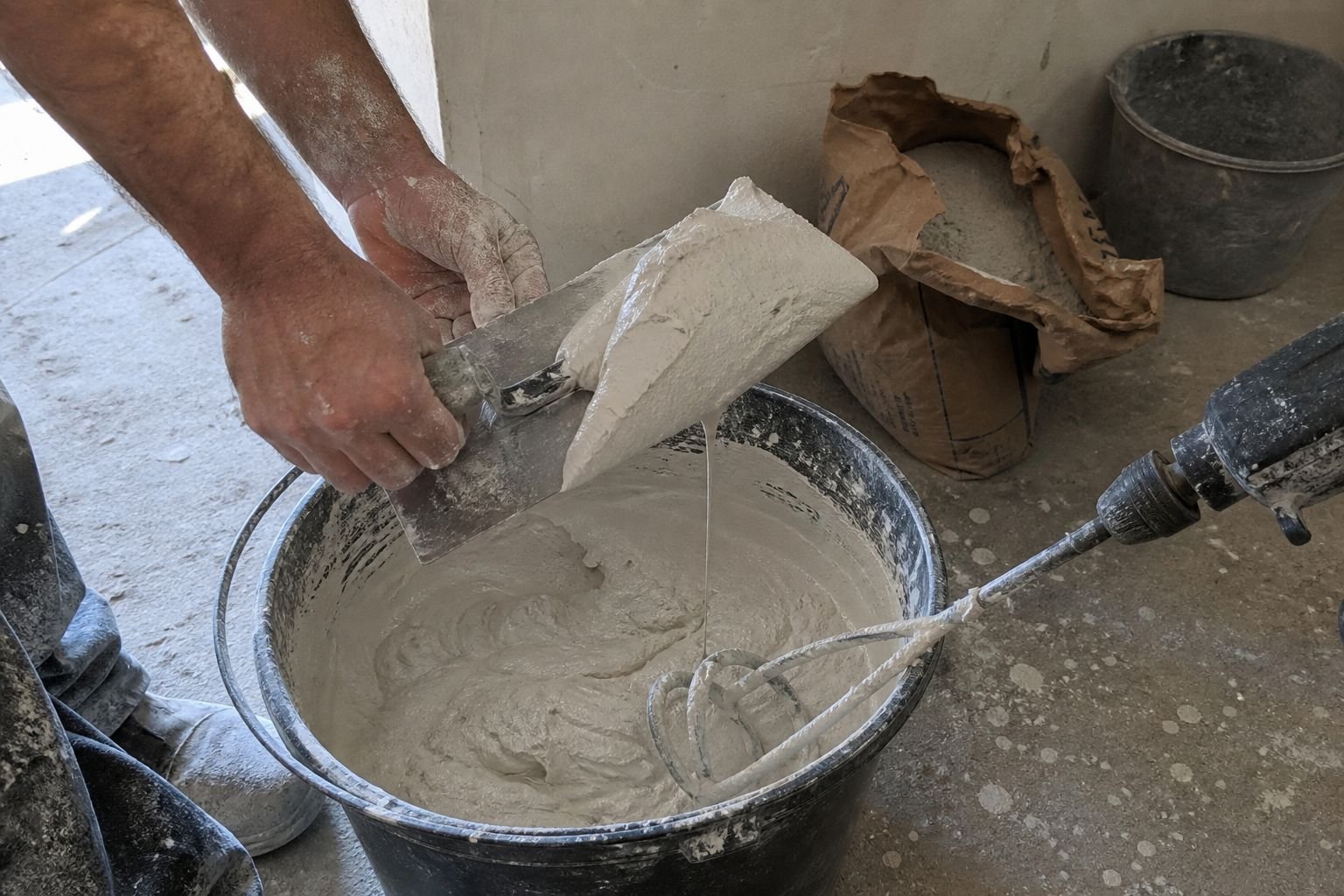
Gypsum-based plasters, hand- and machine-applied renders and repair mortars. The polymer film contributes adhesion of the plaster to the substrate and flexibility in the hardened layer.
RDP becomes a film-forming polymer only after water is added and the mortar dries. That sequence explains both what it can do and where its limits are — the descriptions below are functional, not performance guarantees.
In the mixer the powder disperses in the mixing water. As the mortar dries, water leaves the pores, the polymer particles come into contact and coalesce into a continuous film. Film formation therefore depends on curing: drying too fast at low temperature can leave an incomplete film.
The film at the mortar–substrate interface is what raises the adhesion of the hardened mortar. The same film bonds the mortar to itself and to the next layer, which matters for base coats and renders that are coated or tiled over.
The polymer phase is more deformable than the cement matrix. It lets the hardened mortar accommodate movement and moisture or thermal cycles, and it bridges fine cracks instead of allowing them to run through the layer.
A well-formed film interrupts the capillary pore network, which lowers water absorption and improves resistance to water penetration. Because the effect comes from the film, it is measured on the hardened mortar — for example adhesion after water immersion — and not quoted as a fixed figure.
RDP also acts on the fresh mix: the polymer particles influence cohesion, trowelling behaviour and how long an adhesive stays workable. Dosage, water ratio and the cellulose ether in the formulation set the result together, so these are tuned as a system.
What cannot be promised from a data sheet: adhesion, flexibility and water resistance are measured on the cured mortar under defined conditions — tensile adhesion, adhesion after water immersion, after heat ageing or after freeze–thaw cycles. Results depend on cement content, sand grading, dosage, water ratio and curing. Confirm them by testing your own formulation with a sample of the grade you intend to use.
A grade is chosen against the formulation, not against a catalogue page. These are the four inputs we ask for before recommending a grade and a dosage window.
Whether the mortar is a tile adhesive, putty, render, self-levelling compound or waterproof layer, and what it is applied to: concrete, masonry, cement board or insulation board.
Cement-rich adhesives and flexible base coats usually carry more polymer than a putty or a levelling compound. The starting dosage is set from the binder content of the formulation and then adjusted in trial.
Which properties have to be demonstrated — tensile adhesion, adhesion after water immersion, heat ageing, freeze–thaw or flexibility — and against which standard the finished mortar is tested.
Bulk density and flow behaviour affect silo or bag feeding and how the powder disperses in the mixer; packing and batch marking have to match your intake process.
What is printed on the product and documented with it, and how the powder should be handled once it arrives.
Every 25 kg bag carries a certificate-of-inspection block on the front panel with the product name, the grade type and the batch number of the run. The batch number is what links a bag to its production record, so quote it in any complaint or repeat order.
Appearance, colour and bulk density are the properties quoted on the data sheet: powder, white to off-white, odourless, bulk density 450–550 g/l. For a specific grade the values on its own TDS are the reference, and the net weight is marked on the bag.
Store the bags in a cool, dry place away from direct sunlight and high pressure. Use the contents as soon as possible after opening a bag, and do not puncture the bags. Reseal opened bags to keep moisture out of the powder.
For transport, the data sheet classifies the product as not dangerous goods under ADR/RID, IMDG and IATA, and as not a marine pollutant.
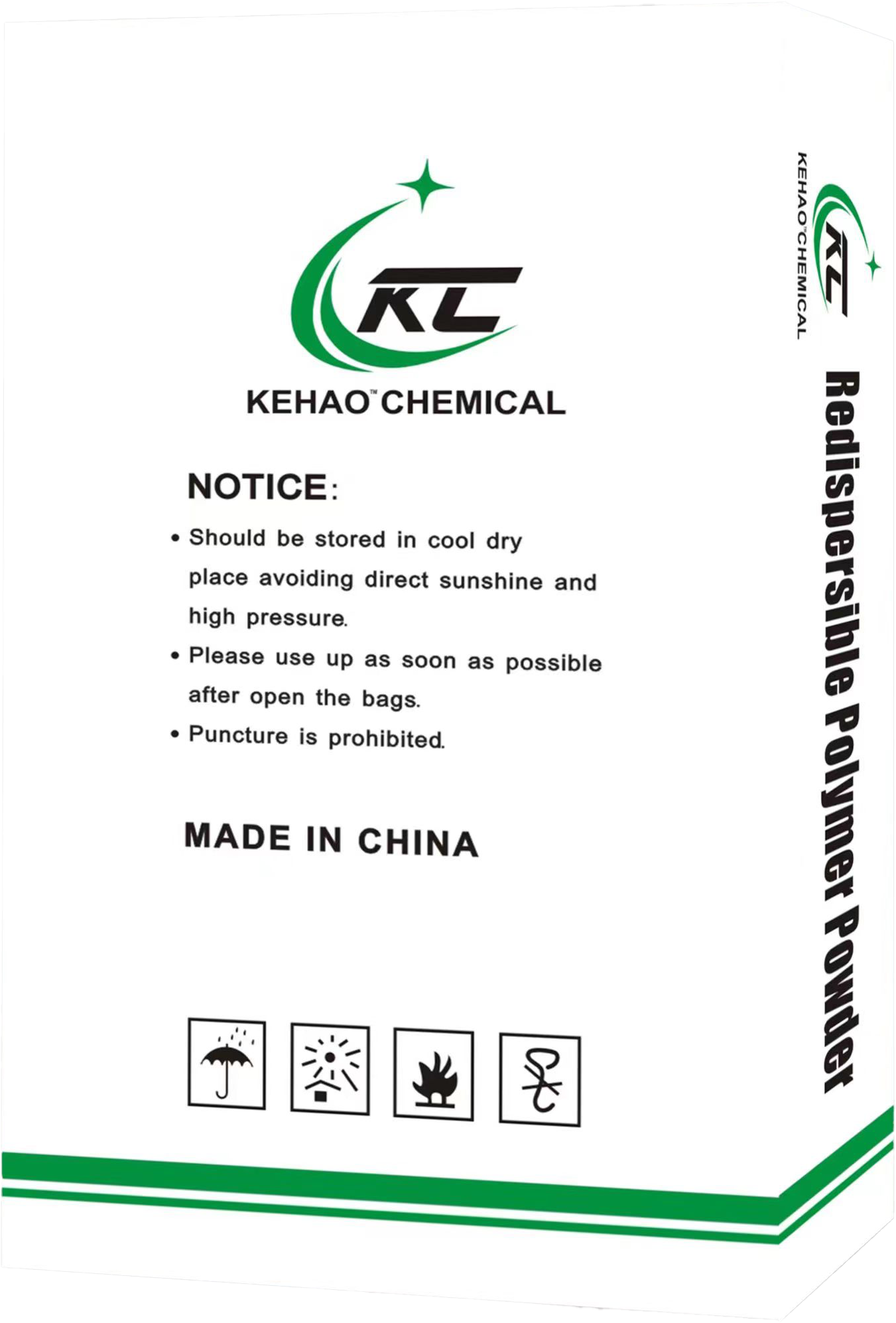
Storage and handling notice printed on the reverse of the RDP bag.
A sample is sent so the grade can be checked in your own mix before an order is placed. The four steps below are the whole process.
STEP 1
Application, substrate, current grade and dosage, cement and filler system, water ratio, and the property you want to change.
STEP 2
A starting grade, a dosage window, and the points to watch during mixing and curing.
STEP 3
Test at your dosage and compare with the material you use today: fresh properties first, then adhesion and water resistance on cured specimens.
STEP 4
Once the trial is accepted, grade, packing, batch marking and delivery details are fixed in writing.
Questions that come up before a first order. If yours is not here, send it with the form below and we will answer it directly.
The application and substrate, your current grade and dosage, the cement and filler system, the water ratio, and the property you want to improve. With those we reply with a starting grade and a dosage window.
RDP is the product category: a redispersible polymer powder. The polymer base can differ, and for this product it is a vinyl acetate–ethylene (VAE) copolymer, CAS 24937-78-8. Other RDP grades can be based on different copolymers, so the TDS of the grade in question is the reference.
Minimum film-forming temperature, ash content, polymer content and bulk density can differ between grades. Bulk density on the current data sheet is 450–550 g/l; the other values are stated on the TDS issued for the grade you are evaluating.
Store in a cool, dry place away from direct sunlight and high pressure, use the contents as soon as possible after opening, and do not puncture the bags. Reseal opened bags to keep moisture out.
Both are cement-based systems and both use RDP, but the polymer demand and the dosage differ. Grade and dosage are confirmed per system; a dosage proven in one application is not carried over to another without a trial.
Send the form on this page or write to kehao@kehaohpmc.com with the application, the dosage you are working to and the quantity you are planning. A sample is sent so the grade can be tested before a bulk order.
Tell us the application, the system you are producing and the property you want to change. We reply with a grade, a starting dosage and the documents available for review.
Useful to include: application and substrate, current grade and dosage, cement and filler system, water ratio, and the test the finished mortar has to pass.
Prefer email? Write to kehao@kehaohpmc.com.
Cellulose Ether Manufacturer
Typically replies within minutes
Any questions related to RDP/VAE?

Nancy
🟢 Online | Privacy policy
Chat for quality HPMC & factory prices!
Please tell us what you need and we will contact you as soon as we receive it!