Hydroxyethyl cellulose · KH-CEL

Hydroxyethyl Cellulose (HEC) for Water-Based Paints

Kehao Chemical supplies hydroxyethyl cellulose (HEC), a non-ionic cellulose ether dissolved in water to thicken and control the rheology of water-based paints, latex coatings and other aqueous systems. Grade selection starts from your binder, pigment system and application method, and is confirmed on the current TDS.

Published specification range: white or yellowish powder · loss on drying ≤ 6% · pH 5.0–8.5 · viscosity 300–100,000 cps at 2% in water. Grade-specific limits are confirmed on the current TDS.
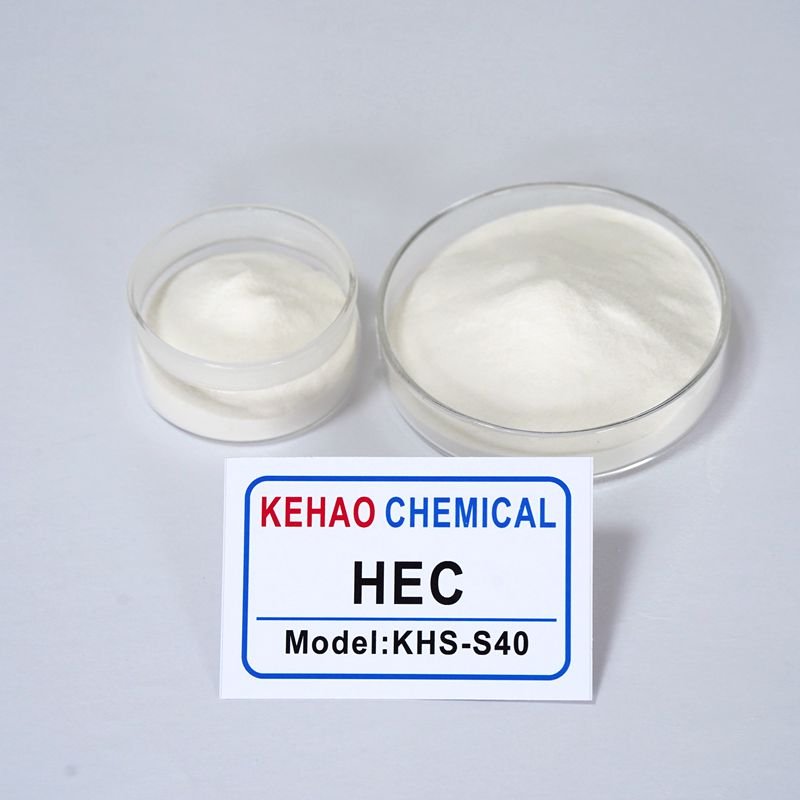
White hydroxyethyl cellulose powder from Kehao Chemical in two glass dishes beside a label reading HEC, model KHS-S40
KH-CEL HEC sample, labelled HEC — model KHS-S40.

What Is HEC and Where It Fits

Hydroxyethyl cellulose (HEC) is a non-ionic, water-soluble cellulose ether. KH-CEL HEC is supplied as a white or yellowish powder that is dissolved in water to build viscosity in aqueous formulations.

In a water-based paint the dissolved polymer thickens the aqueous phase. That viscosity build is what carries pigments and fillers, keeps the paint consistent in the can and shapes how it flows out of the brush or roller. How much of each effect you get depends on the grade, the dosage, the binder and pigment system, and the test method used.

Chemistry

A non-ionic cellulose ether, supplied as a free-flowing powder for dissolution in water.

Primary role

Thickening and rheology control of the aqueous phase in water-based paints and latex coatings.

Where it is evaluated

Water-based architectural paints, latex and emulsion coatings, and other aqueous systems that call for a cellulose ether thickener.

What decides the result

Grade, dosage, solids content, the pigment, binder, surfactant and electrolyte system, and the method used to measure viscosity.

This page covers the water-based paint and aqueous-system use of HEC only. If your system sits outside that scope, send the formulation and we will confirm whether a KH-CEL HEC grade is the right starting point.

Typical Specification

The table below reproduces the HEC specification sheet for the KH-CEL HEC range. It is a range document: the binding figures for a nominated grade are the ones printed on the current TDS and on the batch certificate.

PropertyTypical valueHow it is checked
AppearanceWhite or yellowish powderVisual comparison against the retained sample
Loss on drying≤ 6%Moisture determination in the laboratory
pH5.0 – 8.5pH of the aqueous solution
Viscosity300 – 100,000 cps, 2% water solutionViscosity of a 2% solution in water, reported with method and conditions

Source: the HEC specification sheet published with this product (image “HEC specification”, media ID 737). The values are ranges for the HEC range, not a promise for every grade; confirm the current TDS for the grade you intend to use.

Grade-dependent values: confirm the current TDS

Substitution level, particle size distribution, hydration and dissolution behaviour, and the exact viscosity of a nominated grade are not part of the published range table. They are fixed per grade, so they are confirmed on the current TDS rather than on this page.

Need the TDS for the grade you are evaluating, or a sample to check it in your own paint?

Applications in Water-Based Paints and Aqueous Systems

HEC is evaluated as the aqueous-phase thickener in the systems below. The list describes where the product is used; it is not a performance guarantee for a particular formulation.

Roller application of a white water-based architectural coating on an interior wall

Latex and emulsion paints

Aqueous binder systems where the thickener has to build viscosity without destabilising the emulsion. Compatibility with the binder and the surfactant system is checked in the trial.

Water-based architectural coatings

Interior and exterior water-based coatings where in-can consistency, application feel and film build have to stay in balance.

Pigment and filler suspensions

Aqueous pigment pastes and filled systems where the thickener supports the suspension of dispersed solids during storage.

Other aqueous systems

Water-borne adhesives, sealants and similar systems are evaluated case by case. Send the formulation and we will confirm whether HEC fits.

Dosage is not published as a single figure: it follows the grade, the pigment volume concentration and the target viscosity of your paint, and is fixed in a trial with your own formulation.

How HEC Supports Rheology and Stability

Dissolved HEC raises the viscosity of the aqueous phase and gives the paint a shear-thinning flow. In practice that shows up in four places:

Thickening and viscosity build

The polymer builds viscosity in the water phase, so the same solids load can be brought to a workable consistency without adding more binder.

Sag and levelling balance

Viscosity at low shear resists sagging on a vertical surface, while flow at application shear lets the film level out. The two are balanced by grade and dosage.

Storage stability and suspension

A structured water phase slows the settling of pigments and fillers and helps keep the paint uniform during storage.

Compatibility with pigments, binders and additives

HEC is evaluated alongside the pigments, emulsions, dispersants and rheology additives in the formula, because those interactions set colour acceptance and viscosity response.

These are formulation effects, not fixed numbers. How large each one is depends on the grade, the dosage, the pigment, binder, surfactant and electrolyte system, and the test method — it is established in a trial with your own paint.

Dissolving HEC and Avoiding Lumps

HEC is added to water as a powder, and the difficulties are almost always at the wetting stage, before the polymer has hydrated. Work to the procedure in the current TDS: water temperature, addition rate, agitation and hydration time differ between grades and are not interchangeable.
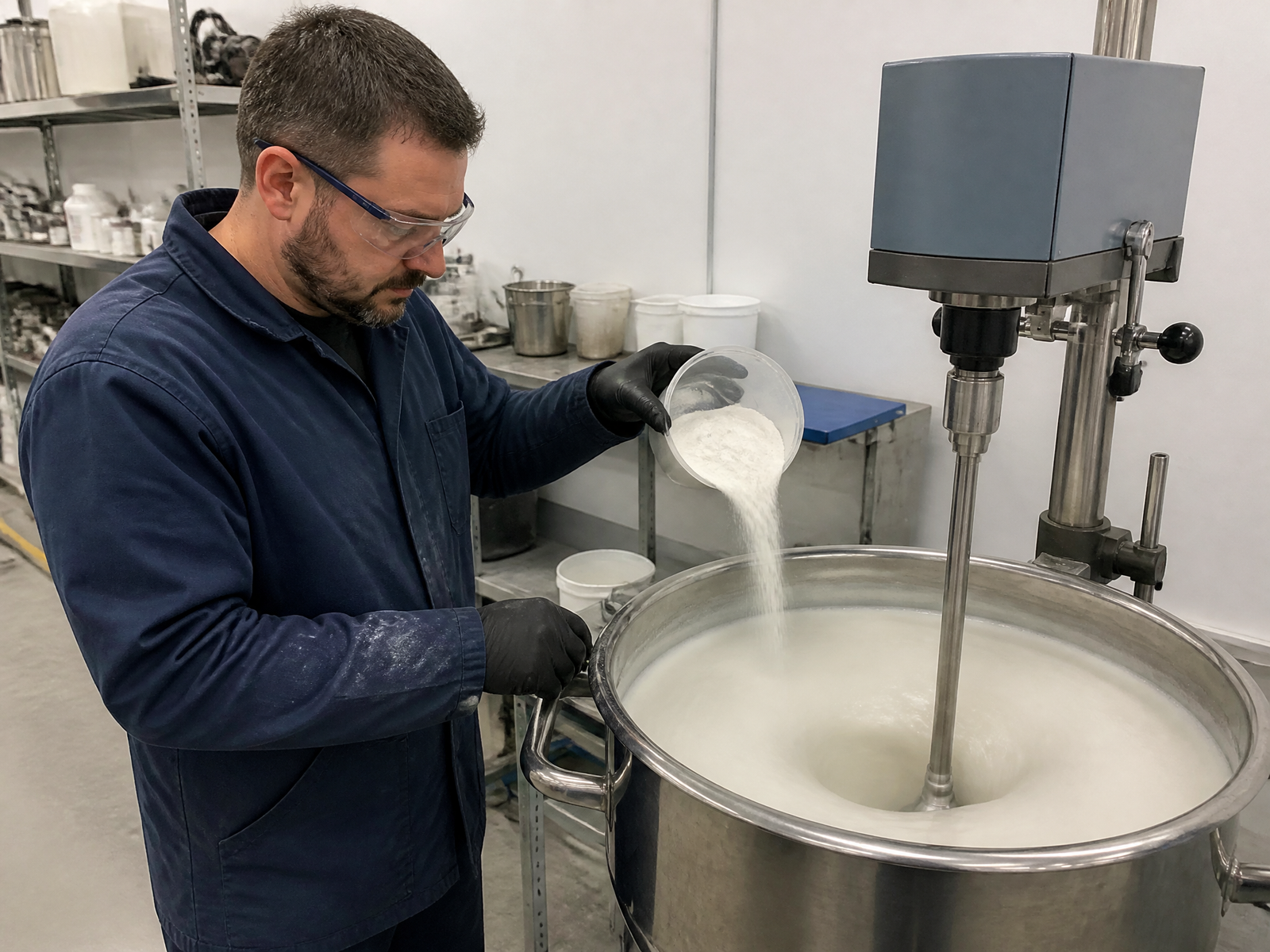
HEC powder dispersion in a water-based coating vessel during formulation testing
STEP 1

Start from the TDS procedure

Use the water temperature, addition rate and agitation stated for your grade. Do not carry a procedure over from another cellulose ether.

STEP 2

Add the powder into moving water

Sprinkle HEC into water that is already in motion, at the point of highest turbulence, instead of dropping it in as one charge.

STEP 3

Control the addition rate

A steady, slower addition wets the particles individually; a fast charge traps dry powder inside a skin of hydrated gel.

STEP 4

Let it hydrate before high shear

Allow the hydration time given in the TDS before applying high shear, so viscosity has developed evenly through the batch.

STEP 5

Use a pre-mix route where the process allows

Pre-blending the powder with other dry ingredients, or dispersing it in a water-miscible carrier, reduces the chance of lumps in high-solids batches.

CHECK

Lumps do not dissolve out later

Gels that survive mixing usually mean the powder went in too fast or into water that was not moving. Check the batch before it is let down.

No single temperature, speed or time is quoted here as suitable for every grade. Confirm the procedure for the grade you are running against its current TDS and your own equipment.

How to Select a Viscosity Grade

The published range is wide — 300 to 100,000 cps at 2% in water — so the grade, not just the chemistry, decides what the paint does. Select in this order:

STEP 1

Start from the application

Target viscosity, application method (brush, roller or spray), film build and the solids of the paint define the window you are working in.

STEP 2

Fix the measurement basis

Compare grades at the same concentration, temperature, spindle and speed. A figure quoted at 2% in water is not comparable with an in-paint viscosity.

STEP 3

Trial two or three grades

Ask for samples of the grades that bracket your target and run them in the same formula, at the same dosage basis, with the same test method.

STEP 4

Nominate the grade on the TDS

Once a grade is chosen, confirm its viscosity, loss on drying and pH on the current TDS and keep the batch certificate with the delivery.

The sample shown at the top of this page is labelled HEC, model KHS-S40. Ask us for the grades that bracket your target viscosity; the exact grade is confirmed per order.

HEC vs HPMC for Water-Based Paints

HEC and HPMC are both non-ionic cellulose ethers and both are used as thickeners in water-based paints. The names are not interchangeable, and the useful question is which one does the rheology job in your formula.

Point to compareHECHPMC
Chemical nameHydroxyethyl celluloseHydroxypropyl methyl cellulose
Ionic characterNon-ionicNon-ionic
Function in a water-based paintThickener and rheology modifier of the aqueous phaseThickener and rheology modifier of the aqueous phase
Grade dependenceViscosity 300–100,000 cps at 2% in water across the HEC rangeGrade-dependent; confirm on the HPMC TDS for the grade in question
How to decide between themSame formula, same dosage basis, same test methodSame formula, same dosage basis, same test method

This page does not claim that HEC is more salt-tolerant, more temperature-stable, more water-retentive or cheaper than HPMC. Those comparisons are system-specific: the answer changes with the grade on each side, the dosage, the pigment, binder, surfactant and electrolyte system, and the method used to measure.

Compare them the practical way: take the two grades you are considering, run them in the same paint at the same dosage basis, and measure viscosity, sag and levelling, storage stability and colour acceptance with the same method. The grade that holds your target properties with the least disruption to the rest of the formula is the one to keep.

Read the full comparison: HEC or HPMC: Which Thickener Works Better in Water-Based Paint?

Comparing HEC and HPMC in your own formula? Send the paint, the dosage basis and the target viscosity.

Quality Control, Packaging and Storage

The parameters we publish for HEC are the ones on the specification sheet. Everything else is grade- or order-specific, and we would rather confirm it than guess.
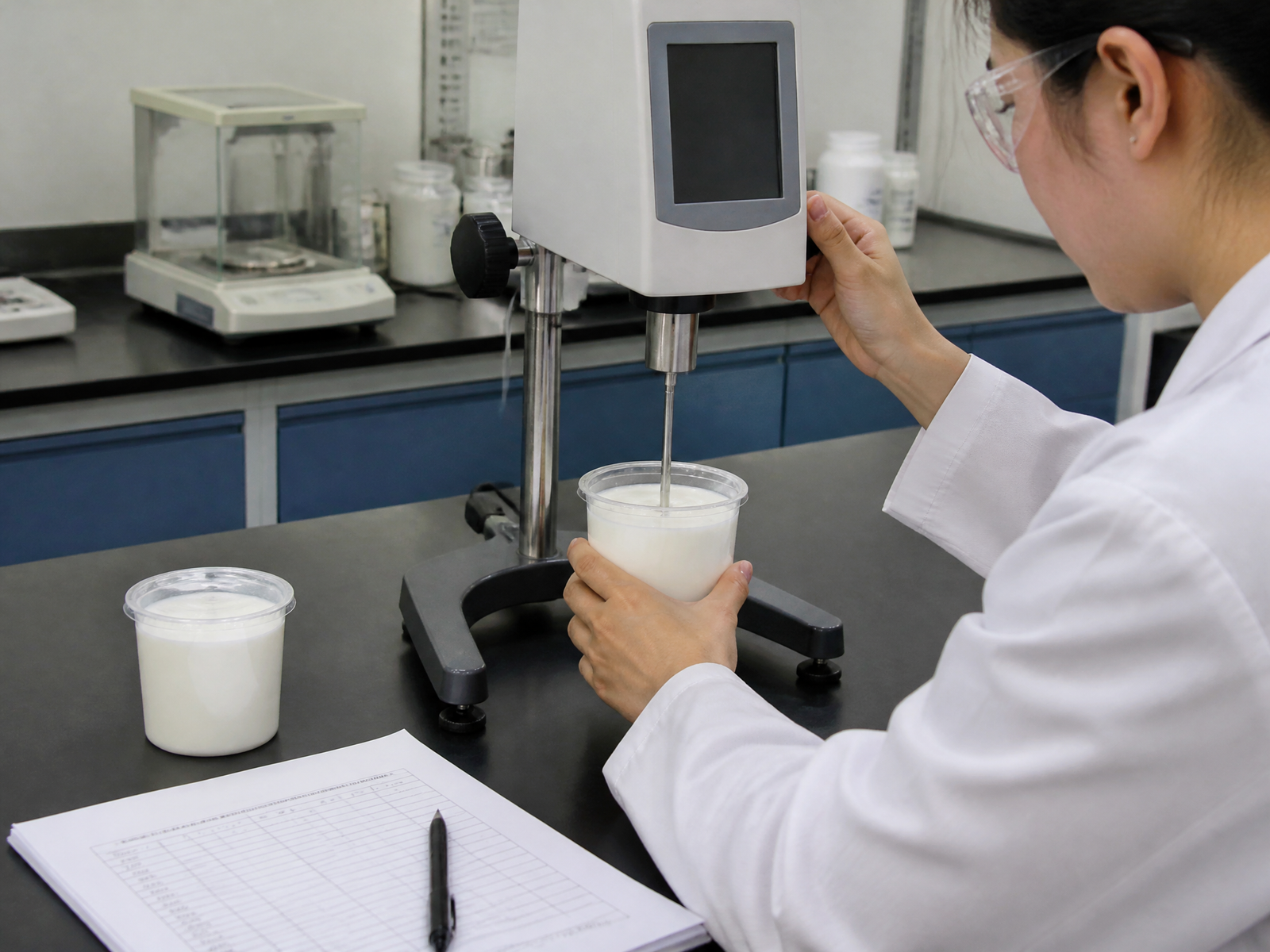
Rotational viscosity check of a white water-based coating sample in a laboratory

Checked against the specification

Appearance (white or yellowish powder), loss on drying (≤ 6%), pH (5.0–8.5) and viscosity of a 2% solution in water, which spans 300–100,000 cps across the range.

Packaging

Net weight, bag type and pallet configuration are stated on the current TDS and on the order confirmation. Confirm them before the shipment is booked.

Storage and handling

Keep the bags sealed and dry, away from direct sunlight, rain and moisture. Reseal opened bags and use stock in rotation; confirm the shelf life for your grade on the current TDS.

Documents

Ask for the current TDS for the nominated grade with the quotation, and keep the batch certificate with the delivery for traceability.

No MOQ, lead time, port or certification statement is published on this page: those depend on the grade, the quantity and the destination, and are confirmed in the quotation.

Sample, Trial and Purchasing FAQ

A sample is sent so the grade can be checked in your own paint; it does not replace your trial. The sequence is usually four steps:

STEP 1

Share the formulation

Application, binder system, pigment volume concentration, the thickener and dosage you use now, and the target viscosity.

STEP 2

We propose a grade and a dosage window

A starting grade, a dosage window and the points to measure, based on the TDS for that grade.

STEP 3

Trial the sample in your own paint

Run it at your own dosage and record viscosity, sag and levelling, storage and colour acceptance against your current thickener.

STEP 4

Review and scale

Compare the results with your target, then confirm the grade, the packaging and the quantity for the first order.

Send the paint, the binder system and your target viscosity, and we will confirm the grade and the sample quantity.

Purchasing FAQ

What does HEC do in a water-based paint?

It thickens the aqueous phase and controls rheology. That viscosity build carries pigments and fillers, keeps the paint uniform in the can and shapes how it flows out of the brush or roller. How large the effect is depends on the grade, the dosage and the formulation.

Which HEC grade should I start with?

Start from your target viscosity and application method, then compare two or three grades that bracket it. The published range is 300 to 100,000 cps at 2% in water, and the exact grade is confirmed on the current TDS.

Is HEC the same as HPMC?

No. Both are non-ionic cellulose ethers used as thickeners, but they are different chemistries and their grades are not interchangeable. Compare them in the same formula with the same dosage basis and test method.

Can I get a sample for a formulation trial?

Yes. Send the application, the binder system, the thickener and dosage you use now, and the properties you are trying to reach. We confirm the grade and the sample quantity against that request.

What packaging do you supply?

Net weight and bag type are confirmed on the current TDS and on the order confirmation. Tell us the destination and any handling constraints and we will confirm what is available for that order.

Do you supply the TDS and batch documents?

The current TDS for the nominated grade is issued with the quotation. Batch documentation travels with the delivery, so it can be filed against the incoming goods check.

Request a Sample or Discuss Your Formulation

Tell us the system you are working in — binder, pigment volume concentration, the thickener you use now and the viscosity you need. We reply with a proposed grade, a dosage window and the points to measure in your own trial.

Get A Quote

Please tell us what you need and we will contact you as soon as we receive it!