Tile adhesive failures cost manufacturers time, money, and customer trust. Delaminated tiles, poor adhesion on vertical surfaces, and premature skinning are rarely caused by bad cement. In most cases, the problem starts with the wrong HPMC grade or incorrect dosage. If you are producing dry mix tile adhesive and struggling with inconsistent performance, this guide addresses exactly that.
HPMC (Hydroxypropyl Methyl Cellulose) improves tile adhesive performance by retaining water in the mortar mix, extending open time, building initial tack, and preventing sag on vertical surfaces. It forms a protective film that slows water loss during curing, which increases adhesion strength and reduces tile failure risk. Dosage typically ranges from 0.3% to 0.8% by weight of dry mix.
Getting HPMC right is not complicated, but it requires understanding what each parameter controls. I have worked directly with tile adhesive manufacturers across Southeast Asia, the Middle East, and Eastern Europe. The same three issues come up every time — wrong viscosity grade, insufficient dosage, and poor grade-to-application matching. Let me walk you through all three.
What Does HPMC Actually Do Inside Tile Adhesive?
Most formulators know HPMC is a "thickener." That description is accurate but incomplete. HPMC does far more than thicken — and understanding its full role is the foundation of every performance optimization decision.
HPMC forms a semi-permeable polymer film throughout the mortar matrix when water is added. This film slows moisture migration into porous substrates, maintains workability by reducing surface evaporation, and builds pseudoplastic viscosity that gives the adhesive its trowelable consistency and initial tile grip. The combined effect is longer open time, higher adhesion strength, and better sag resistance.
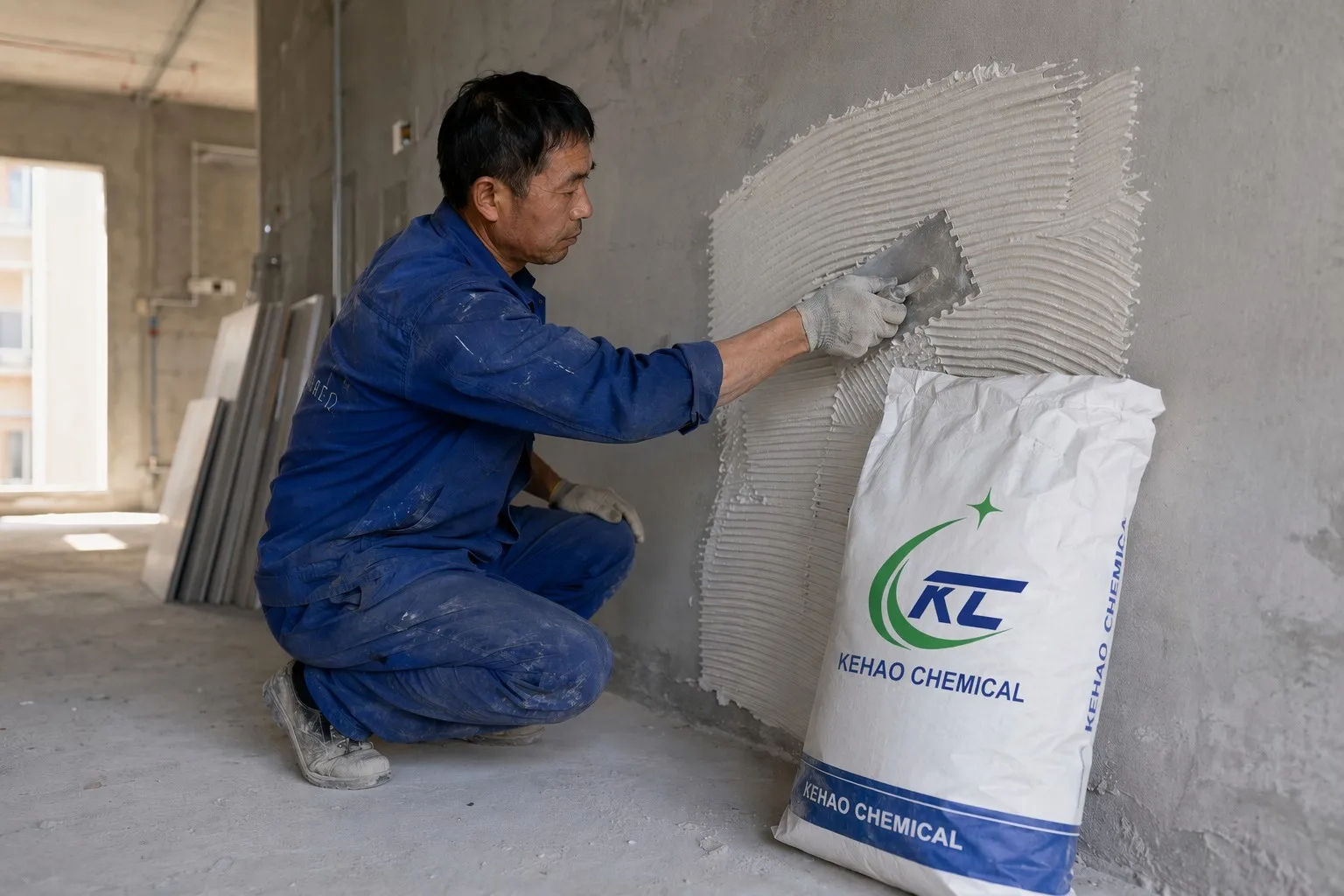
When you mix HPMC-based tile adhesive with water, the cellulose ether particles hydrate and expand into a gel network. That network does three things simultaneously. First, it traps free water inside the mortar body. This prevents rapid absorption into dry concrete or brick substrates — a critical issue in hot climates where substrates draw moisture aggressively. Second, it creates pseudoplastic behavior: the adhesive flows under trowel pressure and stiffens instantly when the tool lifts off. That is what gives tile setters the ability to comb ridges that stay crisp. Third, as the water phase slowly migrates outward during curing, the HPMC film slows that process down, keeping cement hydration active longer. The result is measurably higher tensile adhesion strength compared to mortars without cellulose ether.
Without adequate HPMC, tile adhesive dries too fast, loses workability before tiles are set, and cannot hold heavy tiles on walls. With the right HPMC grade and dosage, installers gain the open time and confidence they need.
| HPMC Function | Technical Effect | Performance Benefit |
|---|---|---|
| Water retention | Slows moisture migration into substrate | Longer open time, stronger adhesion |
| Pseudoplastic viscosity | Shear-thinning under trowel load | Smooth trowelability, comb-ridge stability |
| Film formation | Semi-permeable polymer network | Gradual cement hydration, higher bond strength |
| Initial tack | Immediate surface grip on application | Tiles stay in position without slipping |
| Sag resistance | Yield stress above gravity load | Vertical tile installation without movement |
For a deeper look at HPMC’s construction chemistry, see our full guide on how HPMC improves tile adhesive performance and the KEHAO HPMC product page.
How to Select the Right HPMC Viscosity Grade for Tile Adhesive
Viscosity grade selection is where most performance problems begin. Purchasing the cheapest available grade, or defaulting to one grade for every product, produces inconsistent results. The right grade depends on the tile type, substrate porosity, climate conditions, and your target open time.
For standard ceramic tile adhesive, HPMC grades between 100,000 and 150,000 mPa·s (2% solution, 20°C) deliver balanced open time and water retention. For large-format porcelain tiles on vertical surfaces, grades of 150,000 to 200,000 mPa·s provide superior sag resistance and initial tack. For self-leveling or thin-bed adhesives, lower viscosity grades (40,000–80,000 mPa·s) improve flow without sacrificing workability.
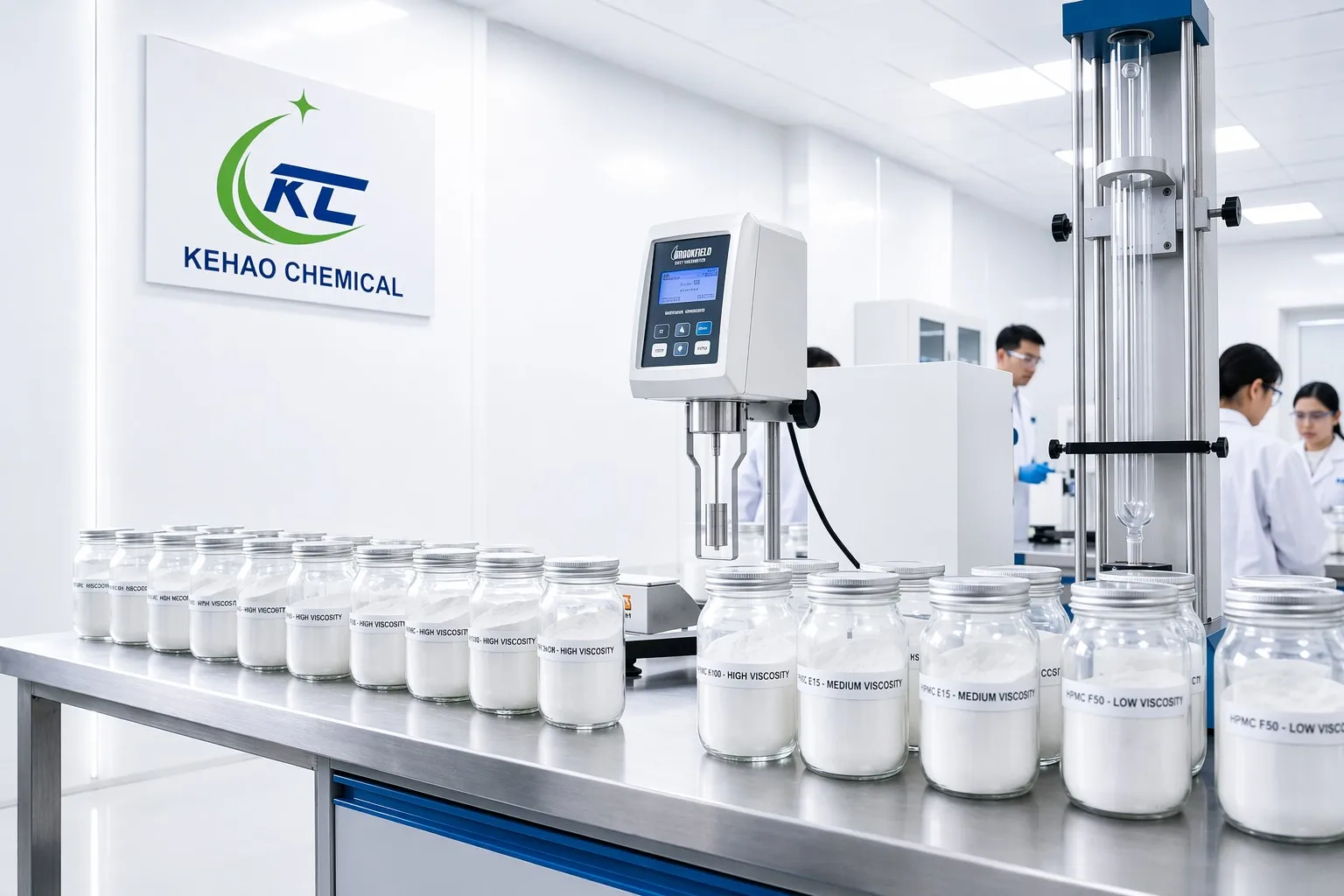
Viscosity is the single most important HPMC parameter for tile adhesive. Higher viscosity means stronger water retention and better sag resistance, but it also means slower dissolution and higher mix water demand. In practical terms, a 200,000 mPa·s grade that is not fully dissolved gives you lumpy mortar and weak spots. Dissolution speed depends on particle size and surface treatment — hot-water soluble HPMC grades dissolve quickly in cold water during normal mixing but gel on initial contact with hot water, preventing lump formation.
Gelation temperature is the second variable that matters most. In hot, dry climates — the Middle East, North Africa, South Asia — substrate temperatures above 40°C can cause HPMC to gel prematurely. Grades with higher gelation temperature (around 65–75°C) perform better in those environments. In temperate climates, standard grades with gelation around 55–65°C work well.
I always recommend requesting samples and running your own open time test on the actual substrate you use. A 20-minute difference in open time can make or break a product’s reputation with tile setters.
| Application | Recommended Viscosity (mPa·s) | Gelation Temperature | Key Benefit |
|---|---|---|---|
| Standard ceramic tile adhesive | 100,000 – 150,000 | 55–65°C | Balanced performance |
| Large-format porcelain (vertical) | 150,000 – 200,000 | 60–70°C | Sag resistance, initial tack |
| Natural stone tile adhesive | 150,000 – 200,000 | 65–75°C | Extended open time |
| Self-leveling thin-bed adhesive | 40,000 – 80,000 | 55–65°C | Flow, smooth bed |
| Exterior tile adhesive (hot climate) | 150,000 – 200,000 | 65–75°C | Heat stability |
For related cellulose ether products that cover specialty applications, see our HEMC/MHEC product page and HEC product page. You can also compare HPMC and RDP performance in our article on RDP in dry mortar.
External reference: ISO 13007-1 — Ceramic tiles: grouts and adhesives — definitions and specifications for adhesives.
HPMC Dosage and Formulation Tips to Maximize Adhesive Strength
Selecting the right grade is only half the work. Dosage and formulation balance determine whether that grade performs at its potential or underdelivers in the field.
HPMC dosage for tile adhesive typically falls between 0.3% and 0.8% by weight of the dry mix. Starting at 0.5% covers most standard formulations. Increasing toward 0.7–0.8% improves open time and sag resistance for demanding applications. Exceeding 1.0% increases water demand excessively and reduces adhesion strength due to over-diluted cement contact. Always adjust based on your specific cement grade, filler ratio, and target performance.
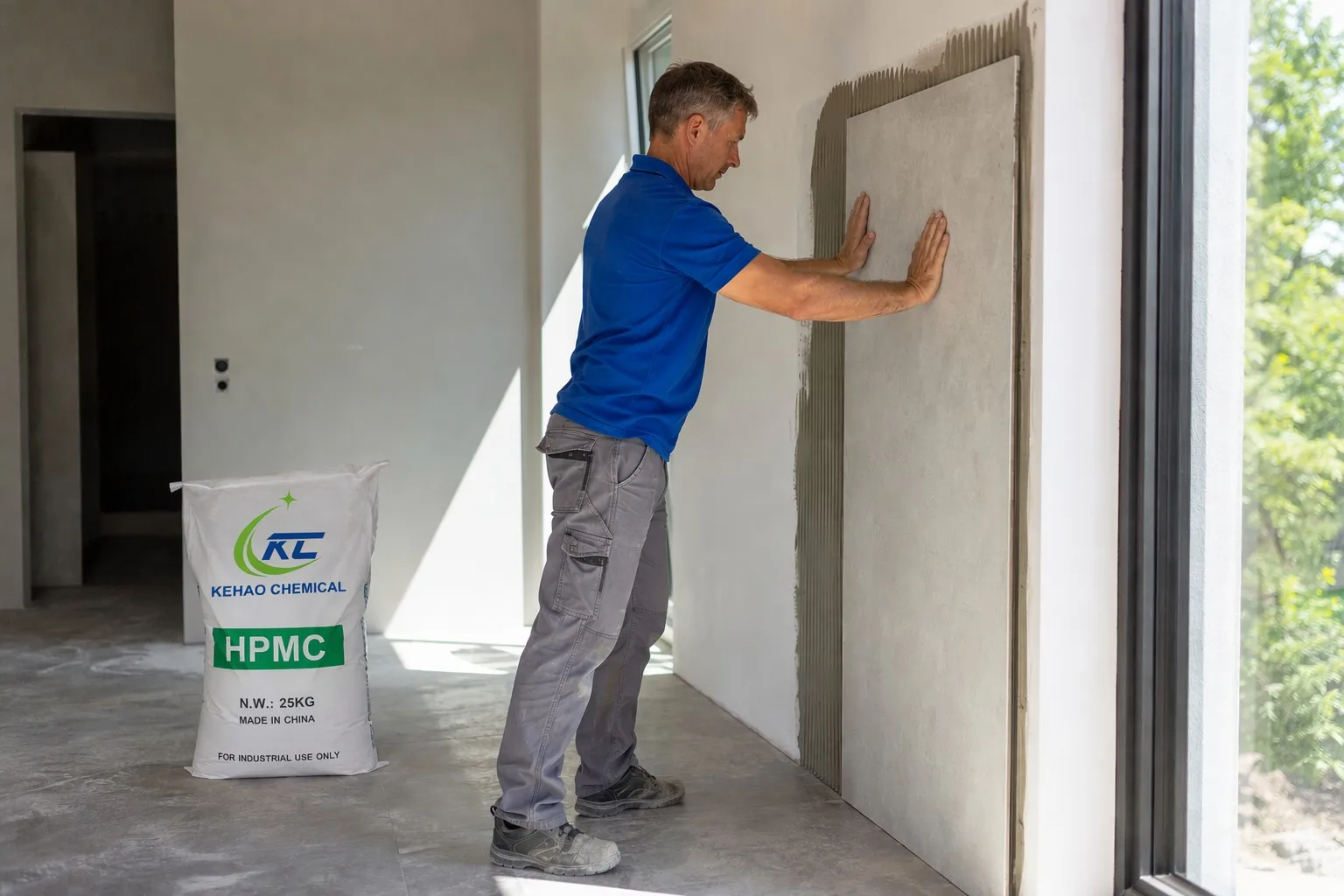
The most common dosage mistake I see is under-dosing. Manufacturers reduce HPMC to cut costs, then face field complaints about short open time and tile slippage. The cost of one project failure far exceeds months of HPMC savings.
Dosage interacts with cement content. Higher cement ratios require slightly more HPMC to maintain water retention balance. Sand gradation also affects performance — finer sands increase surface area and water demand, so dosage may need upward adjustment. When adding RDP (redispersible polymer powder) to improve flexibility and adhesion, HPMC dosage can sometimes be reduced slightly because RDP contributes to open time extension as well. See our guide on finding a reliable RDP supplier for sourcing guidance.
Mixing procedure directly affects HPMC performance. HPMC must be pre-blended with dry ingredients before water is added. Lumping occurs when HPMC contacts water directly without being dispersed in the dry matrix first. Use consistent water-to-powder ratios — typically 0.22–0.26 by weight — and mix for a minimum of 3 minutes at low shear. Let the mix rest for 5 minutes, then remix briefly before use. That rest period allows full HPMC hydration and gel network formation.
Test every batch against three key performance indicators: open time on an unprimed concrete substrate, initial tack measured by finger-pull test at 10 minutes, and sag resistance on a 60° inclined tile panel. These three field-relevant tests reveal performance gaps faster than lab viscosity alone.
For complete product specifications and technical data sheets, visit the KEHAO Chemical HPMC product page or the cellulose ether manufacturers guide.
External references: ASTM C627 — Standard Test Method for Evaluating Ceramic Floor Tile Installation Systems; EN 12004-1:2017 — Adhesives for ceramic tiles.
| Dosage Range | Performance Effect | Recommended Application |
|---|---|---|
| 0.2 – 0.3% | Minimal water retention, short open time | Not recommended for tile adhesive |
| 0.3 – 0.5% | Acceptable workability, moderate open time | Standard interior tile adhesive, low demand |
| 0.5 – 0.7% | Balanced performance, good sag resistance | Standard to mid-range tile adhesive |
| 0.7 – 0.8% | Extended open time, high sag resistance | Large-format tiles, vertical surfaces |
| 0.8 – 1.0% | Maximum water retention, high viscosity | Exterior and demanding applications |
| > 1.0% | Excessive water demand, adhesion loss | Avoid — counter-productive |
Conclusion
HPMC is not a generic thickener you add once and forget. It is the functional core of tile adhesive performance — and every percentage point of dosage, every viscosity grade decision, and every formulation adjustment has measurable consequences in the field. The manufacturers who get this right consistently produce adhesives that installers trust and specify by name.
If you are developing a new tile adhesive formula, reviewing an existing one, or scaling production and need reliable HPMC supply, KEHAO Chemical’s technical team is ready to assist. We provide product samples, viscosity-grade recommendations, and formulation support tailored to your substrate, climate, and performance targets. Contact us for a technical consultation or sample request.
Frequently Asked Questions
Q1: What is the difference between high-viscosity and low-viscosity HPMC in tile adhesive?
High-viscosity HPMC (150,000–200,000 mPa·s) delivers stronger water retention, longer open time, and better sag resistance — ideal for vertical surfaces and large-format tiles. Low-viscosity HPMC (40,000–80,000 mPa·s) improves flow and dissolution speed, suited for self-leveling or thin-bed tile adhesive systems where fluidity matters more than sag resistance.
Q2: Can I use HPMC and RDP together in the same tile adhesive formula?
Yes — combining HPMC and RDP is standard practice in premium tile adhesive production. HPMC handles water retention, workability, and open time. RDP contributes adhesion strength, flexibility, and water resistance after cure. The two additives complement each other and together produce performance that neither achieves alone. Typical RDP dosage is 1–3% alongside 0.5–0.7% HPMC.
Q3: How does substrate porosity affect HPMC dosage in tile adhesive?
Highly porous substrates — old concrete, cement board, brick — absorb water from the adhesive rapidly. On these surfaces, increase HPMC dosage toward 0.7–0.8% to compensate for faster moisture loss and maintain adequate open time. Non-porous substrates like glass mosaic or large-format porcelain applied to a wall require good sag resistance, so higher viscosity grades are more important than higher dosage.
Ready to optimize your tile adhesive with the right HPMC grade?
KEHAO Chemical supplies high-viscosity HPMC for tile adhesive, mortar, wall putty, and EIFS — with full technical support, REACH compliance, and factory-direct pricing.
📧 Email: kehao@kehaohpmc.com
📱 WhatsApp: +86 157 3315 6958
🌐 Request a Sample or Quotation →