When I compare redispersible polymer powder (RDP) for a bulk purchase, I do not ask which sample makes the prettiest film. That shortcut can hide differences in sample preparation, drying conditions, and mortar compatibility. The result is a purchasing decision that looks technical but cannot be reproduced at scale.
I use a problem–agitation–solution approach instead: define the evidence layers, control the comparison, test both the redispersion and the end application, then connect every result to the commercial lot. This article explains that workflow for a white or off-white ultrafine RDP powder without inventing a universal pass value.
1. What Does “Good Film Formation” Actually Mean for RDP?
Problem: Buyers may treat MFFT, a clear-looking cast film, easy redispersion, and strong mortar performance as interchangeable claims. They are not. If I collapse them into one judgment, I can approve a powder that passes a visual demonstration yet disappoints in the intended dry mix.
Answer: I compare four separate evidence layers: MFFT of the reconstituted dispersion, visual film formation under controlled drying, redispersion quality after powder-to-water conversion, and performance in the buyer’s actual dry-mix mortar. No single layer substitutes for another, so I require linked results from the same identified sample.
Solution: I start by writing four separate questions in the test plan. First, at what temperature does the prepared polymer dispersion form a continuous film under the selected method? This is the MFFT question. ISO 2115 describes determination of white-point temperature and minimum film-forming temperature for polymer dispersions.[1] ASTM D2354 addresses MFFT of emulsion vehicles.[2] These references can support method selection, but neither automatically becomes an RDP mortar purchase specification.
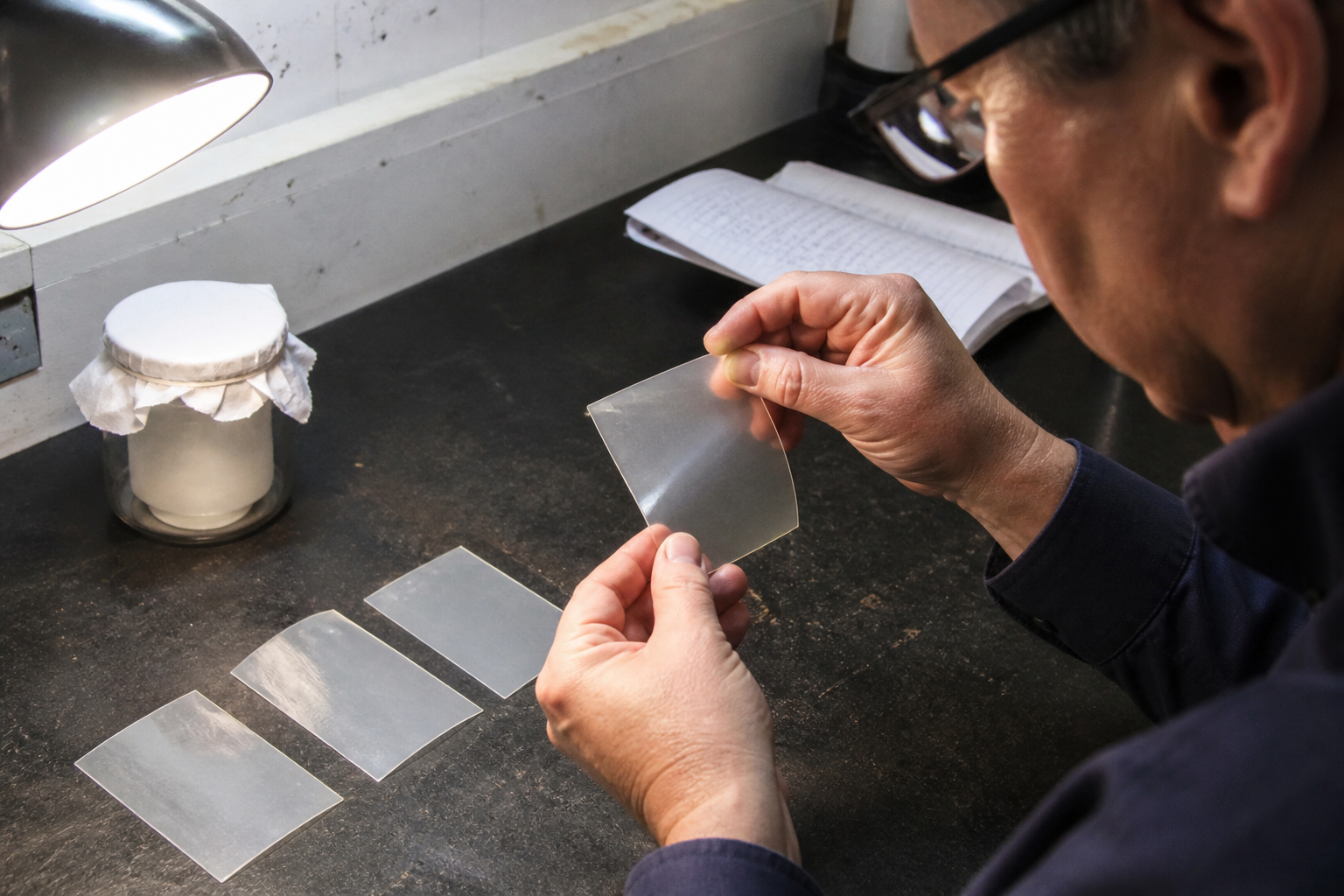
Second, what do I observe when the standardized redispersion is cast and dried? I record continuity, whitening, cracking, tack, surface defects, and ease of handling at the agreed endpoint. A visual film is useful comparative evidence, not proof of every application property.
Third, how well does the powder return to a usable aqueous dispersion? I document wetting, mixing response, visible agglomeration, settling or separation, and film uniformity after the same preparation sequence. For basic product context, I use the RDP product overview and the explanation of how redispersible polymer powder is made, while keeping supplier descriptions separate from test evidence.
Fourth, does the powder improve the intended mortar under the buyer’s controlled formulation and method? Cement, fillers, cellulose ether, water demand, mixing, curing, and substrate interaction can change the outcome. I therefore build a four-column evidence matrix rather than declare a winner from one film. A candidate advances only when its results are internally consistent and relevant to the purchase objective.
2. How Do I Make RDP Samples Truly Comparable?
Problem: Two powders can appear different because the polymer family, protective colloid system, solids basis, water quality, conditioning, or dispersion procedure was not matched. If these variables move together, I cannot tell whether I am comparing products or merely comparing laboratory preparation.
Answer: I compare like with like by fixing the declared polymer type, protective colloid basis, target solids of the redispersion, water, sample conditioning, addition sequence, mixing energy, rest time, and vessel geometry. I document every deviation before interpreting the film, because an uncontrolled preparation can reverse an apparent ranking.
Solution: I first confirm the comparison family. Polymer type and protective colloid can influence redispersion and coalescence, so I do not rank unlike chemistries as if they were direct substitutes unless the sourcing brief explicitly allows alternatives. I ask suppliers to identify these characteristics at an agreed disclosure level and review the site’s guide to compositional differences among RDP varieties for terminology—not as a substitute for lot documentation.
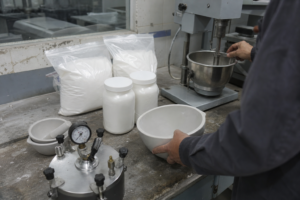
Next, I choose one solids basis for every aqueous preparation and state whether calculations use supplied powder mass, declared non-volatile content, or another agreed basis. I do not quietly use equal powder mass when the basis differs. I also condition sealed samples together and inspect their appearance. RDP should be described here as a white or off-white ultrafine powder, never as granules or crystals. Storage damage is a separate issue; the guide on RDP powder caking and storage helps frame that check without turning caking into the present article’s topic.
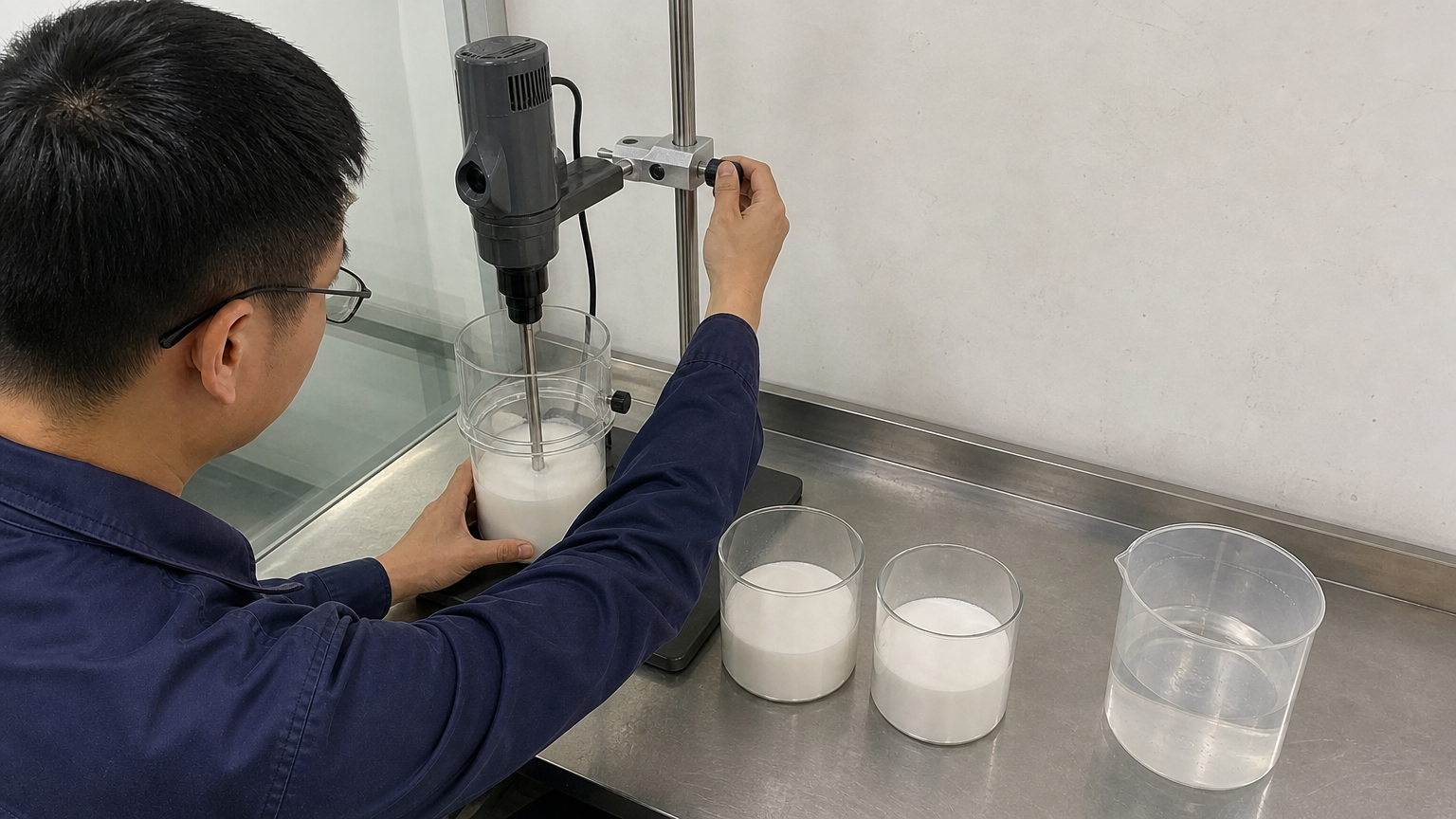
I then issue a short preparation instruction: water source, water temperature range, vessel, impeller, addition order, mixing sequence, rest period, remix step, and time from preparation to casting. I label each vessel with a blind sample code so appearance or supplier identity does not bias observation. A blank, a retained reference, and duplicate preparations help reveal operator or preparation noise.
Finally, I log anything unusual rather than “correcting” one candidate during the run. Extra stirring, foam removal, filtration, or a longer rest can improve one film unfairly. If intervention is necessary, I repeat the complete set under the revised protocol. Comparability comes from a locked method, not from forcing every sample to look similar.
3. Which Casting and Drying Conditions Must Stay Fixed?
Problem: Film appearance changes with substrate, wet-film thickness, temperature, humidity, airflow, drying duration, and observation timing. A buyer who compares films dried on different benches or judged at different endpoints may mistake environmental variation for a supplier advantage.
Answer: I lock the substrate, applicator, wet-film thickness, casting direction, temperature, relative humidity, airflow exposure, drying position, conditioning time, and observation endpoint. I randomize sample positions and assess all films with the same lighting and handling sequence, recording actual conditions instead of relying on room labels.
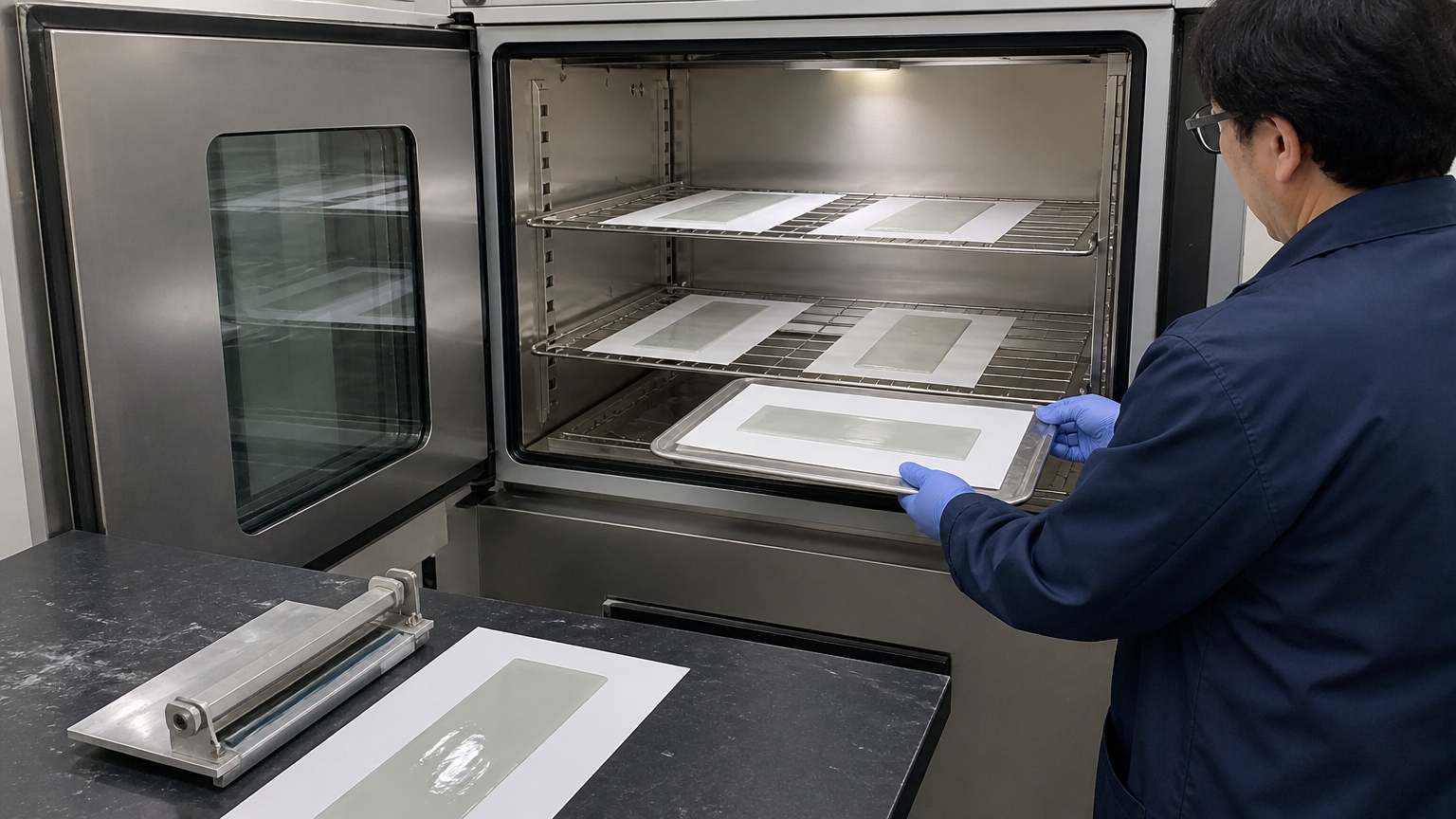
Solution: I select one clean, level substrate that suits the agreed method and use it for all candidates. I record its material, surface preparation, and reuse policy. I use the same film applicator and casting technique, because a thicker wet layer can mask discontinuity while a thinner layer may exaggerate defects. I also control the delay between redispersion, casting, and entry into the drying environment.
The drying environment receives equal attention. I record measured temperature and relative humidity throughout the comparison and minimize uncontrolled drafts or radiant heat. If the purpose is an MFFT determination, I follow the chosen standard method and calibrated equipment rather than improvising a cold-to-warm bench. The ISO page for ISO 2115 identifies the published edition and notes its lifecycle status; I check that page again when fixing a contract or laboratory method.[1] The ASTM page similarly identifies the current D2354 listing for emulsion vehicles.[2]
For a simple comparative cast-film observation, I define the endpoint before testing. My record can include continuity, whitening, visible cracking, pinholes, edge effects, tack, release from the substrate, and changes after a defined conditioning stage. I photograph each film under the same neutral setup, but I preserve written observations because camera exposure can conceal differences. I do not create a new “pass” threshold after seeing the candidates.
I randomize positions within the controlled space and, where practical, rotate them according to a prewritten plan. I also separate edge observations from the central film area. If conditions leave the agreed window, I flag the run rather than selectively accept attractive specimens. The goal is not laboratory theater; it is a repeatable comparison another qualified operator can audit.
4. Why Must Cast-Film Results Be Checked in Dry-Mix Mortar?
Problem: A smooth film from a redispersed RDP can create false confidence. The powder still has to redisperse during mortar mixing and interact with cement, mineral fillers, cellulose ether, water, substrate, curing, and the buyer’s process. That system may change the ranking.
Answer: I use the redispersed-film test as a controlled screening tool, then verify finalists in one locked dry-mix mortar formulation and application protocol. I compare fresh behavior, application handling, curing response, and relevant hardened properties against a retained reference, while changing only the RDP candidate in the planned test series.
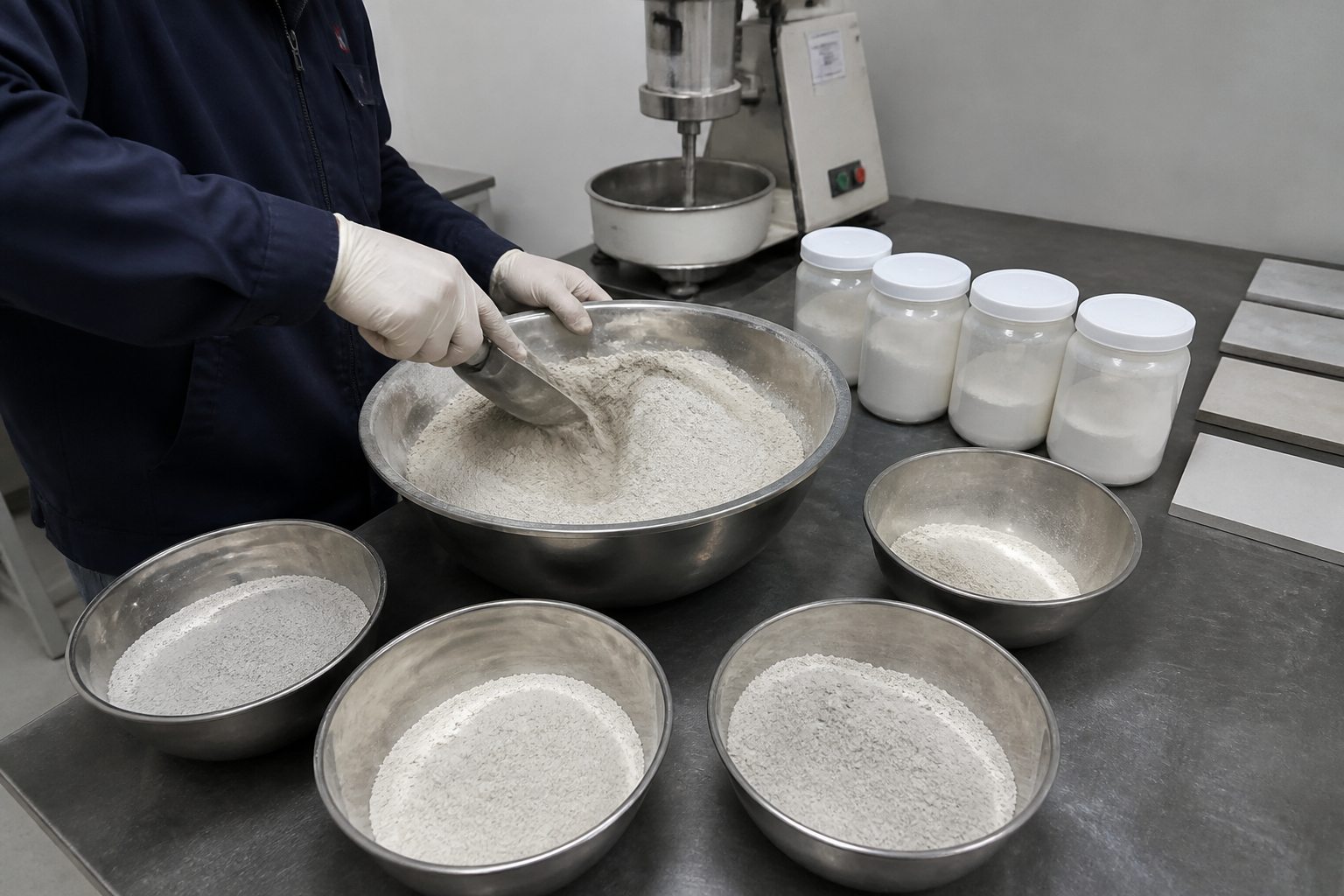
Solution: I use two linked screens. The first is the standardized aqueous redispersion and cast film. It helps me detect preparation behavior, visible instability, and differences in coalescence under controlled conditions. The second is an application test using the buyer’s representative dry-mix system. I never claim the first screen predicts every result in the second.
For the mortar screen, I prepare one master batch of the non-RDP dry ingredients when feasible, then split it according to the test plan. I keep raw-material lots, weighing sequence, mixer, mixing cycle, water basis, resting, remixing, specimen preparation, substrate, curing, and operator instructions fixed. Only the coded RDP candidate changes. This prevents sand grading, cement variation, or water adjustment from becoming hidden explanations.
I choose application observations and hardened tests that match the intended product and the buyer’s existing specification. The record may cover mixing response, workability, consistency retention, application feel, wetting, sag behavior, surface development, cracking observations, adhesion-related testing, flexibility-related testing, or water-exposure performance where relevant. I avoid promising a property merely because a detached polymer film looks continuous. The article on RDP and PVA in dry-mix mortar provides useful category context, but this test keeps the focus on RDP candidates rather than reopening a material-choice debate.
I review the two screens side by side. Agreement strengthens confidence; disagreement is diagnostic. It can point to formulation compatibility, redispersion under realistic mixing, water demand, or curing sensitivity. I investigate that mechanism before commercial approval. A film test is most valuable when it narrows candidates and explains behavior—not when it is used as a decorative substitute for application evidence.
5. How Do I Carry the Winning Sample Into a Bulk Order?
Problem: A technically promising sample has little procurement value if its identity is lost between the laboratory, supplier batch, quotation, contract, production lot, and warehouse receipt. Without traceability, a buyer may test one material and receive another without a defensible comparison.
Answer: I link the approved sample code to supplier batch identity, COA, test records, retained material, purchase specification, scale-up review, and incoming inspection plan. I predefine change notification and acceptance handling, then compare delivered lots with the approved reference using risk-based identity, redispersion, film, and application checks.
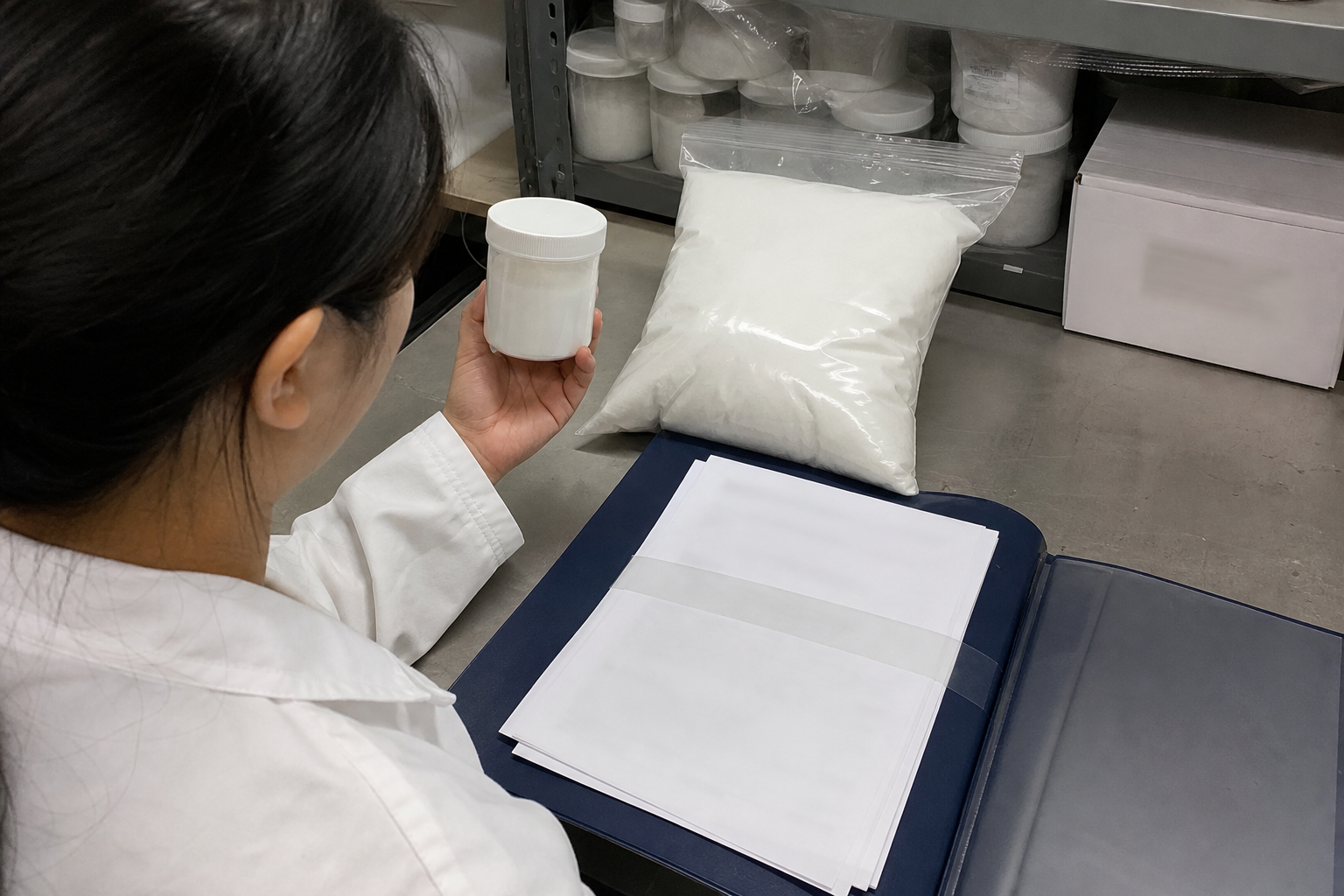
Solution: I create an approval packet for each finalist. It contains the sample code, supplier name, batch or lot identifier, sampling date, packaging condition, COA, safety documentation, preparation record, film observations, application results, photographs, deviations, and decision. I retain sealed material under documented storage so a later investigation has a physical reference. A COA supports traceability, but I do not treat it as proof that the buyer’s application test was passed.
Before scale-up, I ask whether the evaluation sample came from routine production and whether the commercial material will use the same declared product identity and control plan. I agree how the supplier will notify changes that could affect polymer type, protective colloid, manufacturing site, or other purchase-critical characteristics. The guide to evaluating RDP supplier capability and quality control can support due diligence, while my own approval packet remains the transaction-specific evidence.
The purchase specification names the agreed test methods, sample preparation, reporting basis, acceptance process, and dispute-sample handling. If third-party testing is important, I consider a laboratory whose relevant scope and competence are suitable. ISO/IEC 17025 sets requirements for competent, impartial, consistent laboratory operation, but its use does not make any RDP result automatically acceptable or create a mortar specification.[3]
At receipt, I verify product and lot identity, packaging and document consistency, powder appearance, and risk-based comparison with the retained reference. Depending on risk, I may repeat redispersion, controlled film observation, and a compact application check before releasing inventory. I trend results across lots rather than waiting for a failure. This closes the loop from sample to scale-up, bulk supply, and incoming control.
FAQ 1: Is a lower MFFT always better for my mortar?
No. I treat MFFT as one property of the prepared polymer dispersion. The suitable range depends on the intended application, formulation, curing conditions, and performance specification. I compare relevant candidates under one method and confirm the result in the actual dry-mix system.
FAQ 2: Can I approve RDP from a clear, flexible cast film alone?
No. I use cast-film observations for screening and diagnosis. They do not replace redispersion assessment, controlled mortar preparation, or application-specific testing. A film can look good while the powder behaves differently during dry mixing, hydration, curing, or substrate contact.
FAQ 3: Should every supplier prepare its own dispersion?
I prefer one laboratory to prepare coded samples under one locked instruction. If suppliers submit prepared dispersions, I treat them as supplementary demonstrations because differences in water, solids, mixing, age, and handling can undermine a fair comparison.
FAQ 4: What should I ask the laboratory to retain?
I ask it to retain enough sealed powder for confirmation, together with sample and batch identity, COA, preparation records, raw observations, environmental records, images, application specimens where useful, deviations, and the final report. Retention time and storage conditions should be agreed before testing.
FAQ 5: How often should incoming RDP be retested?
I set frequency by risk, supplier history, lot changes, process sensitivity, contractual requirements, and the cost of failure. Identity and document checks can apply to every receipt, while more extensive film and mortar verification follows the agreed incoming-control plan.
CTA: If you are preparing an RDP bulk-order comparison, contact KHCellulose with your intended dry-mix application, current test method, and required purchasing controls. I can use that information to discuss an appropriate sample-comparison workflow without assuming a universal formulation or pass value.
References
- ISO, “ISO 2115:1996 — Plastics — Polymer dispersions — Determination of white point temperature and minimum film-forming temperature,” published page accessed October 14, 2026. The page states that the edition was confirmed in 2021 and displays its current lifecycle information. https://www.iso.org/standard/6910.html
- ASTM International, “ASTM D2354-10(2023) — Standard Test Method for Minimum Film Formation Temperature (MFFT) of Emulsion Vehicles,” current listing accessed October 14, 2026. https://store.astm.org/d2354-10r23.html
- ISO, “ISO/IEC 17025:2017 — General requirements for the competence of testing and calibration laboratories,” published and confirmed standard page accessed October 14, 2026. https://www.iso.org/standard/66912.html