
When two HPMC samples produce different mortar air content, the easy conclusion is that one grade entrains more air. That conclusion may be premature. HPMC air entrainment develops inside a complete system: raw materials, water demand, mixing energy, consistency, temperature, waiting period, and the test procedure all shape the result.
For procurement teams, an uncontrolled comparison creates a costly problem. We may reject a suitable sample, approve an unstable one, or discover after scale-up that the laboratory ranking cannot be reproduced. We therefore need a comparison protocol that separates product influence from test noise and then connects laboratory evidence to real application behavior.
Our approach below is designed for HPMC sample comparison before a bulk order. It combines mortar air content, fresh density, flow or workability observations, application trials, retained samples, and supplier qualification. ASTM methods provide useful standardized frameworks, but they must be applied within their stated scope and adapted into a buyer’s documented, formulation-specific control plan.
Why Is Air Content Not a Standalone Property of an HPMC Sample?
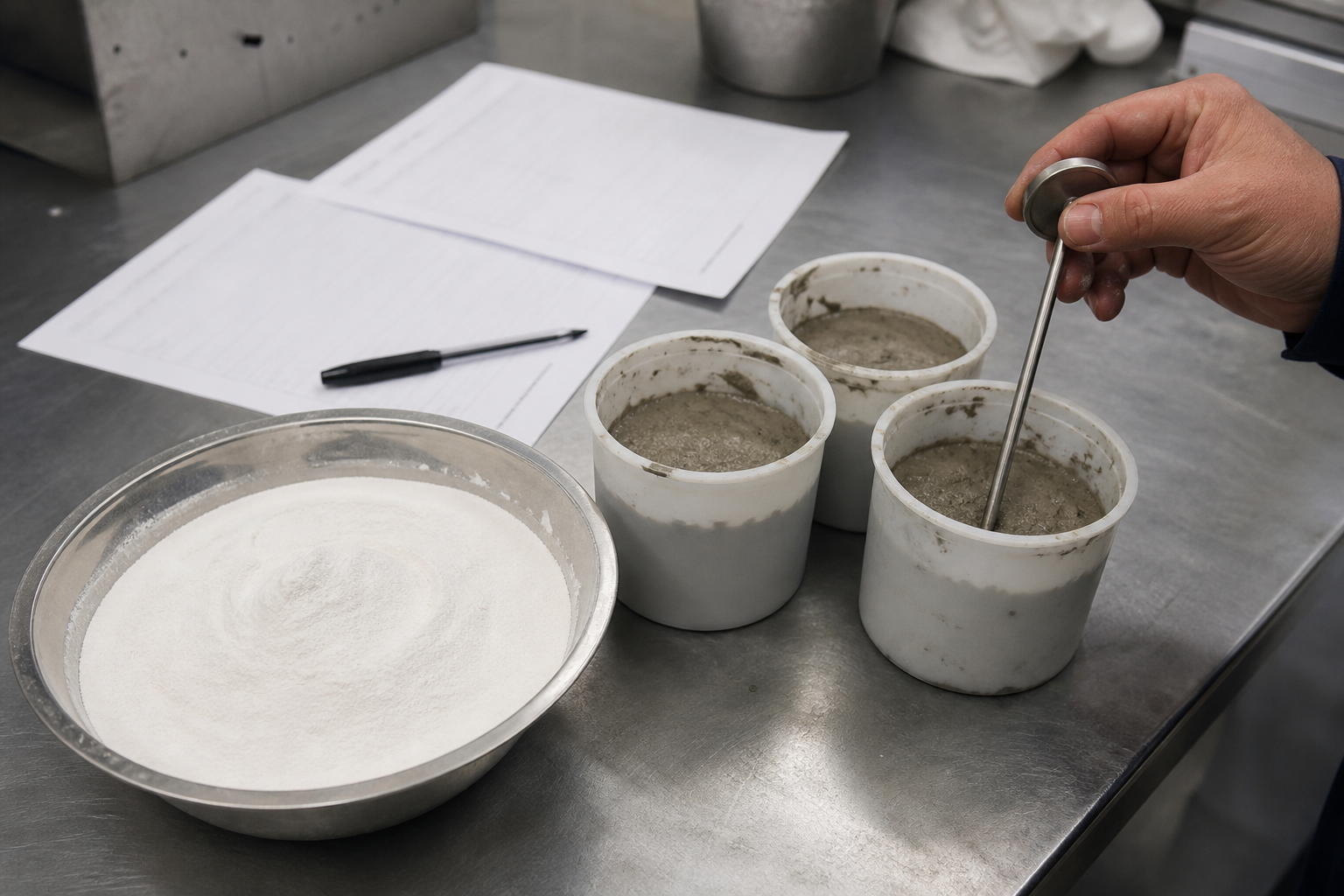
Problem. Buyers sometimes treat the air-content result as if it were printed permanently into the HPMC powder. Yet the measured value can move when the mortar recipe, consistency, mixing history, material temperature, or delay before measurement changes, even when the HPMC sample itself has not changed.
Agitation / Answer: HPMC can influence bubble formation and stabilization, but mortar air content is a system response rather than a single-product constant. We should compare samples only after controlling formulation, water demand, mixing energy, consistency, temperature, and resting history, then interpret air together with density and application behavior.
Solution. We begin by mapping every variable that can create or remove air. Binder chemistry, mineral additions, sand grading, other admixtures, and the cleanliness of water and equipment can alter wetting, foam stability, and bubble release. HPMC changes viscosity and water retention, so a sample may help bubbles survive; however, the same apparent effect can arise because one batch is wetter, stiffer, warmer, cooler, or mixed differently.
Consistency deserves special attention. If operators add water until the mortar “looks right,” each HPMC grade may receive a different water level. We then compare different mortar states, not just different polymers. The waiting period also matters because hydration, dissolution, structural build-up, and bubble migration continue after mixing. Testing one batch immediately and another after an informal pause creates false separation.
We therefore prepare a variable map before opening samples. It records the formulation version, ingredient lots, conditioning state, water basis, mixing sequence, mixer identity, observation points, and test order. We also decide whether the study asks about performance at fixed water or at matched application consistency; these are different questions and should be run as separate protocols rather than blended.
For foundational context, buyers can review the key properties of construction HPMC and how viscosity affects HPMC in cement-based systems. The practical principle is simple: we do not label a sample “high air” until repeat testing shows that the difference survives controlled conditions.
How Do We Lock the Formulation Before Comparing Samples?
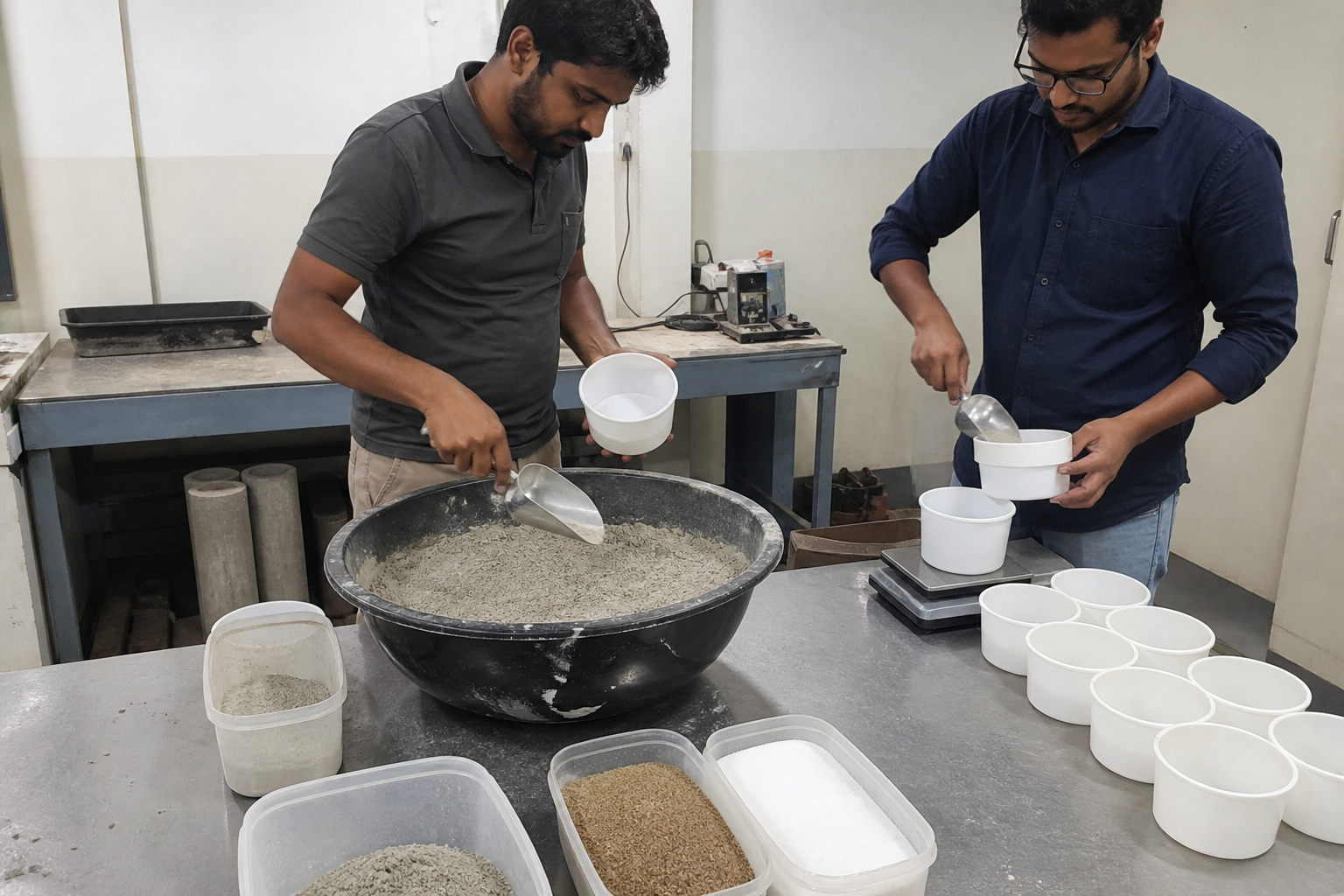
Problem. Small formulation differences can overwhelm the HPMC signal. Separate hand-weighed cement and sand portions, changing aggregate moisture, inconsistent water-to-binder ratio, or a different HPMC addition point may create unequal batches before the mixer starts, making a fair sample ranking impossible.
Agitation / Answer: We should freeze the water-to-binder ratio, sand grading, cementitious materials, additive lots, and HPMC addition sequence. Preparing one homogeneous master dry blend for all test portions reduces weighing and segregation bias, while coded sample substitution keeps the comparison focused on the candidate HPMC grades.
Solution. We issue one controlled formulation sheet and do not alter it during the fixed-water comparison. The sheet identifies each cementitious component and lot, the defined sand fractions, the water basis, all co-additives, and the exact point at which HPMC enters. Sand moisture must be handled consistently because unnoticed water carried by aggregate changes both effective water content and mortar volume.
A common master blend is often the cleanest way to reduce batch-to-batch noise. We homogenize the non-HPMC dry ingredients, divide the blend using a documented procedure, and then add coded HPMC samples to equivalent portions. If HPMC must be preblended for dispersion, every candidate receives the same carrier, preblend method, and addition sequence. The powder should be free-flowing white or off-white ultrafine material; visible foreign matter, caking, or handling damage is recorded before testing rather than silently screened out.
We also separate a fixed-water test from any later matched-consistency study. In the first, the water-to-binder ratio remains unchanged so that sample effects on air, density, and flow can be compared directly. In the second, any water adjustment follows a written rule and is reported as an outcome, not hidden as an operator correction.
Coding helps reduce expectation bias, especially when a familiar incumbent and a lower-priced candidate are tested together. Batch records should connect each code to supplier lot, package condition, and sampling date without revealing identity to the operator during measurement. Buyers building the broader raw-material plan can consult the tile-adhesive plant raw-material guide and the HPMC grade-selection guide.
How Do Mixing and Resting Procedures Distort the Result?
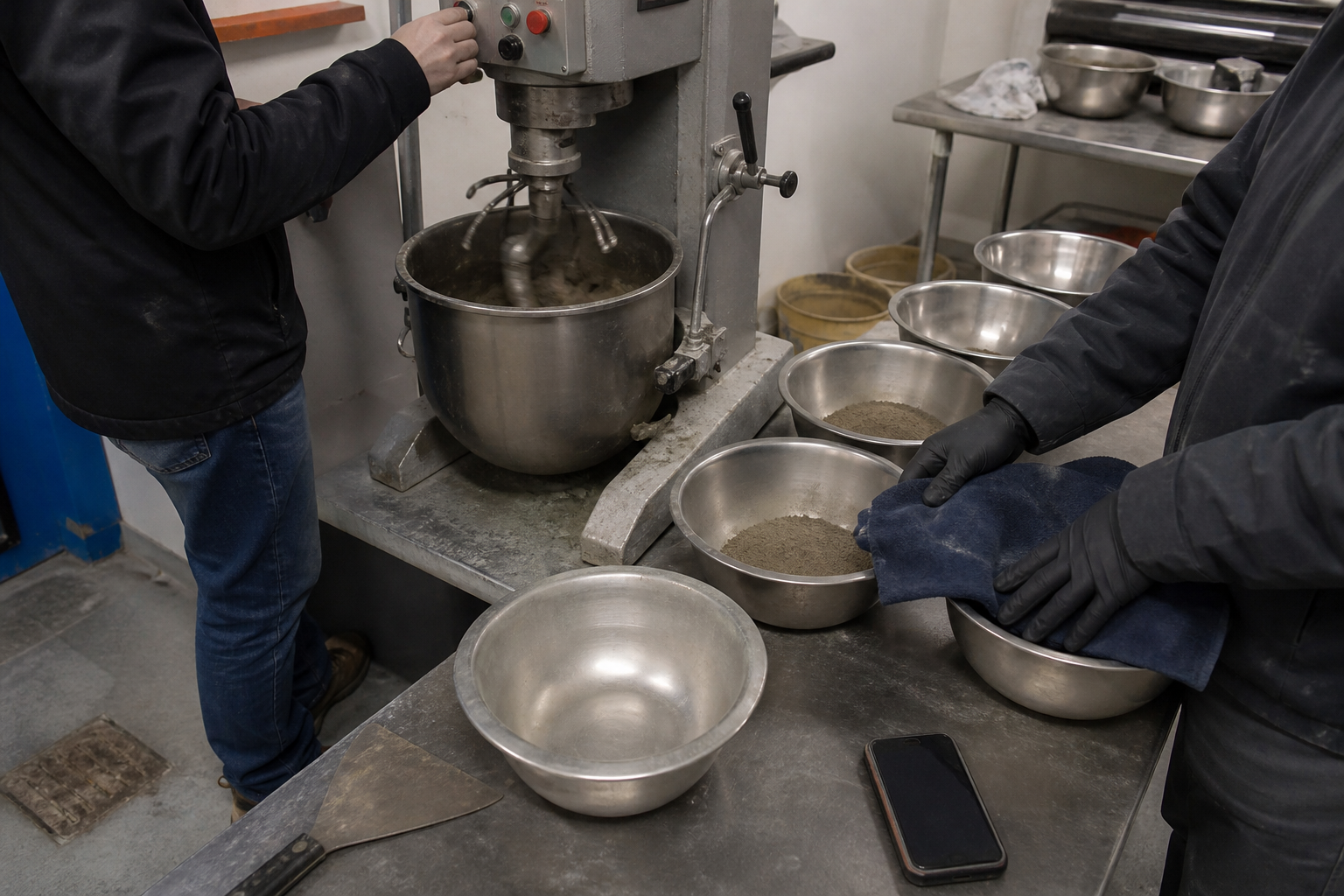
Problem. A different mixer, speed setting, mixing duration, scraping pattern, or pause can change how much air enters and escapes. When technicians use personal habits instead of one written sequence, an apparent product difference may actually be operator or equipment variation.
Agitation / Answer: We must standardize the mixer, bowl and paddle condition, speed stages, timing, wall scraping, restart sequence, and resting interval for every batch. ASTM C305 offers a recognized mechanical-mixing framework for hydraulic cement pastes and plastic mortars, but our exact internal method still needs documented repeatability.
Solution. We assign one mixer and one matched set of accessories for the comparison. Before the series begins, we inspect the bowl and paddle, define their condition, and confirm that the equipment operates consistently. Changing mixer geometry between samples changes circulation and air incorporation, so nominally similar equipment is not automatically interchangeable.
The work instruction should describe the complete sequence from water charging through final discharge. It identifies ingredient order, speed stages, elapsed mixing periods, when the operator stops to scrape the wall and bottom, how material is returned to the active zone, and whether a restart follows. ASTM C305 covers mechanical mixing of hydraulic cement pastes and mortars of plastic consistency and is intended for hydraulic-cement testing.[2] It is a useful procedural anchor, not permission to improvise around an HPMC-modified formulation.
Resting must also be controlled. We define when the clock starts, whether the vessel is covered, what happens during the pause, and the exact order of subsequent measurements. Air content, density, and flow should follow the same schedule for every coded batch. If the intended application includes a remix after standing, we evaluate that behavior in a separate application-relevant sequence rather than inserting it into only some laboratory batches.
Operator training is part of method control. A dry run with a non-evaluation batch can expose ambiguous scraping or transfer steps. During the comparison, deviations are recorded immediately; a compromised batch is not quietly accepted because its result looks plausible. For related dispersion diagnostics, see what makes HPMC form lumps during dry mixing. Standardized technique protects us from mistaking handling differences for supplier differences.
How Should We Measure and Interpret Fresh-Mortar Air Content?
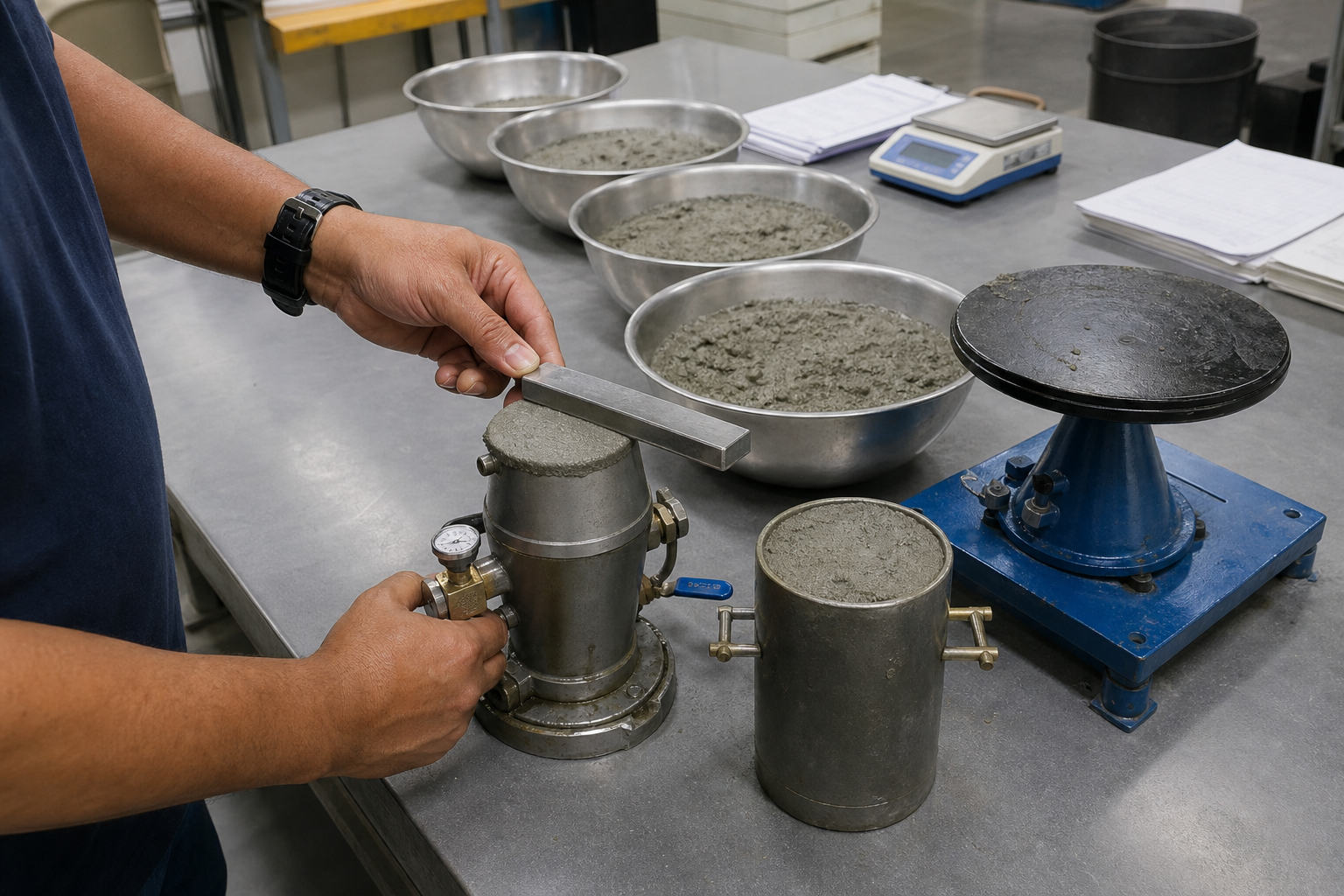
Problem. Even a carefully mixed batch can be misjudged if filling, consolidation, strike-off, vessel condition, or calculation differs. A single air number also says little about whether changed consistency or density caused the result, or whether the mortar remains usable in the target application.
Agitation / Answer: We should use one documented fresh-mortar air-content method and consistent specimen handling, then review air alongside fresh density, flow, and observed workability. ASTM C185 supplies a standardized framework for hydraulic cement mortar, but it is not an HPMC-specific acceptance standard and cannot replace formulation-specific limits.
Solution. We select a method appropriate to the mortar and document the equipment, filling sequence, consolidation, strike-off, vessel checks, timing, calculation, and repeat criteria. ASTM C185 covers determination of air content in hydraulic cement mortar under specified conditions. Its stated purpose is to assess whether a hydraulic cement meets applicable air-entraining or non-air-entraining specification requirements, and ASTM itself notes that air is influenced by factors beyond cement air-entraining potential.[1]
That scope creates an important purchasing limitation: ASTM C185 offers a disciplined air-content framework for hydraulic cement mortar; it does not define a universal acceptance limit for an HPMC grade, prove field performance, or serve as a product-specific HPMC release specification. We must validate that the chosen procedure suits our modified mortar and write internal decision limits around the actual formulation and application.
Fresh density provides a useful cross-check because entrained air changes the relationship between mass and volume. Flow and practical workability observations reveal whether two air results were obtained at comparable mortar states. ASTM C1437 covers determination of hydraulic cement mortar flow and notes that flow is commonly used where standard tests require water content that provides a specified flow level.[3] We can use that framework where applicable while avoiding the claim that flow alone predicts installation success.
Results belong in a comparison matrix, not a winner-takes-all column. We review replicate behavior, obvious outliers with documented causes, density, flow, visual bubble stability, spreading, pickup, sag tendency, and finishing feel relevant to the product. Dry-mortar quality-control testing guidance can help buyers place these observations within a broader control plan.
How Do We Convert Laboratory Evidence into a Bulk-Order Decision?
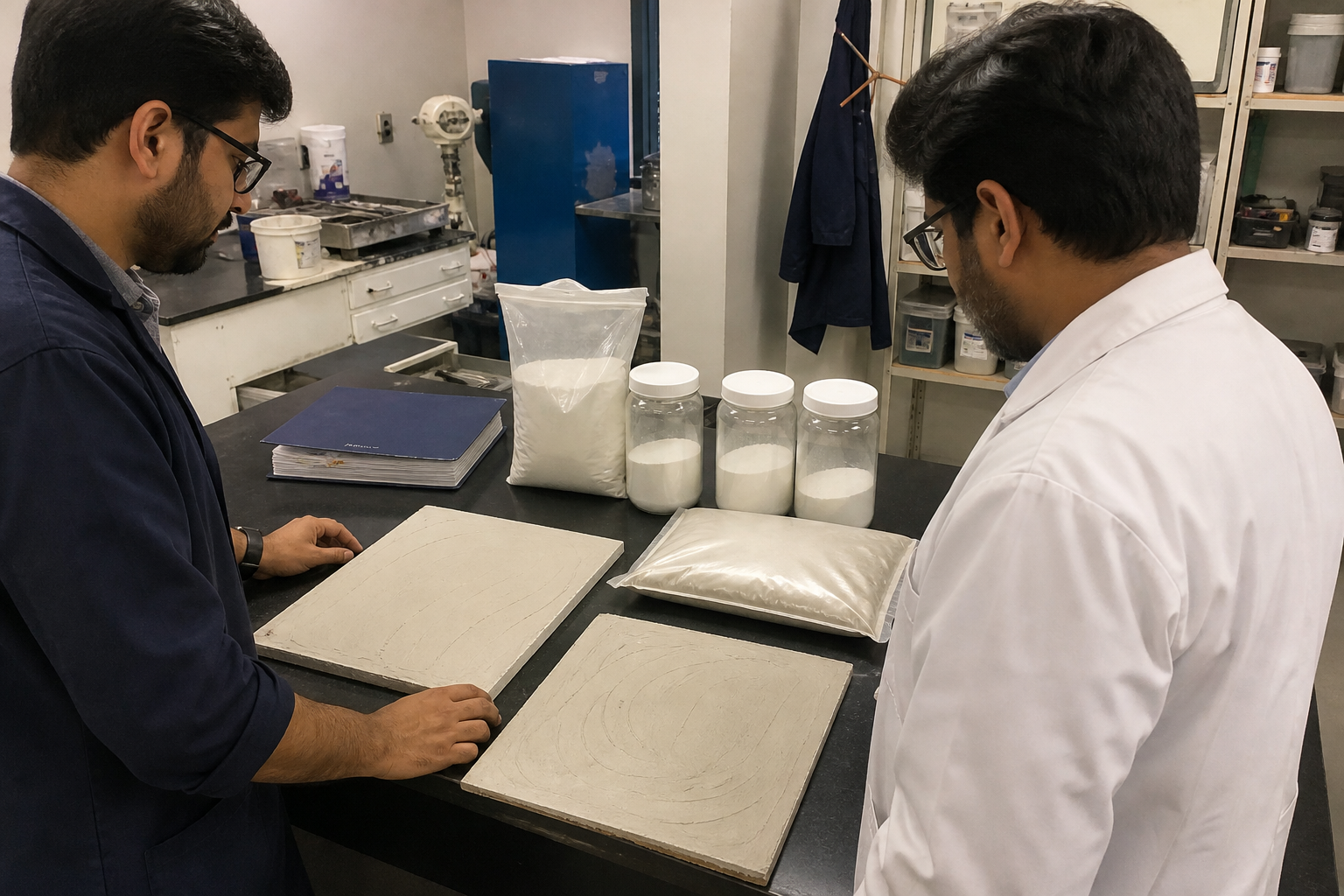
Problem. A candidate can look stable in small bowls yet fail during actual spreading, pumping, troweling, or bonding. Approving a bulk purchase from one laboratory number leaves buyers exposed to scale-up effects, lot variation, undocumented supplier changes, and disputes without retained comparison material.
Agitation / Answer: We qualify HPMC through staged evidence: controlled laboratory screening, real application trials, retained samples, repeat testing, and a supplier change-control agreement. The purchase decision should combine air content, density, workability, application results, lot traceability, and supply controls rather than reward the lowest isolated test value.
Solution. We first use the standardized laboratory screen to remove candidates that cannot produce repeatable behavior. Shortlisted grades then enter an application trial using the intended mortar, substrate, tools, layer conditions, and operating sequence. The trial records mixing response, spreading or pumping behavior, trowel feel, sag or slump tendency, open handling behavior, finish, and the relevant hardened or bond checks specified by the buyer. We do not invent a universal pass value; the product specification and market requirement define acceptance.
Next, we repeat the comparison with independently prepared batches and, where practical, another supplied lot. A retained portion of every HPMC sample and relevant dry blend is sealed, labeled, and stored under defined conditions. Retains allow us to investigate later disagreements using the same reference material instead of relying on memory or unmatched replacement samples.
Supplier qualification completes the technical decision. We request product identification, lot traceability, agreed certificate data, sampling practice, complaint handling, and written notification before changes to raw materials, process, production site, specification, or grade identity. A controlled trial order can bridge laboratory work and routine production. Incoming checks should use the agreed method and compare the shipment with the approved reference rather than with an unrelated fresh sample.
Our procurement record should explain why a candidate passed, what evidence remains open, and who can authorize deviations. For supporting workflows, see how to test cellulose ether before bulk purchase, how to choose a reliable HPMC supplier, and which export-market certifications HPMC manufacturers should provide. This lab-to-production verification turns sample comparison into defensible supplier qualification.
FAQ 1: Does higher mortar air content always mean the HPMC sample is worse?
No. The answer depends on the mortar design and application. We assess air with density, flow, workability, application behavior, and required hardened performance. A higher or lower isolated result is not automatically a quality verdict.
FAQ 2: Can we compare HPMC samples by adjusting water until they feel the same?
We can run a matched-consistency study, but we keep it separate from the fixed-water comparison. Every adjustment needs a written rule and a recorded water demand; otherwise, we conceal an important performance difference.
FAQ 3: Is ASTM C185 an HPMC acceptance standard?
No. ASTM C185 is a test method for air content of hydraulic cement mortar under its specified conditions and is directed toward hydraulic cement requirements. It offers a standardized framework, not a universal HPMC specification or a substitute for application validation.[1]
FAQ 4: Why record fresh density when we already measure air content?
Density provides an independent view of the fresh mortar’s mass-to-volume condition and can flag inconsistent filling, water, or air behavior. We use it as a cross-check, not as a duplicate air measurement.
FAQ 5: What should we retain after approving a sample?
We retain a traceable HPMC portion, relevant blend or raw-material references where practical, test records, application observations, supplier lot information, and the approved protocol. These items support incoming verification and future investigations.
CTA — Build a reproducible HPMC approval plan. Send us your target mortar type, current formulation constraints, application method, and existing test workflow. We can discuss a staged sample-comparison and supplier-qualification plan before your bulk-order decision.
References
- ASTM International, ASTM C185-20, Standard Test Method for Air Content of Hydraulic Cement Mortar. Scope and significance confirm its hydraulic-cement-mortar purpose and its limits.
- ASTM International, ASTM C305-20, Standard Practice for Mechanical Mixing of Hydraulic Cement Pastes and Mortars of Plastic Consistency.
- ASTM International, ASTM C1437-20, Standard Test Method for Flow of Hydraulic Cement Mortar.