HPMC in gypsum plaster often gets blamed when cracks appear, but the real problem is usually more complicated. If you change the cellulose ether too quickly, you may make workability worse and still see cracking. The better solution is to diagnose the crack pattern, formulation, substrate, thickness, and drying conditions first.
Gypsum plaster cracks because of shrinkage stress, fast water loss, poor substrate preparation, unsuitable application thickness, formulation imbalance, or mismatched HPMC performance.1 HPMC can improve water retention and workability, but it cannot fix every cracking cause alone.2 The safest approach is to diagnose the cracking source before changing HPMC grade or dosage.
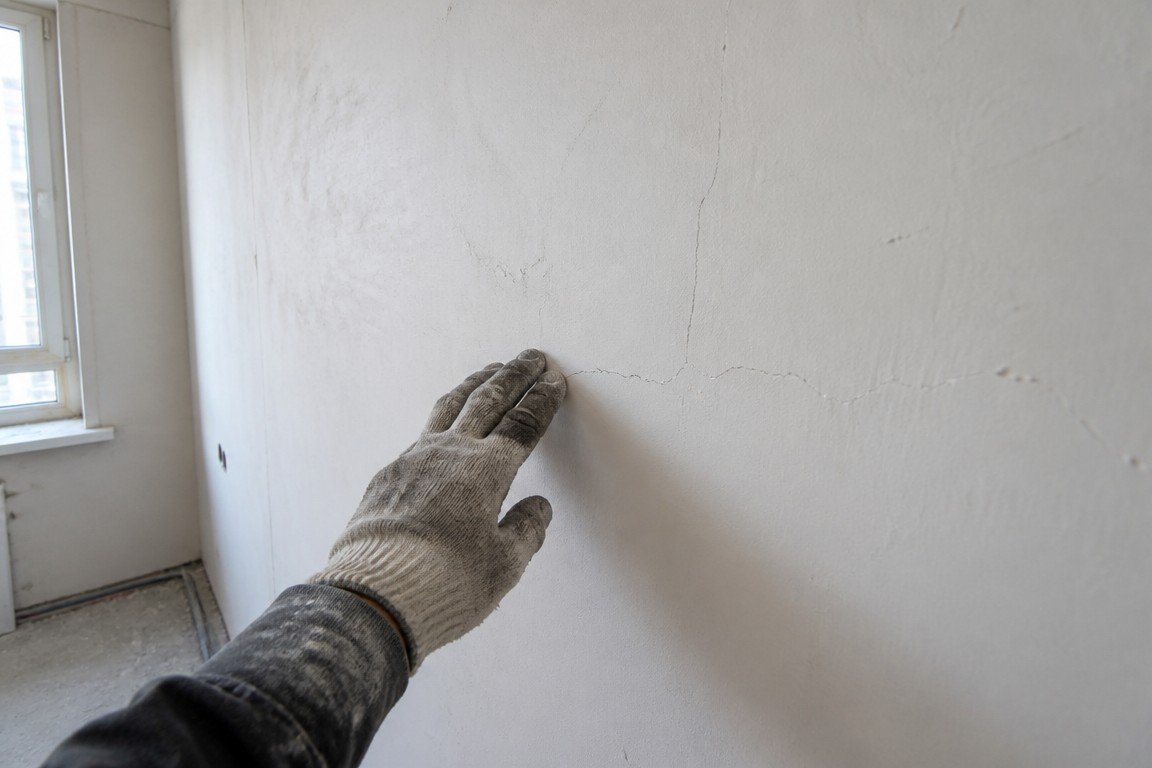
In my work with gypsum plaster and dry-mix customers, the most useful question is not “Which HPMC should I use?” It is: when did the cracks appear, what do they look like, and where are they concentrated? That answer usually points us toward the right troubleshooting path.
How Should You Diagnose Cracks Before Changing HPMC in Gypsum Plaster?
Cracks create pressure because they look like a product failure, and the first reaction is often to increase HPMC or switch to a higher viscosity grade. That can waste time. If the crack type is misunderstood, the same defect may return even after several formulation changes.
The first step is to document the crack pattern before changing HPMC in gypsum plaster. Record when the cracks appeared, their shape, depth, location, substrate type, plaster thickness, ambient conditions, and curing history. This separates formulation-related cracking from substrate, application, and drying-related problems.

Start With Three Diagnostic Questions
When a customer sends me a cracking complaint, I usually ask three simple questions first:
-
When did the cracks appear?
During setting, within a few hours, after one day, or after several days? -
What do the cracks look like?
Hairline cracks, map cracks, long straight cracks, corner cracks, hollow cracks, or deep structural cracks? -
Where are they concentrated?
Around corners, over concrete, near joints, on high-absorption blocks, in thick patches, or across the whole wall?
These questions sound basic, but they prevent a common mistake: treating all cracks as “low water retention” problems.
Common Crack Patterns and Likely Investigation Direction
| Crack observation | Possible first investigation | HPMC role to review |
|---|---|---|
| Fine map cracks over a wide surface | Fast drying, high absorption, thin coat, ventilation | Water retention and open time |
| Cracks only on concrete or AAC blocks | Substrate absorption or surface treatment | Water retention may help, but primer/wetting matters |
| Cracks at corners or joints | Movement, stress concentration, mesh use | HPMC is not the main solution |
| Cracks in thick areas | Layer thickness, setting heat, shrinkage stress | Workability and sag control may matter |
| Cracks after aggressive ventilation | Drying rate and site conditions | HPMC cannot fully overcome bad curing |
| Random cracks after formula change | Gypsum source, filler, additives, water demand | HPMC compatibility should be tested |
Why Timing Matters
Cracks that appear very early may indicate rapid water loss, poor wetting, or application problems. Cracks that appear after drying may relate more to shrinkage stress, over-thick application, air movement, or formulation imbalance. Cracks that follow joints or corners may be linked to movement or stress concentration rather than HPMC performance.3
I once followed up with a customer who had changed HPMC twice because the plaster cracked near window corners. After reviewing photos, we saw the cracks were concentrated around stress points, not across the full wall. The improvement came after they changed application practice and reinforcement details. I would not describe that as an HPMC success case. It was a diagnosis success case.
What Buyers Should Ask Suppliers to Review
A gypsum plaster manufacturer should send the supplier more than one photo. A useful troubleshooting package includes:
- Gypsum type and source
- Full formulation with additive dosages
- HPMC grade, viscosity reference, and substitution type if available
- Mixing water ratio
- Application thickness
- Substrate type and pretreatment
- Temperature, humidity, and ventilation
- Crack photos at different distances
- Time between application and visible cracking
- Any recent raw material change
A cracking complaint without application data is only half a complaint. It tells us what happened, but not why it happened.
For procurement teams and distributors, this matters because a quick grade replacement may create new problems. A higher viscosity HPMC may improve sag resistance in one system but reduce ease of spreading in another. A stronger water-retention profile may help on absorbent substrates, but it may also change setting feel or finishing behavior. That is why I prefer a controlled troubleshooting sequence instead of a fast sales answer.
What Does HPMC in Gypsum Plaster Actually Control?
Many buyers expect HPMC to “stop cracks,” but that expectation is too broad. If HPMC is treated as a magic additive, formulation teams may overlook gypsum quality, fillers, retarders, substrate absorption, and drying conditions. That creates repeated complaints and unstable production decisions.
HPMC in gypsum plaster mainly influences water retention, viscosity, workability, consistency, open time, and application feel.4 These properties can reduce some cracking risks linked to rapid water loss or poor workability, but HPMC does not replace proper formulation design, substrate preparation, thickness control, or drying management.
HPMC Is One Variable in a Full Gypsum System
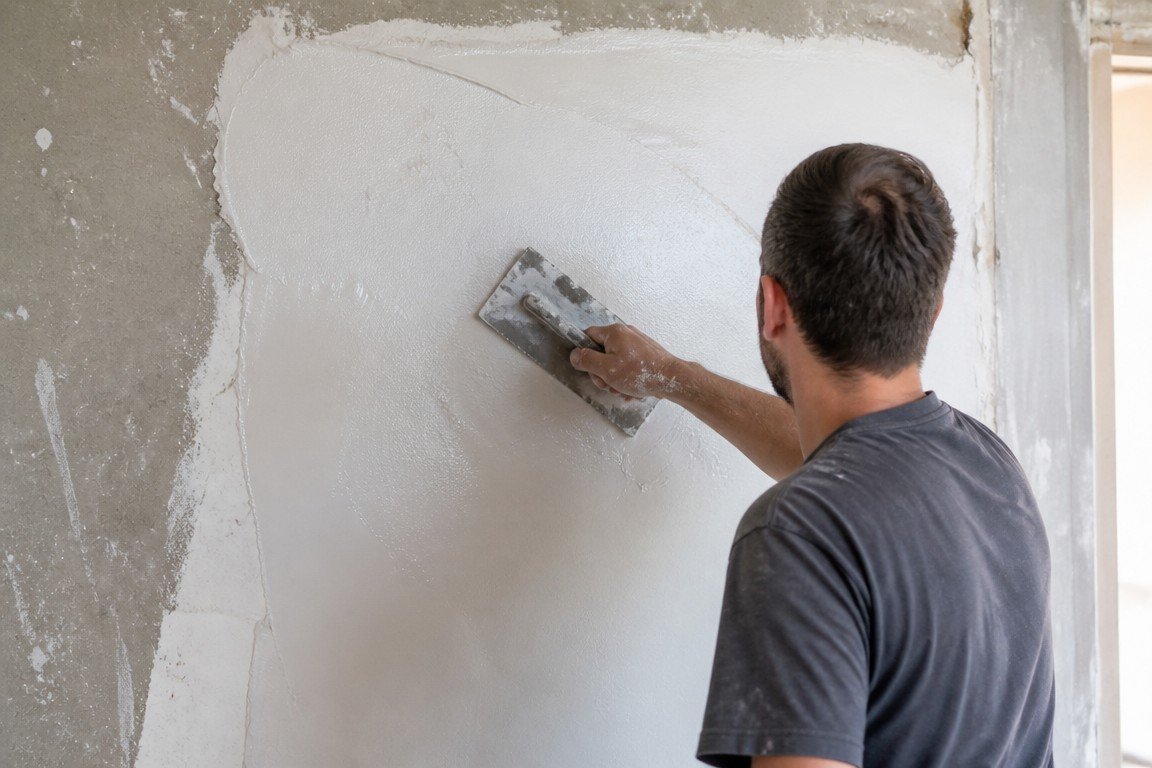
Hydroxypropyl Methylcellulose, or HPMC, is used in gypsum plaster because it helps the wet mortar hold water and maintain workable consistency. In practical terms, a suitable HPMC grade can help plaster spread smoothly, stay workable for the expected time, and reduce fast water loss into the substrate.
However, gypsum plaster is a system. HPMC interacts with:5
- Gypsum powder quality and setting behavior
- Fillers and particle size distribution
- Retarders and accelerators
- Air-entraining agents
- Starch ether or other rheology modifiers
- Water demand
- Application thickness
- Substrate absorption
- Ambient drying conditions
If one part changes, the HPMC performance may feel different even if the HPMC itself has not changed.
Key HPMC Properties Buyers Usually Compare
| HPMC property | Why it matters in gypsum plaster | Buyer caution |
|---|---|---|
| Water retention | Helps plaster keep water during setting and early drying | Higher water retention is not always better in every system |
| Viscosity | Affects consistency, sag resistance, and body | Higher viscosity can reduce smoothness or change pumping feel |
| Workability | Influences spreading, troweling, and finishing | Must be tested by applicators, not only in a beaker |
| Dissolution behavior | Affects lump formation and mixing stability | Mixing equipment and sequence matter |
| Batch consistency | Supports stable factory production | Buyers should verify COA and retain samples |
| Compatibility | Affects interaction with gypsum and additives | Must be validated with the full formulation |
Why Higher Viscosity Does Not Always Mean Better Crack Resistance
A common purchasing mistake is to ask for the highest viscosity HPMC available because cracking has appeared. That approach can backfire.
Higher viscosity may give more body to the plaster. It may improve anti-sag performance in some applications. But it can also make the plaster feel heavy, sticky, or harder to finish. In some formulas, it may require more water for the same application feel. More water can increase drying shrinkage risk if the system is not balanced.6
So the real question is not:
“Which HPMC has the highest viscosity?”
The better question is:
“Which HPMC gives the right water retention, consistency, open time, and finishing behavior in this specific gypsum plaster formula?”
What I Usually Check in Supplier Selection
As an HPMC manufacturer, we at Shijiazhuang Kehao Chemical Co., Ltd. often review customer requirements from the viewpoint of matching grade to system, not only sending a product name. Our production facility in Hebei uses automated production lines, and we support customers with samples and technical communication. Still, every buyer should verify performance in their own formulation before bulk purchasing.
For gypsum plaster, I suggest buyers compare suppliers based on:
-
Stable batch quality
Request technical data sheets, COA, and retained sample support. -
Relevant application experience
Ask whether the supplier has worked with gypsum plaster, not only tile adhesive or wall putty. -
Technical communication
A good supplier should ask about your formulation and application conditions before recommending a grade. -
Sample testing support
Free samples are useful only if the test plan is controlled. -
Documentation
Certifications such as REACH testing should be treated as documents to verify, especially for regulated markets.
In my experience, many cracking discussions improve when the buyer stops looking for a universal grade and starts comparing HPMC under realistic production and application conditions.
When Should You Adjust HPMC in Gypsum Plaster Instead of Changing Site Conditions?
It is frustrating when plaster cracks even after the formula looks correct. In that moment, it is easy to blame the construction site or blame the additive. Both reactions can be wrong. The key is to decide which variable has the strongest evidence.
You should consider adjusting HPMC in gypsum plaster when cracks correlate with poor water retention, short open time, weak workability, or inconsistent application behavior under controlled substrate and drying conditions. If cracks appear only under high absorption, excessive ventilation, poor pretreatment, or abnormal thickness, site correction should come first.
A Practical Troubleshooting Order
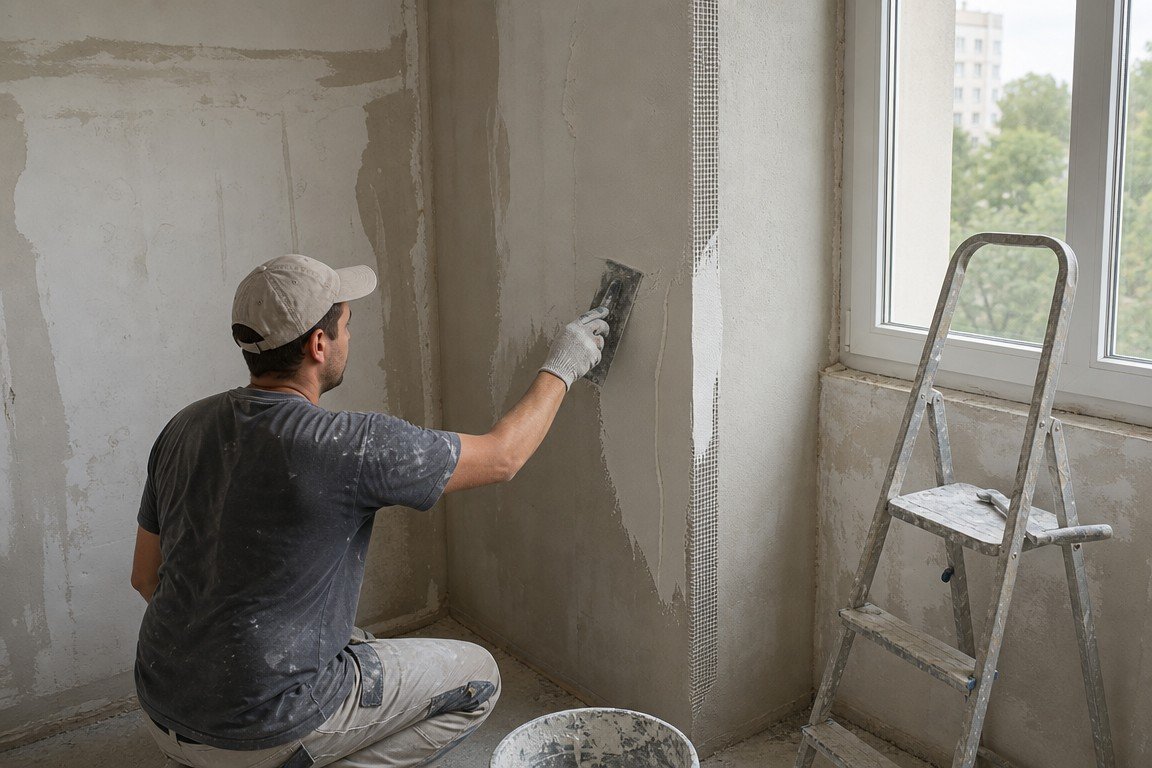
I recommend this sequence because it reduces guesswork:
-
Document the crack pattern
- Time of appearance
- Shape and depth
- Location and concentration
- Photos from close and wide angles
-
Review the gypsum system
- Gypsum source
- Setting time
- Water demand
- Filler quality
- Additive interactions
-
Review the full formulation
- HPMC grade and dosage
- Retarder dosage
- Starch ether or rheology additive
- Air entrainment
- Water ratio
-
Check substrate conditions
- Absorption rate
- Dust or contamination
- Primer or pre-wetting
- Surface temperature
-
Check application conditions
- Plaster thickness
- Number of layers
- Mixing time
- Resting time after mixing
- Finishing timing
-
Check drying environment
- Temperature
- Relative humidity
- Wind or ventilation
- Direct sunlight
- Heating equipment
-
Then compare HPMC grades or dosages
- Use the same raw materials
- Use the same water ratio where possible
- Apply on the same substrate
- Record workability and cracking together
When Site Conditions Are the Bigger Problem
If plaster cracks mainly on high-absorption substrates, the first correction may be substrate preparation. AAC blocks, old masonry, or very dry cement surfaces can pull water rapidly from the plaster.7 In that case, HPMC water retention may help, but it may not be enough if the substrate is not controlled.
Common site-related problems include:
- Very dry or dusty substrate8
- No primer where primer is needed
- Uneven substrate absorption
- Excessive thickness in one pass
- Direct sun on fresh plaster
- Strong wind or forced ventilation
- Very low humidity
- Poor mixing or inconsistent water addition
In these situations, increasing HPMC may hide part of the problem but not remove the cause. The plaster still faces stress from rapid water loss or uneven drying.
When HPMC Deserves Closer Review
HPMC should move higher on the investigation list when several signs appear together:
- The plaster loses workability too fast.
- The surface dries before proper finishing.
- The same cracking appears on multiple controlled substrates.
- The formula changed only in HPMC grade or batch.
- The plaster feels thin, unstable, or difficult to spread.
- Water retention test results are lower than expected.
- Applicators report inconsistent feel between batches.
In customer follow-ups, I have seen improvement after changing HPMC grade under comparable formulation conditions. But I always describe those cases carefully. They are customer-case observations, not controlled universal proof. In other cases, improvement followed after HPMC was adjusted together with retarder level, water ratio, or substrate treatment. When several variables change, no one should attribute the result to HPMC alone.
A Buyer-Friendly Decision Table
| Evidence found | First action | Should HPMC be changed immediately? |
|---|---|---|
| Cracks only near windows, joints, or corners | Review stress points and reinforcement | Usually no |
| Cracks only on very absorbent blocks | Improve substrate preparation | Not first |
| Plaster dries too fast on all test boards | Review water retention and HPMC | Possibly yes |
| Workability is poor after HPMC batch change | Compare retained samples and COA | Yes, investigate |
| Cracks appear only in thick patches | Control thickness and layering | Not first |
| Formula change includes multiple additives | Run controlled comparison | Not alone |
| Cracks worsen after increasing viscosity | Review water demand and finishing | Yes, reconsider selection |
This decision structure protects manufacturers from unnecessary reformulation. It also protects distributors from promising that one additive can solve every job-site defect.
How Can Manufacturers Test HPMC in Gypsum Plaster Without Chasing False Results?
Testing can create confidence, but poor testing can create false confidence. If every trial changes raw materials, water ratio, substrate, and application method, the result tells you very little. Buyers may then choose the wrong HPMC because the comparison was not controlled.
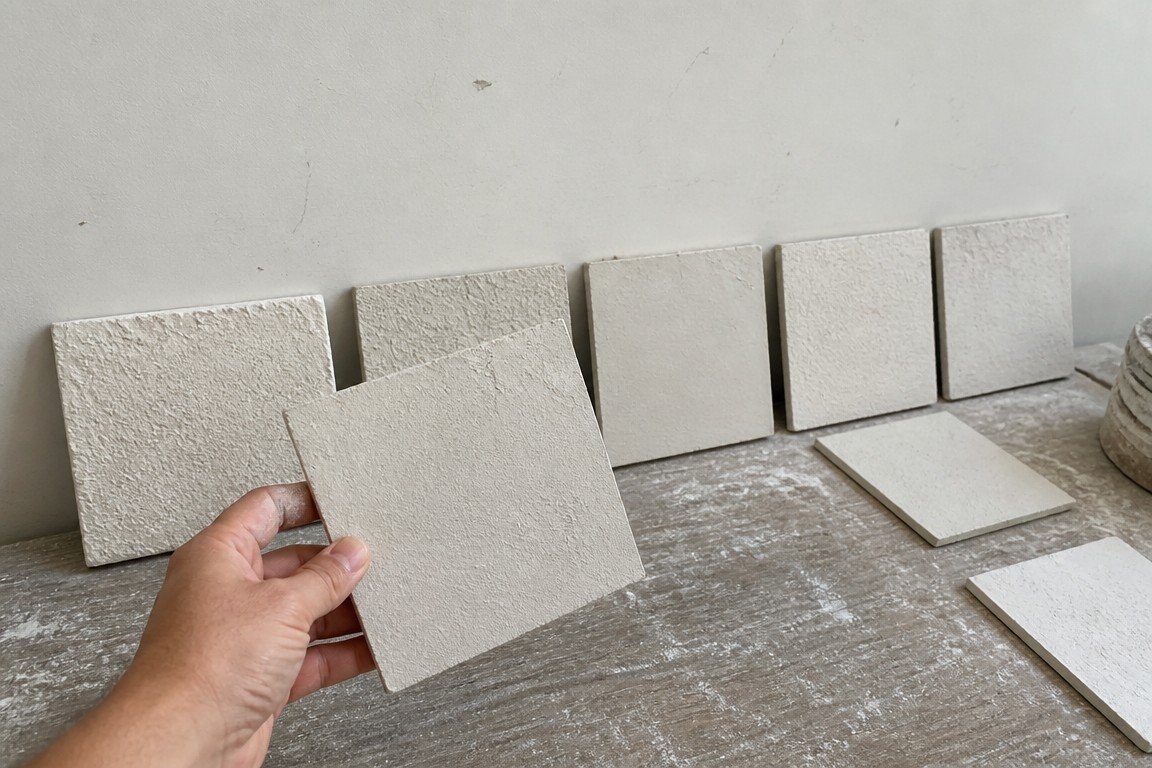
Manufacturers should test HPMC in gypsum plaster by changing one main variable at a time, keeping gypsum, fillers, water ratio, substrate, thickness, mixing method, and drying conditions as consistent as possible.9 Record workability, setting feel, water retention, surface quality, and cracking at fixed time intervals.
Build a Simple Test Matrix
A test matrix does not need to be complicated. It only needs to be consistent. I often suggest that customers test two or three HPMC options under the same conditions before making a purchasing decision.
A basic test matrix may include:
| Test item | Control sample | HPMC Option A | HPMC Option B |
|---|---|---|---|
| Same gypsum batch | Yes | Yes | Yes |
| Same filler batch | Yes | Yes | Yes |
| Same additive package | Yes | Yes | Yes |
| Same water ratio | Yes | Yes | Yes |
| Same mixing time | Yes | Yes | Yes |
| Same substrate board | Yes | Yes | Yes |
| Same plaster thickness | Yes | Yes | Yes |
| Same drying location | Yes | Yes | Yes |
| Crack observation at 2h, 24h, 48h | Yes | Yes | Yes |
The point is not to create a laboratory standard. The point is to avoid changing five things at once.
What to Measure Besides Cracking
Crack observation is important, but it is not the only performance indicator. A plaster that does not crack but becomes difficult to apply may still fail commercially.
A useful trial should record:
- Dry powder appearance
- Mixing behavior
- Lump formation
- Initial consistency
- Trowel feel
- Sag resistance
- Open time
- Surface finishing
- Setting feel
- Water retention
- Crack appearance
- Final surface hardness or powdering tendency
- Applicator feedback
Some properties require qualified testing. If a project has structural, fire-rating, pharmaceutical, or regulated performance requirements, the buyer should use a qualified laboratory or professional evaluator. Supplier guidance helps with selection, but application-specific decisions should be verified.
Do Not Compare Only Viscosity Numbers
HPMC viscosity values can be measured under different methods, temperatures, concentrations, and instruments.10 A number on a TDS is useful, but it should not be the only purchasing criterion.
Buyers should ask:
- What test method was used for viscosity?
- What concentration and temperature were used?
- Is the grade designed for gypsum plaster or another dry-mix product?
- What is the expected water retention profile?
- How does it perform in the customer’s formula?
- Is batch-to-batch consistency supported by COA?
A distributor once asked me for “the strongest HPMC for plaster.” I asked what “strongest” meant. They meant fewer cracks, longer open time, and better trowel feel. Those are three related but different targets. The final recommendation depended on their formula and local application conditions, not on one maximum viscosity number.
How Procurement Teams Should Evaluate Suppliers
For B2B buyers, the goal is not only to pass one sample test. The goal is to secure stable supply.
A practical supplier evaluation should include:
-
Product fit
- The HPMC grade should match gypsum plaster requirements.
- The supplier should explain why the grade is suitable.
-
Manufacturing stability
- Automated production and quality control can support batch consistency.
- Buyers should still verify each shipment with incoming inspection.
-
Technical support
- The supplier should help interpret cracking feedback.
- The supplier should avoid unrealistic claims.
-
Documentation
- COA, TDS, safety documents, and REACH-related documents should be reviewed.
- Certifications should be checked against buyer requirements.
-
Logistics
- Lead time, loading port, packaging, and warehouse support matter.
- For our business, Tianjin is the loading port, and our Iran office and warehouse can support faster local delivery in that region.
At Shijiazhuang Kehao Chemical Co., Ltd., we supply HPMC, MHEC, HEC, RDP/VAE, PVA2488, and HPS for construction materials and other industries. For gypsum plaster customers, I prefer to start with sample testing and technical questions. That approach is slower than sending a quick grade name, but it usually saves time later.
<h3>Related technical guides</h3> <ul> <li><a href="https://khcel.com/dry-mortar-additive-enhancing-performance-with-polymers/">Dry Mortar Additive: Enhancing Performance with Polymers</a></li> <li><a href="https://khcel.com/hpmc/">HPMC</a></li> <li><a href="https://khcel.com/hpmc-workability-optimizing-mortar-performance-consistency/">HPMC Workability: Optimizing Mortar Performance & Consistency</a></li> </ul>
Frequently Asked Questions
Can HPMC completely prevent gypsum plaster cracking?
No. HPMC can improve water retention, viscosity, workability, and open time, but it cannot prevent every crack. Cracking may come from substrate absorption, excessive thickness, poor curing, movement, formulation imbalance, or fast drying. HPMC should be selected as part of a complete gypsum plaster system.
Should I use higher viscosity HPMC if gypsum plaster cracks?
Not automatically. Higher viscosity may improve body or sag resistance, but it can also change spreading, finishing, and water demand. You should first diagnose the crack pattern and test HPMC grades under the same formulation, substrate, thickness, and drying conditions.
What information should I send to an HPMC supplier for cracking troubleshooting?
You should send crack photos, time of appearance, substrate type, plaster thickness, full formulation, HPMC grade and dosage, water ratio, gypsum source, application method, temperature, humidity, and ventilation conditions. This information helps the supplier separate HPMC issues from site and formulation problems.
How do I know if cracks are caused by poor water retention?
Poor water retention is more likely when plaster loses workability quickly, dries too fast on absorbent substrates, becomes hard to finish, or shows fine surface cracking soon after application.11 Still, you should verify by comparing controlled samples and checking substrate preparation and drying conditions.
Can Kehao provide samples for gypsum plaster testing?
Yes. Shijiazhuang Kehao Chemical Co., Ltd. offers sample support for cellulose ether products, including HPMC grades used in dry-mix applications. I recommend sharing your formulation and target performance first so the sample selection matches your gypsum plaster system.
Conclusion
HPMC in gypsum plaster is important, but it is not the only answer to cracking. A good troubleshooting process starts with crack timing, shape, and location. Then it reviews formulation, substrate, application thickness, and drying conditions before changing HPMC grade or dosage. If you manufacture gypsum plaster or distribute cellulose ether, test under controlled conditions and verify supplier documents carefully. If you need help comparing HPMC options for your plaster formula, contact Shijiazhuang Kehao Chemical Co., Ltd. for samples and technical guidance.
"(PDF) Common defects in plaster", https://www.academia.edu/11193893/Common_defects_in_plaster. Research on gypsum-based plasters identifies drying and shrinkage stresses, substrate interaction, mixture composition, and application conditions as factors that can contribute to cracking. Evidence role: general_support; source type: research. Supports: That plaster cracking can be associated with drying and shrinkage stresses, substrate interactions, mix composition, and application conditions.. Scope note: The relative importance of these factors depends on the specific gypsum formulation, substrate, thickness, and environmental exposure. ↩
"The Influence of Hydrated Lime and Cellulose Ether ... - PMC", https://pmc.ncbi.nlm.nih.gov/articles/PMC8509617/. Studies of cellulose ethers in gypsum-based mortars report that HPMC can alter water retention and fresh-state rheological behavior; such effects address only additive-related contributors and do not eliminate cracking caused by substrate movement or unsuitable application conditions. Evidence role: mechanism; source type: paper. Supports: That cellulose ethers such as HPMC modify water retention and fresh-state rheology or workability in gypsum-based mortar systems.. Scope note: Results vary with polymer grade and dosage, gypsum composition, water ratio, and test method. ↩
"Durability of stucco and plaster construction", https://nvlpubs.nist.gov/nistpubs/nbstechnologic/nbstechnologicpaperT70.pdf. Building-envelope guidance identifies corners, openings, joints, and transitions between materials as locations where differential movement and stress concentration can lead to cracking in finishes. Evidence role: mechanism; source type: government. Supports: That openings, corners, joints, and changes in construction can concentrate stresses and are common locations for movement-related cracking.. Scope note: A location pattern can indicate movement-related cracking but does not by itself establish the precise source of movement. ↩
"Water Retention Mechanism of HPMC in Cement Mortar - PMC", https://pmc.ncbi.nlm.nih.gov/articles/PMC7372461/. Experimental studies of cellulose ethers in gypsum mortars show that these polymers influence water retention and rheological properties, which in turn affect consistency, workability, and application behavior. Evidence role: mechanism; source type: paper. Supports: That HPMC and related cellulose ethers influence water retention and rheological properties in gypsum mortar.. Scope note: “Application feel” is partly practitioner-assessed and is not standardized in the same way as laboratory rheology measurements. ↩
"The Influence of Hydrated Lime and Cellulose Ether ... - PMC", https://pmc.ncbi.nlm.nih.gov/articles/PMC8509617/. Research on gypsum-mortar formulations indicates that fresh and hardened performance reflects interactions among the gypsum binder, fillers, water content, chemical admixtures, and exposure conditions rather than the effect of a single additive alone. Evidence role: general_support; source type: research. Supports: That gypsum-mortar performance is determined by interactions among binders, fillers, chemical admixtures, water content, and environmental conditions.. Scope note: The specific interaction effects and their magnitudes must be established for each formulation. ↩
"A Study of the Influence of Cement Addition and Humidity on ...", https://pmc.ncbi.nlm.nih.gov/articles/PMC11122799/. Materials studies report that mixing-water content affects pore formation and drying behavior in gypsum-based and mortar systems, and excessive water can increase susceptibility to drying-related dimensional change. Evidence role: mechanism; source type: paper. Supports: That mixing-water content can affect drying behavior, pore structure, and shrinkage in gypsum-based or mortar materials.. Scope note: The relationship is formulation-specific and should not be interpreted as a fixed increase in cracking for every additional amount of water. ↩
"In-use performance assessment of rendered autoclaved ...", https://www.sciencedirect.com/science/article/abs/pii/S0360132303002865. Guidance for rendering absorbent masonry substrates notes that rapid suction can withdraw water from fresh plaster or render, making substrate conditioning and compatible preparation important. Evidence role: mechanism; source type: institution. Supports: That absorbent masonry substrates can remove water from fresh render or plaster and may require preparation appropriate to the substrate.. Scope note: Required preparation methods differ by substrate type, product system, and local application specification. ↩
"guideline instructions for concrete surface preparation ( ...", https://charlottesville.gov/DocumentCenter/View/7606/Sherwin-Williams-Guideline-Instructions-for-Concrete-Surface-Preparation-Form-G-1-PDF. Construction training guidance generally specifies that plaster substrates should be sound, clean, and free of dust or contamination, with absorption managed before application. Evidence role: general_support; source type: education. Supports: That plaster substrates should be sound, clean, and prepared to manage absorption before application.. Scope note: Surface-preparation requirements should follow the applicable plaster product specification and substrate manufacturer guidance. ↩
"What Is Design of Experiments (DOE)?", https://pe.gatech.edu/blog/industry-trends/what-is-design-of-experiments. Experimental-design guidance emphasizes controlling relevant variables and minimizing confounding when comparing material formulations, so that observed differences can be attributed more reliably to the factor under investigation. Evidence role: general_support; source type: government. Supports: That valid experimental comparisons require controlling relevant variables and accounting for confounding factors.. Scope note: Formal factorial designs may be more informative than one-factor comparisons when interactions among formulation variables are important. ↩
"A Study on the Impact of Hydroxypropyl Methylcellulose ... - PMC", https://pmc.ncbi.nlm.nih.gov/articles/PMC4370968/. Polymer-rheology literature describes solution viscosity as a measurement dependent on defined concentration, temperature, shear conditions, and instrument method; viscosity values are therefore comparable only when their test conditions are specified. Evidence role: definition; source type: paper. Supports: That polymer-solution viscosity is conditional on specified concentration, temperature, shear conditions, and measurement method.. Scope note: Supplier technical data may use different standardized methods, so equivalence must be confirmed from the stated test procedure. ↩
"Water Retention Mechanism of HPMC in Cement Mortar - PMC", https://pmc.ncbi.nlm.nih.gov/articles/PMC7372461/. Research on fresh mortars shows that water-retention capacity influences moisture availability and workability retention, particularly where an absorbent substrate withdraws water from the applied material. Evidence role: mechanism; source type: research. Supports: That water retention influences moisture availability, workability retention, and behavior of fresh mortar on absorbent substrates.. Scope note: These observations are diagnostic indicators rather than conclusive proof of inadequate water retention, because similar symptoms can arise from mixing, setting, or environmental factors. ↩