HPMC vs HEC in tile adhesive can look like a simple choice between two cellulose ethers. However, a same-viscosity replacement can change water demand, open time, slip resistance, and application feel. I reduce that risk by starting with the mortar system, performance targets, current grade, test method, and dosage before I recommend any sample.
For most cement-based tile adhesives, I recommend starting the evaluation with a suitable HPMC grade. HEC can be considered when the base formulation and performance targets justify a trial. Buyers should not treat HPMC and HEC as equal-dose substitutes, even when their viscosity labels appear similar. Controlled comparative testing should determine the final choice.
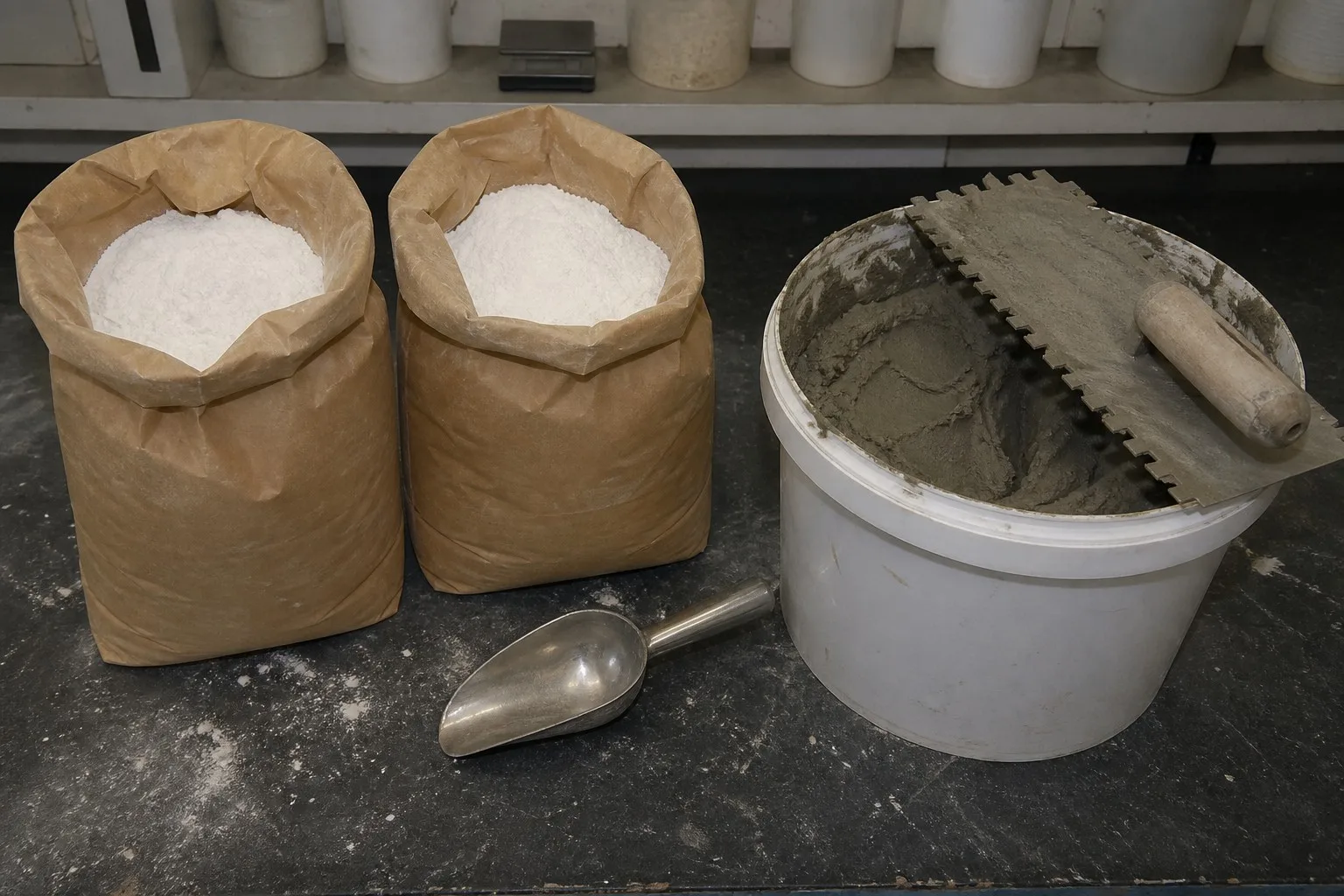
The product name alone cannot predict performance in a complete dry-mix mortar. I look at the cement, fillers, polymer powder, application method, climate, and test standard together. The following comparison explains how I screen the options without confusing initial consistency with verified adhesive performance.
What Is the Difference Between HPMC and HEC in Tile Adhesive?
Manufacturers sometimes compare HPMC and HEC by reading only the viscosity number on two technical data sheets. That shortcut creates uncertainty because the polymers have different substitution chemistry, test conditions, and behavior in a formulated mortar. I first make the comparison conditions clear.
HPMC, or hydroxypropyl methylcellulose, and HEC, or hydroxyethyl cellulose, are nonionic, water-soluble cellulose ethers. Both can modify rheology and water management, but their performance depends on grade design and the full formulation. For cement-based tile adhesive, HPMC is commonly the first candidate, while HEC requires formulation-specific validation.
The Polymer Name Does Not Define the Whole Grade
HPMC contains methyl and hydroxypropyl substitution, while HEC contains hydroxyethyl substitution. That chemical distinction matters, but it does not provide enough information for purchasing decisions. A commercial grade can also differ in:
- Molecular weight distribution
- Degree and uniformity of substitution
- Particle size
- Surface treatment
- Dissolution behavior
- Moisture content
- Viscosity specification range
- Rheological modification
- Batch consistency
I therefore treat “HPMC” and “HEC” as product families rather than single, standardized materials. Two HPMC grades can behave differently from each other. The same principle applies to two HEC grades.
Why Viscosity Numbers Can Mislead Buyers
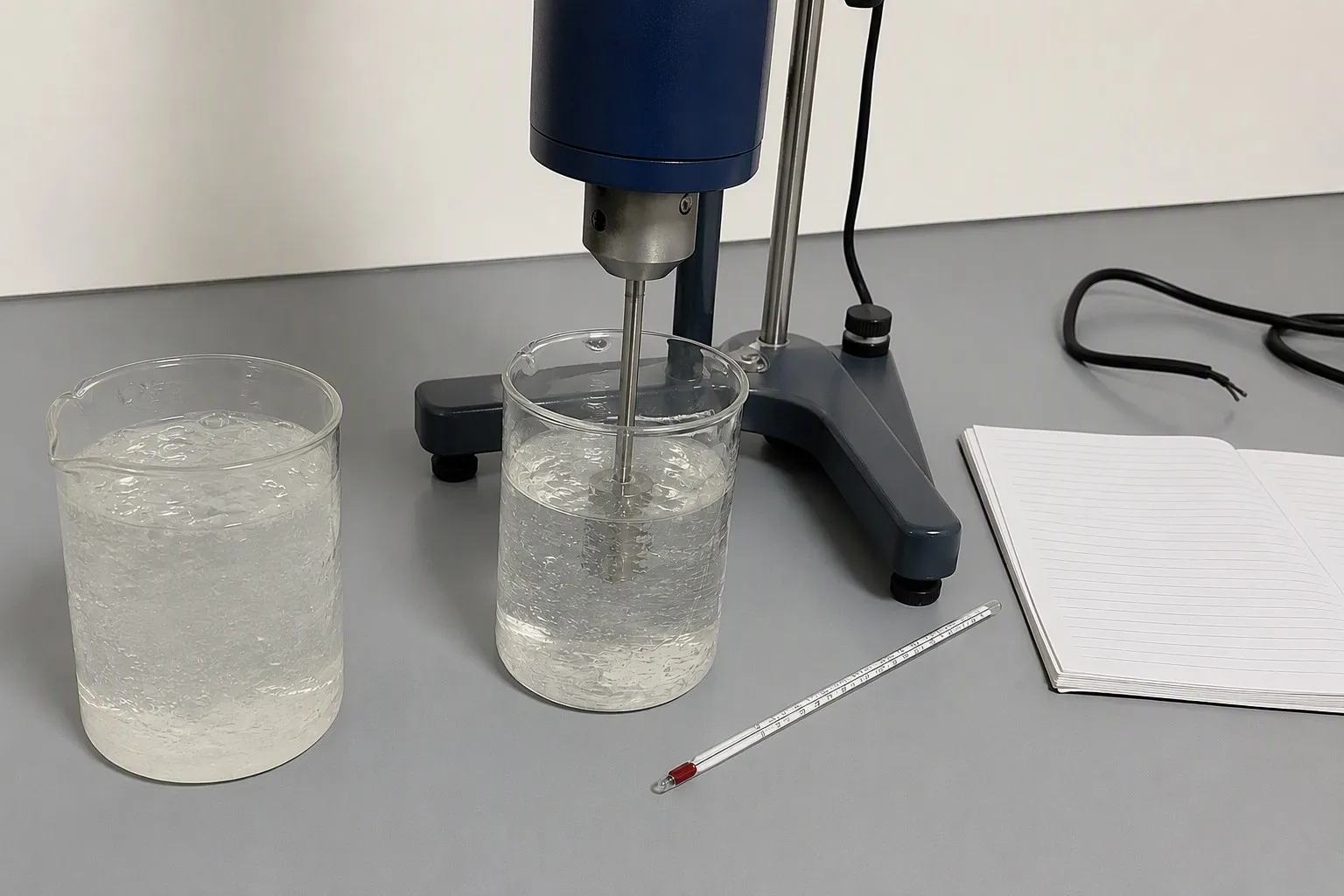
A viscosity value has meaning only when the supplier states the test method and test conditions. Buyers should confirm at least:
- The polymer concentration used in the solution
- The test temperature
- The viscometer type and spindle
- The rotational speed or shear condition
- The solution preparation method
- Whether the value is nominal, typical, or a release specification
For example, a value measured in a 2% aqueous solution cannot automatically be compared with a value measured at a different concentration or temperature. Even two identical numerical results do not prove identical behavior inside a cement-rich, alkaline mortar.1
| Comparison point | HPMC | HEC | Purchasing implication |
|---|---|---|---|
| Main substitution groups | Methyl and hydroxypropyl | Hydroxyethyl | Chemistry may influence solution and mortar behavior |
| Typical selection position | Common starting point for cement-based mortars | Alternative for validated formulations | Buyers should start with system requirements |
| Viscosity label | Method-dependent | Method-dependent | Buyers must compare the same methods |
| Equal-dose substitution | Not established | Not established | A controlled dosage study is necessary |
| Final bond strength | Cannot be inferred from polymer name | Cannot be inferred from polymer name | Buyers need separate adhesive testing |
In supplier conversations, I often hear, “Our current material is 100,000 viscosity. Can your product replace it?” I do not answer that question from the number alone. I ask for the current technical data sheet, viscosity method, dosage, base formula, and observed application behavior. That sequence prevents a false equivalence before the trial begins.
Why Is HPMC Usually the Starting Point for Cement-Based Tile Adhesive?
A new tile adhesive plant may want one simple cellulose ether recommendation. However, an unqualified recommendation can create more risk than value because tile adhesives vary by cement type, aggregate grading, polymer content, and performance class. I use HPMC as a starting point, not as a universal answer.
For many cement-based tile adhesive formulations, a suitable HPMC grade provides a practical starting combination of water retention, workable consistency, open-time support, and slip control.2 Industry familiarity also makes benchmarking easier. However, manufacturers must confirm these functions through trials under their own formula, substrate, mixing, curing, and test conditions.
HPMC Supports Several Formulation Functions
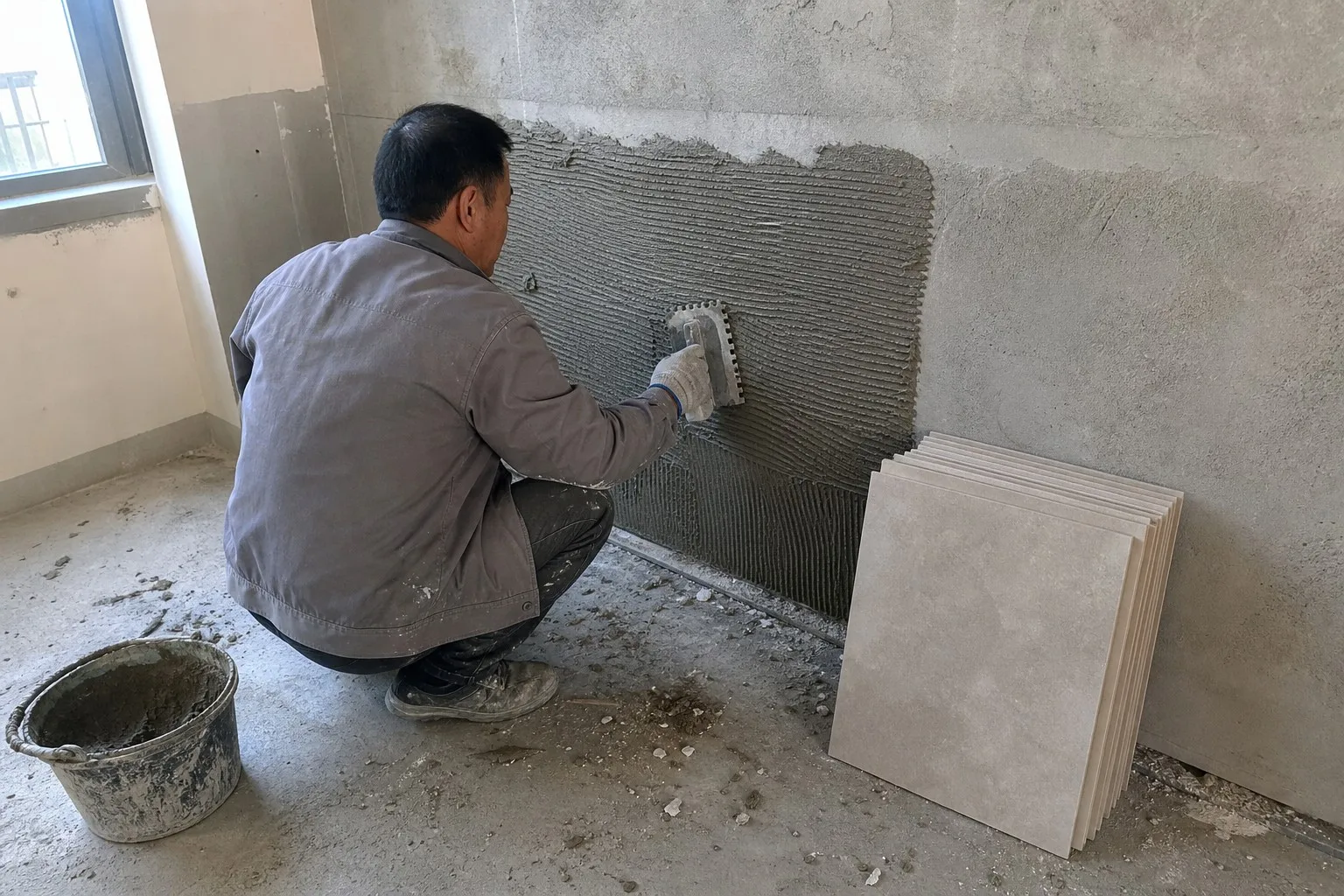
Tile adhesive manufacturers usually expect a cellulose ether to contribute to more than viscosity. Depending on the grade and formulation, the expected functions may include:
- Water retention: The mortar should retain enough water for cement hydration and practical application.
- Workability: The mixed adhesive should spread and comb without excessive drag.
- Consistency: The mortar should maintain a usable texture during its intended working period.
- Open-time support: The adhesive should remain capable of wetting the tile after it has been spread for a defined period.
- Anti-slip behavior: The applied tile should resist excessive downward movement on a vertical surface.
- Air and rheology control: The grade can influence density, trowel feel, and the shape of combed ridges.
HPMC is widely evaluated for these functions in dry-mix mortar. This established use gives manufacturers a broad reference base when they develop or adjust a cement-based adhesive. It does not mean that every HPMC grade will deliver the same balance.
I Start With the Target, Not the Highest Viscosity
A common purchasing mistake involves asking for “the highest viscosity HPMC” without defining the problem that the grade should solve. Higher solution viscosity does not automatically create better tile adhesive.3 An unsuitable rheology profile can make the mortar sticky, heavy under the trowel, difficult to wet, or unnecessarily sensitive to water addition.
I normally ask the following questions before I suggest a trial grade:
What type of tile adhesive are you producing, and which measured performance target is currently difficult to meet?
I then clarify:
- Is the product a cement-based dry-mix adhesive?
- What cement and filler system does the plant use?
- Does the formula include RDP/VAE or other polymer modifiers?
- What is the current cellulose ether type and dosage?
- Which viscosity method appears on the current specification?
- Does the customer need better water retention, open time, trowel feel, or slip resistance?
- Which local or international test standard applies?
- What temperature and humidity represent actual application conditions?
These questions are especially useful for new or smaller plants. They prevent a sample from becoming an uncontrolled production experiment.
Better Handling Does Not Prove Better Bond Strength
I always separate application observations from final performance results. A mortar that feels smoother can be easier to apply. A mortar with better water retention can support curing conditions. A longer measured open time can improve the available installation window. None of those observations alone proves that the adhesive has achieved the required tensile adhesion strength.4
A qualified laboratory should test bond performance under the applicable standard and conditioning regime. Depending on the market and product class, the program may include initial adhesion, water immersion, heat aging, freeze-thaw exposure, or extended open-time testing.5 The manufacturer or an independent technical professional should define the relevant methods.
When Can HEC Be Used in Tile Adhesive?
Some buyers consider HEC because they already use it in another product, receive an attractive quotation, or observe strong initial thickening. Those reasons can justify investigation, but they cannot justify direct substitution. I consider HEC only after I understand the formula and the expected performance profile.
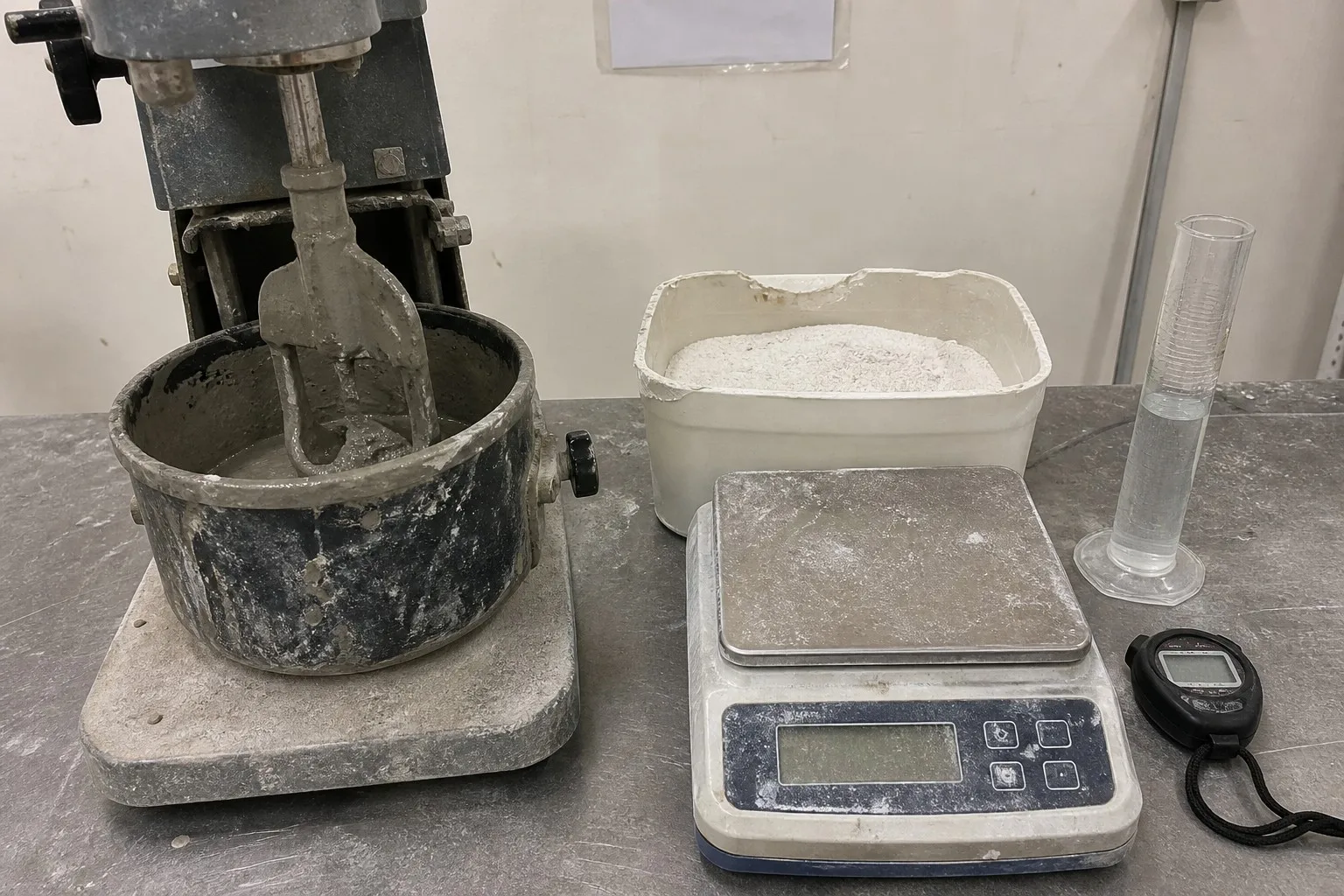
HEC can be trialed in tile adhesive when a manufacturer has a defined technical objective and can compare it with the current grade under controlled conditions. The trial must evaluate water demand, workability, water retention, open time, slip, storage stability, and applicable adhesion tests. A matching viscosity number does not establish suitability.
Situations That May Justify an HEC Trial
I would consider supplying or recommending an HEC sample when one or more of these conditions apply:
- The manufacturer has previous formulation experience with a specific HEC grade.
- The technical team wants to study a different rheological profile.
- The base formula has already been characterized.
- The plant can run controlled side-by-side tests.
- The target market accepts the resulting tested performance.
- The buyer wants a second-source option and can complete full qualification.
- The existing cellulose ether creates a defined processing or application issue.
The key phrase is defined technical objective. “HEC costs less per kilogram” is a commercial observation, not a complete technical objective. “We need to maintain measured open time while reducing trowel drag under our summer application conditions” gives the trial team a result that it can evaluate.
Initial Thickening Is Only One Observation
A technician may mix HEC into a trial batch and observe a strong or rapid increase in consistency. That result can look promising. However, the first few minutes after mixing do not represent the complete service profile.
The trial team should also observe:
- Wetting and lump formation during mixing
- Required mixing time
- Water addition needed to reach the target consistency
- Rest time and remix response
- Consistency retention
- Trowel drag and ridge formation
- Tile slip on a vertical test panel
- Skin formation
- Open-time performance
- Water retention under the selected method
- Cured adhesion under relevant conditioning
The manufacturer should record each result instead of relying on memory or installer preference alone. I have found that structured feedback is far more useful than comments such as “Sample A feels stronger.” The word “stronger” may refer to thicker consistency, higher tack, lower slip, or actual tested adhesion. Those are different properties.
HPMC vs HEC Requires a System-Level Decision
A tile adhesive formula contains interacting materials.6 Cement source, gypsum content, limestone grading, sand absorption, RDP level, starch ether, defoamer, accelerator, and retarder can all affect the final response. Water addition and mixing energy also matter.
For that reason, I do not present HEC as an inferior or superior material in every case. I present it as a different cellulose ether family that must earn its place through comparative evidence. A qualified formulation professional should review any application-specific decision, especially when the adhesive must comply with a declared performance class.
How Should Manufacturers Test HPMC vs HEC in Tile Adhesive?
An informal bucket test may reveal obvious mixing or application differences, but it cannot support a reliable specification. If the trial changes several ingredients at once, the manufacturer cannot identify the cause of the result. I recommend a staged comparison with controlled variables and predefined acceptance limits.
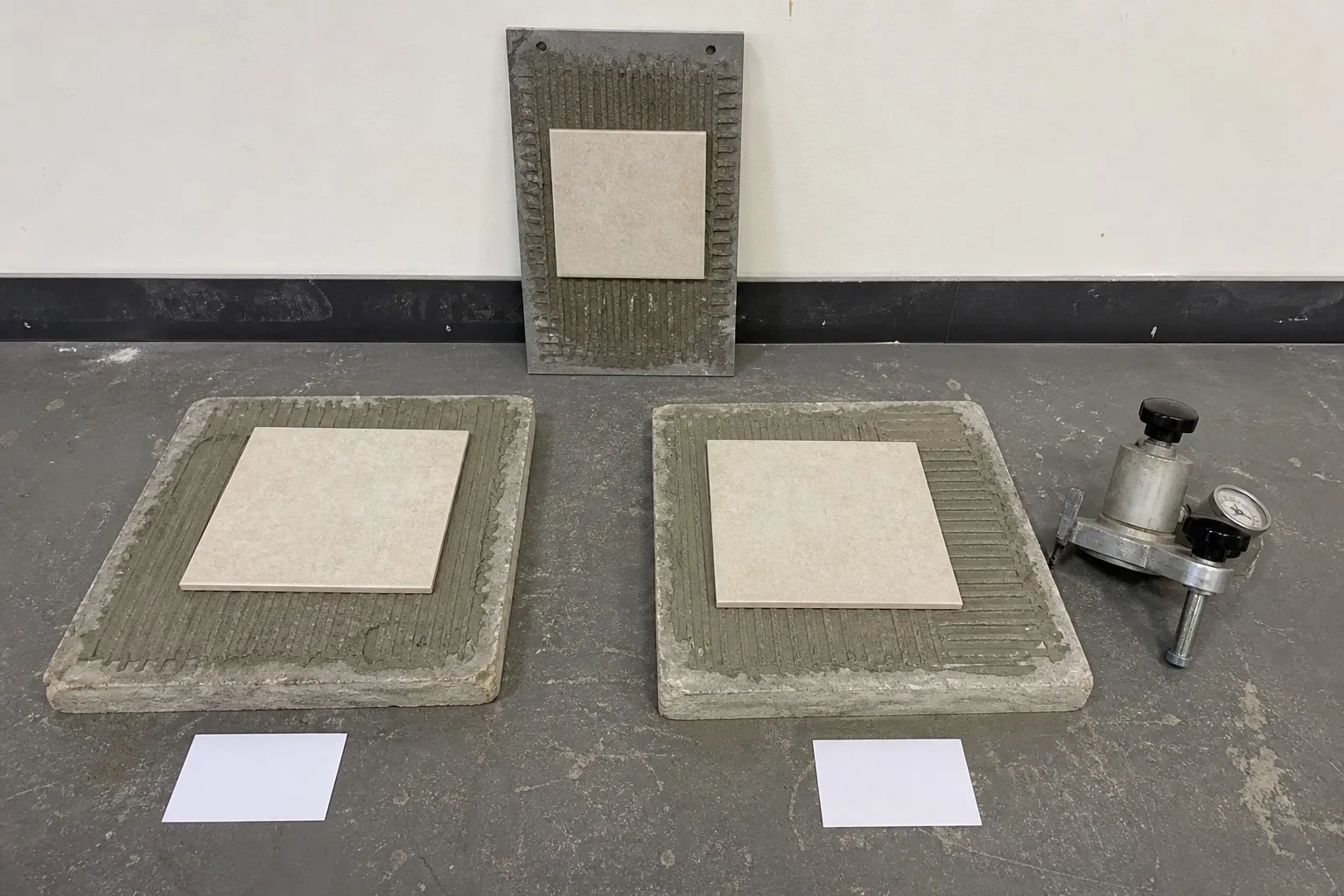
Manufacturers should compare HPMC vs HEC in tile adhesive by keeping the base formula, raw material lots, water, mixing procedure, and test environment constant.7 They should begin with a benchmark, screen dosage where technically justified, measure fresh-mortar properties, and then conduct the required cured-performance tests before approving a substitution.
Step 1: Document the Current Benchmark
The current product should become the control. I ask the manufacturer to record:
- Current cellulose ether supplier and grade
- Declared chemistry
- Viscosity value and full test method
- Current dosage
- Water-to-dry-mix ratio
- Mixing time, rest period, and remix method
- Application temperature and humidity
- Fresh-mortar results
- Cured-performance results
- Known production or customer concerns
A benchmark allows the technical team to judge whether a change is an improvement, a trade-off, or a regression.
Step 2: Define Acceptance Criteria
The manufacturer should decide what success means before opening the sample bags. Acceptance criteria may cover:
| Test area | Example question | Why it matters |
|---|---|---|
| Mixing | Does the powder wet and disperse consistently? | Poor dispersion can distort later observations |
| Water demand | How much water reaches the target consistency? | Extra water can affect application and cured properties |
| Workability | Does the mortar spread and comb as required? | Installers need repeatable handling |
| Slip | Does tile movement stay within the product target? | Vertical application requires controlled sag |
| Open time | Does adhesion remain acceptable after the stated interval? | The installer needs a defined placement window |
| Water retention | Does the mortar retain water under the selected method? | Water management affects application and hydration |
| Adhesion | Does the product pass the applicable test program? | Fresh handling cannot replace cured testing |
| Cost in use | What is the cost per tonne of compliant adhesive? | Unit price alone can hide dosage and rework costs |
I recommend that the plant use numerical limits wherever a recognized method exists. A trained panel can still record trowel feel, but subjective ratings should support rather than replace measured data.
Step 3: Avoid Assuming Equal Dosage
A same-dose comparison can provide useful screening information, but it does not prove that the two materials have equivalent optimal dosage. At the same time, the plant should not change dosage randomly until one sample appears acceptable.
A formulation engineer should design the dosage range. The team should then document every adjustment. This process helps buyers compare cost in use, not only cost per kilogram.
The calculation should include:
- Cellulose ether dosage per tonne
- Required water adjustment
- Output consistency
- Off-specification production
- Rework or disposal
- Application complaints
- Production downtime
- Qualification and inventory costs
A lower-priced grade can become more expensive if it requires a higher dosage or creates inconsistent batches.8 A higher-priced grade can also be poor value if it adds no measured benefit. I therefore use the compliant finished product as the cost basis.
Step 4: Scale Up in Stages
I prefer a progression from laboratory screening to pilot production and then to a controlled factory batch. Scale changes can expose mixing and dispersion effects that a small test does not show.
The plant should retain samples and batch records during the qualification period. The technical team should also test more than one production lot when supply consistency is important. One excellent sample cannot demonstrate long-term batch-to-batch control.
How Should Buyers Evaluate an HPMC or HEC Supplier?
A technically suitable sample can still create procurement risk if the supplier cannot control production or provide consistent documentation. Buyers may focus on the first quotation and overlook specification tolerances, change control, traceability, and delivery planning. I recommend evaluating the material and the supplier together.
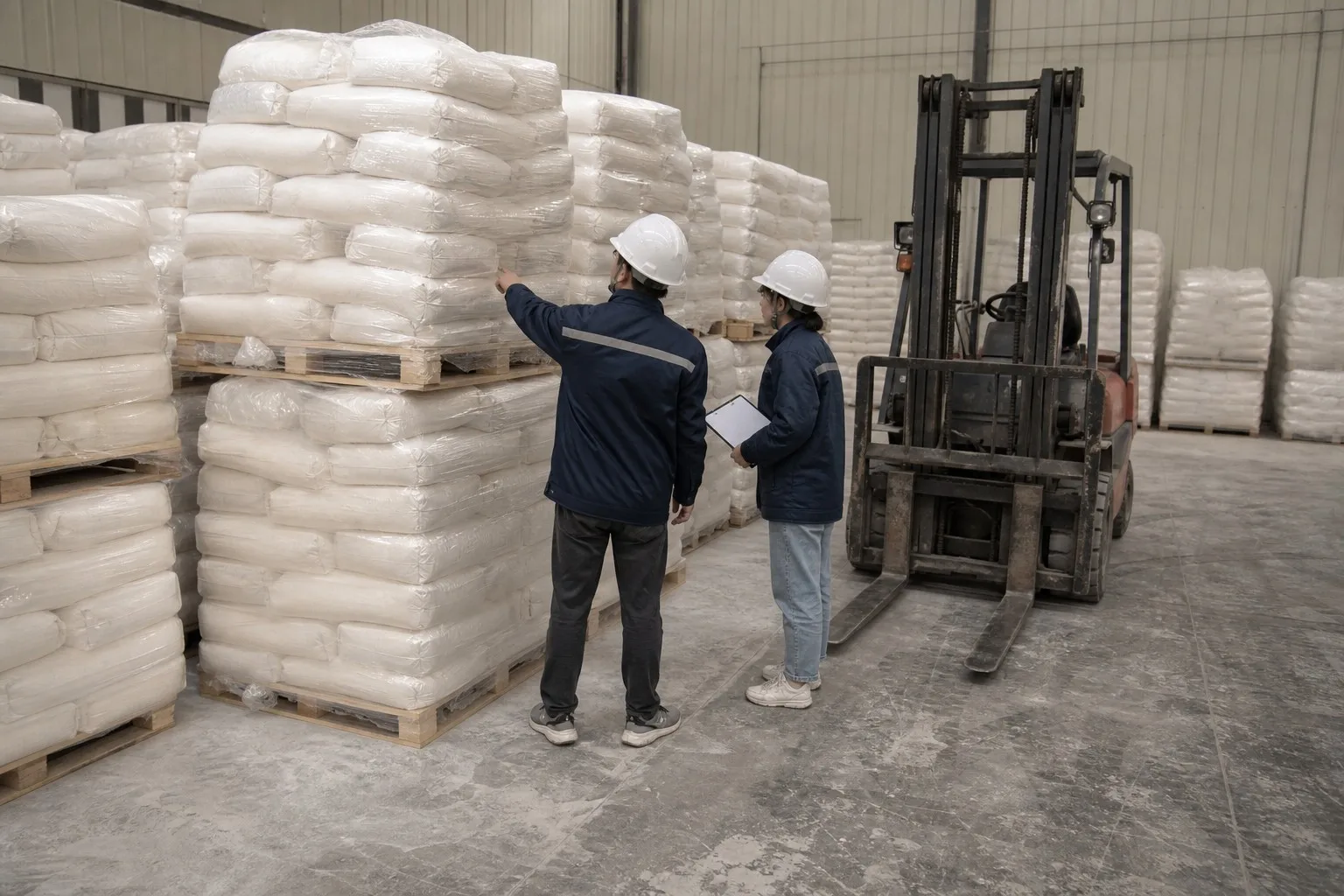
Buyers should assess an HPMC or HEC supplier through technical documentation, representative samples, batch consistency, quality-control methods, production capacity, traceability, communication, and logistics. They should verify certifications and test reports rather than treating logos as proof. Purchase approval should follow both technical qualification and a supplier audit appropriate to the risk.
Documents Buyers Should Request
A practical supplier file can include:
- Technical data sheet
- Safety data sheet
- Certificate of analysis format
- Product specification and tolerance range
- Viscosity test method
- Moisture and ash testing information, where relevant
- Batch coding and traceability process
- Shelf-life and storage guidance
- Regulatory or chemical compliance documents
- Change-notification policy
- Packaging and loading information
Certifications and regulatory reports should be current, applicable to the supplied legal entity and product, and independently verifiable where possible.9 For example, our company has passed REACH testing, but I still encourage European buyers to review the exact report scope and confirm that it fits their import and application obligations.
Questions About Manufacturing Control
A supplier should explain how it manages variation. The buyer can ask:
- Which properties receive release testing?
- Which viscosity method does the factory use?
- How does the factory retain and trace batch samples?
- What tolerance applies to the purchased grade?
- How does the supplier investigate complaints?
- Will the supplier notify customers before changing a specification or process?
- Can the supplier support repeat trials from commercial production batches?
At Shijiazhuang Kehao Chemical Co., Ltd., we manufacture cellulose ether and related dry-mix additives on automated production lines at our facility in Jinzhou City, Hebei Province. We offer free samples, OEM support, and technical guidance. I present those capabilities as inputs for supplier evaluation, not as substitutes for the buyer’s own audit and performance testing.
Logistics Also Affect Specification Risk
A technically approved grade has limited value if deliveries are unpredictable or storage conditions damage the material. Buyers should review lead time, minimum order quantity, packaging, moisture protection, container planning, and safety stock.
Our standard loading port is Tianjin. We also operate an office and warehouse in Iran for faster service in that local market. Buyers in other regions should compare landed cost and lead-time reliability rather than using the factory price alone.
I also recommend qualifying a second source carefully. The second supplier’s product should pass the same comparison process as the original product. A matching trade description or viscosity label cannot serve as automatic approval.
<h3>Related technical guides</h3> <ul> <li><a href="https://khcel.com/mhec/">MHEC</a></li> <li><a href="https://khcel.com/cellulose-ether-and-starch-ether/">Cellulose Ether and Starch ether?</a></li> <li><a href="https://khcel.com/hec/">HEC</a></li> </ul>
Frequently Asked Questions
Can HEC directly replace HPMC in tile adhesive?
HEC should not directly replace HPMC at the same dosage based only on a matching viscosity label. I recommend checking the viscosity method, current dosage, base formula, water demand, and performance targets. The manufacturer should then complete controlled fresh-mortar and cured-adhesion tests before approving the replacement.
Is HPMC always better than HEC for tile adhesive?
No. I do not treat HPMC as universally superior. HPMC is usually the practical starting candidate for cement-based tile adhesive because of its established use and functional balance. However, a specific HEC grade may be suitable when comparative testing confirms that it meets the complete formulation and performance requirements.
Does higher cellulose ether viscosity produce better tile adhesive?
Higher solution viscosity does not automatically produce better adhesive. The grade can change water demand, trowel drag, slip, open time, and consistency retention. Buyers should compare products with the same viscosity test method and then evaluate their behavior in the complete mortar.
Can good water retention guarantee high bond strength?
No. Water retention can support suitable application and curing conditions, but it does not guarantee final bond strength. Cement chemistry, polymer modification, substrate, tile type, water ratio, curing, and test conditions also affect adhesion. A qualified laboratory should measure the required cured properties separately.
How much HPMC or HEC should a tile adhesive contain?
I cannot recommend one universal dosage because the correct range depends on the cellulose ether grade, cement system, aggregate, polymer content, target performance, and test method. A formulation engineer should define a controlled dosage study. Buyers should avoid copying a dosage from an unrelated formula.
Conclusion
The HPMC vs HEC in tile adhesive decision should begin with formulation risk, not price or viscosity alone. I generally recommend a suitable HPMC grade as the first candidate for cement-based systems, while I consider HEC when clear objectives and comparative tests support it. Buyers should measure fresh properties and final adhesion separately, calculate total cost in use, and verify supplier documents and consistency.
Contact Shijiazhuang Kehao Chemical Co., Ltd. to request samples and discuss your current grade, test method, formula type, and performance targets with our technical team.
"Water Retention Mechanism of HPMC in Cement Mortar - PMC", https://pmc.ncbi.nlm.nih.gov/articles/PMC7372461/. Studies of cellulose ethers in cementitious systems show that fresh-mortar rheology and water retention depend on polymer characteristics and cement–polymer interactions in addition to nominal solution viscosity. Evidence role: mechanism; source type: research. Supports: That cellulose-ether performance in cementitious materials is influenced by polymer characteristics and interactions with the mortar system, not solution viscosity alone.. Scope note: This evidence supports the general principle; it does not establish the performance of any particular commercial HPMC or HEC grade. ↩
"Water Retention Mechanism of HPMC in Cement Mortar - PMC", https://pmc.ncbi.nlm.nih.gov/articles/PMC7372461/. Research on cellulose ethers in cement-based mortars reports that HPMC-type additives can modify water retention and fresh-state rheology, properties relevant to workability, open time, and resistance to tile slip. Evidence role: general_support; source type: paper. Supports: That HPMC and related cellulose ethers are used in cementitious mortars to influence water retention, workability, rheology, and tile-adhesive application properties.. Scope note: The magnitude and balance of these effects depend on grade, dosage, aggregate system, polymer modifiers, and test conditions. ↩
"Water Retention Mechanism of HPMC in Cement Mortar - PMC", https://pmc.ncbi.nlm.nih.gov/articles/PMC7372461/. Experimental studies of cellulose ethers in cementitious mortars indicate that increasing polymer viscosity or molecular weight can alter several fresh-state properties simultaneously, so higher solution viscosity alone is not a sufficient indicator of superior adhesive performance. Evidence role: mechanism; source type: paper. Supports: That cellulose-ether viscosity and molecular characteristics can affect multiple mortar properties and may involve performance trade-offs rather than a uniformly positive effect.. Scope note: The relationship is formulation-specific and cannot be used to predict the optimum grade without testing. ↩
"EN 12004 Tile Adhesive Testing in India", https://www.tcreng.com/post/tile-adhesive-en-12004-testing-india. Tile-adhesive standards treat open time, slip resistance, and tensile adhesion strength as separately measured performance characteristics; a favorable fresh-state observation does not itself demonstrate compliance with tensile adhesion requirements. Evidence role: definition; source type: institution. Supports: That tile-adhesive performance standards specify distinct test methods for open time, slip, and tensile adhesion strength.. Scope note: The applicable standard and required conditioning sequence vary by jurisdiction and declared adhesive class. ↩
"C2TE - Tile Adhesives", https://kgplastochem.in/pdf/TileOX-TDS-207.pdf. Recognized ceramic tile adhesive standards include separate performance assessments that may cover tensile adhesion after defined conditioning, including water immersion, heat aging, freeze–thaw cycling, and extended open-time procedures. Evidence role: definition; source type: institution. Supports: The conditioning and performance tests specified in major ceramic tile adhesive standards.. Scope note: Not every test applies to every adhesive category, national market, or declared performance designation. ↩
"Influences of Additives on the Rheological Properties of ... - PMC", https://pmc.ncbi.nlm.nih.gov/articles/PMC12028820/. Cementitious mortar performance is governed by interactions among binder chemistry, aggregate characteristics, polymeric and chemical admixtures, water content, and mixing procedures rather than by any one additive in isolation. Evidence role: mechanism; source type: research. Supports: That the fresh and hardened behavior of cement-based mortars results from interactions among binder, aggregate, chemical admixtures, polymer additives, water content, and mixing conditions.. Scope note: This systems-level evidence does not quantify the effect of a specific ingredient in a particular commercial formula. ↩
"Concrete Mix Designs with Shrinkage Reducing Admixture", https://digitalcommons.calpoly.edu/cgi/viewcontent.cgi?article=1262&context=arcesp. Standardized mortar and tile-adhesive test procedures prescribe controlled specimen preparation, mixing, conditioning, and test environments to improve repeatability and enable meaningful comparison between formulations. Evidence role: general_support; source type: institution. Supports: That repeatable mortar and adhesive testing requires standardized preparation, conditioning, and testing procedures.. Scope note: A standard test method controls specified variables but may not reproduce every site-specific application condition. ↩
"Supply Chain Management | NIST", https://www.nist.gov/mep/supply-chain. Total-cost and cost-of-quality frameworks recognize that a lower purchase price may be offset by higher costs from process variation, rework, waste, downtime, or supplier-performance problems. Evidence role: general_support; source type: government. Supports: That procurement and manufacturing decisions should consider quality, rework, process disruption, and other lifecycle costs in addition to purchase price.. Scope note: This framework supports the economic rationale generally and does not calculate the cost impact of a particular cellulose ether grade. ↩
"ISO Certificate Validity Online | How to Verify It", https://guardian.qa/iso-certificate-validity-online/. Certification and regulatory documentation should be reviewed for validity, scope, issuing body, legal-entity coverage, and product relevance rather than treated as blanket evidence of compliance. Evidence role: general_support; source type: institution. Supports: That conformity certificates have defined scopes and validity and that regulatory obligations and documentation must be assessed in relation to the relevant entity and product.. Scope note: The documentation required depends on the importing jurisdiction, chemical status, intended use, and contractual quality requirements. ↩