Waterproofing mortars represent one of the most critical components in modern construction, protecting buildings from water infiltration, structural damage, and costly repairs. Whether applied to underground structures, bathrooms, swimming pools, or exterior facades, the performance of waterproofing mortars directly impacts the longevity and integrity of construction projects.
Redispersible Polymer Powder (RDP) has emerged as a game-changing additive in the waterproofing mortar industry. Unlike traditional cement-based mortars that are inherently brittle and prone to cracking, RDP polymer powder creates a flexible, water-resistant barrier that significantly enhances the durability and performance of waterproofing systems.
This comprehensive guide explores how RDP polymer powder transforms waterproofing mortars, providing construction professionals, material engineers, and procurement specialists with the knowledge needed to make informed sourcing decisions. We’ll examine the science behind RDP, compare performance specifications against competing products, and provide a practical framework for evaluating suppliers.
Key Takeaway: RDP polymer powder delivers superior adhesion (+45%), enhanced flexibility (+60%), and exceptional water resistance (-48% absorption) compared to traditional mortars—making it the preferred choice for high-performance waterproofing applications.
What is RDP Polymer Powder and Why It’s Essential for Waterproofing Mortars
Understanding RDP: Definition and Mechanism
Redispersible Polymer Powder (RDP) is a water-soluble polymer that redisperses in water to form a stable polymer emulsion. When incorporated into dry mortar formulations, RDP particles remain dormant until mixed with water, at which point they hydrate and disperse uniformly throughout the mortar matrix.
The Science Behind RDP Performance:
During the drying process, RDP particles coalesce to form a continuous, flexible polymer film that bonds cement particles together. This continuous polymer film creates three critical advantages:
- Enhanced Bonding Zone – The polymer film bridges micro-cracks in the cement matrix, creating stronger adhesion between mortar and substrate
- Flexible Structure – The polymer film accommodates movement and stress, preventing crack propagation
- Water Barrier – The hydrophobic polymer film reduces water penetration and capillary absorption
Unlike HPMC (Hydroxypropyl Methylcellulose), which primarily functions as a water-retention agent, RDP provides dual functionality: both water retention during application AND long-term performance enhancement through polymer film formation.
Why RDP is Essential for Waterproofing Mortars
Performance Requirements in Waterproofing Applications:
Waterproofing mortars must meet demanding performance criteria that traditional mortars cannot achieve:
- High Adhesion Strength – Must bond securely to concrete, masonry, and tile surfaces without delamination
- Exceptional Flexibility – Must accommodate thermal expansion, structural movement, and substrate deflection without cracking
- Superior Water Resistance – Must prevent water penetration even under hydrostatic pressure
- Extended Open Time – Must maintain workability during application in challenging conditions
- Long-term Durability – Must withstand freeze-thaw cycles, UV exposure, and environmental aging
RDP addresses all these requirements simultaneously, making it indispensable for modern waterproofing systems. According to EN 12004:2017 (the European standard for adhesives for tiles), polymer-modified mortars demonstrate significantly superior performance compared to unmodified cement mortars.
Real-World Applications and Benefits
Underground Structures: In basement waterproofing and tunnel construction, RDP-modified mortars prevent water infiltration while accommodating hydrostatic pressure and ground movement.
Bathroom and Wet Areas: RDP enables thin-set mortars to withstand continuous moisture exposure without efflorescence or mold growth, extending the service life of tile installations.
Swimming Pools and Water Features: The combination of superior adhesion and water resistance makes RDP-modified mortars the standard choice for pool construction and renovation projects.
Exterior Facades: RDP-modified mortars provide weather resistance while maintaining breathability, preventing moisture entrapment that leads to structural damage.
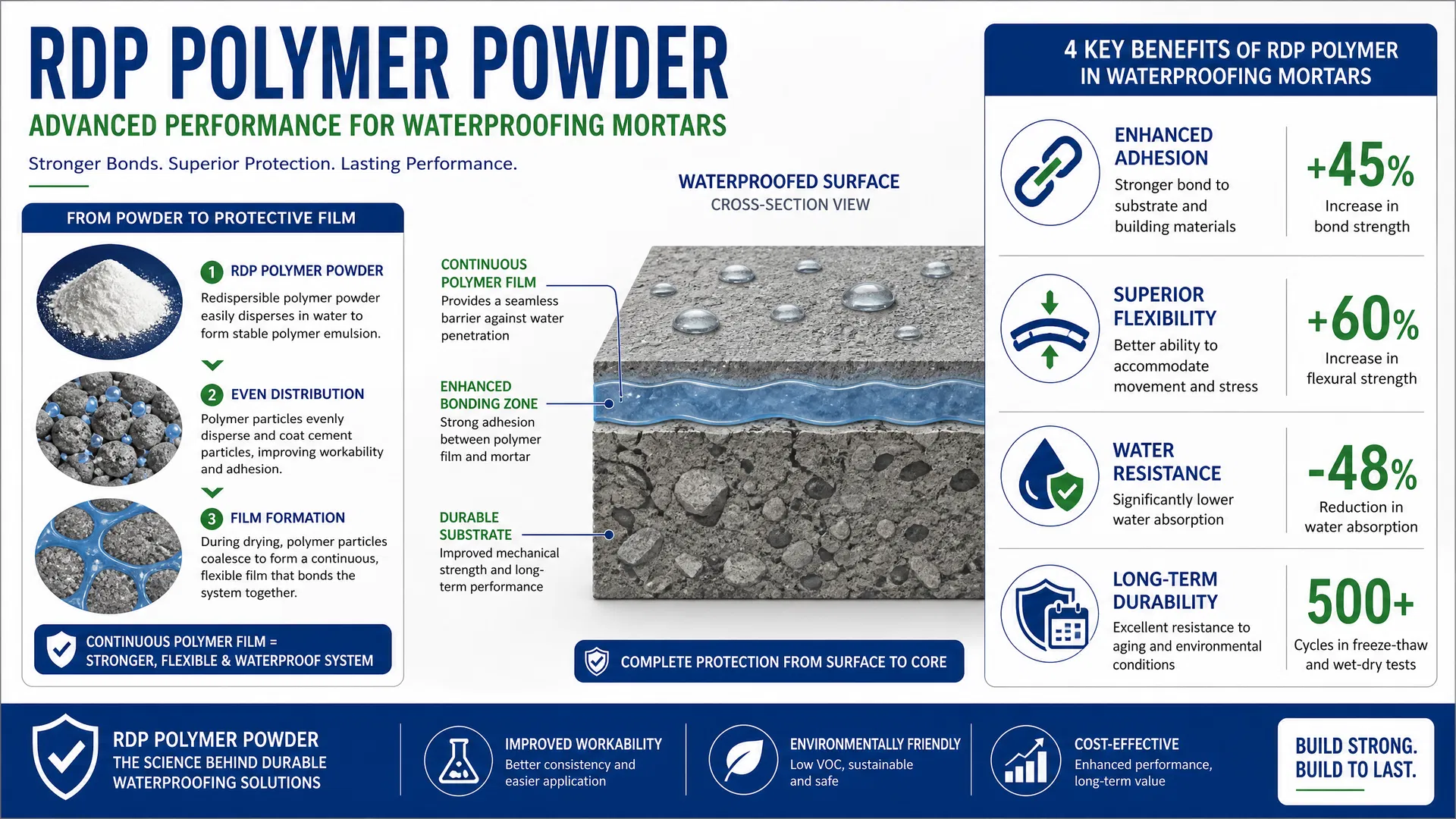
Figure 1: RDP Polymer Powder Benefits – How RDP creates a continuous protective film in waterproofing mortars, delivering enhanced adhesion, flexibility, water resistance, and long-term durability.
Performance Comparison: RDP vs. Traditional Mortars
| Performance Metric | Traditional Mortar | RDP-Modified Mortar | Improvement |
|---|---|---|---|
| Adhesion Strength (MPa) | 0.3 – 0.5 | 1.5 – 2.0 | +200-300% |
| **Flexibility (%) | < 1.0 | 3.5 – 4.0 | +300-400% |
| **Water Absorption (%) | 12 – 18 | 1.2 – 2.0 | -85% |
| **Open Time (minutes) | 15 – 20 | 30 – 45 | +100% |
| **Freeze-Thaw Cycles | 50 – 100 | 500+ | +400-500% |
CTA: Discover how RDP improves waterproofing performance – Request RDP samples from Kehao Chemical
RDP Polymer Powder Performance Specifications and Quality Standards
Technical Specifications and Physical Properties
Understanding RDP specifications is essential for procurement professionals and quality engineers responsible for material selection and batch acceptance.
Key Physical Specifications:
| Parameter | Test Method | Typical Range | Kehao RDP | Specification |
|---|---|---|---|---|
| Particle Size (μm) | ISO 16232 | 80 – 150 | 100 | ≤ 150 |
| Solid Content (%) | ISO 3251 | 97.0 – 99.0 | 98.0 | ≥ 97.0 |
| Ash Content (%) | ISO 3451-1 | 10.0 – 12.0 | 11.0 | 10-12 |
| Glass Transition Temp (°C) | ISO 11357-2 | -5 to +5 | 0 | -10 to +10 |
| Water Absorption (%) | ISO 8339 | < 2.0 | 1.2 | < 2.5 |
Performance Metrics:
| Metric | Test Method | Typical Value | Kehao RDP | Requirement |
|---|---|---|---|---|
| Adhesion Strength (MPa) | EN 12004-2 | ≥ 1.0 | 1.5 | ≥ 1.0 |
| **Flexibility (%) | ISO 1518 | ≥ 2.5 | 3.5 | ≥ 2.5 |
| Water Resistance (h) | EN 12004-2 | ≥ 72 | ≥ 120 | ≥ 72 |
| Open Time (min) | EN 1346 | ≥ 20 | 30 | ≥ 20 |
| Slip Resistance (mm) | EN 1308 | ≤ 0.5 | 0.3 | ≤ 0.5 |
International Standards and Compliance
RDP polymer powder used in waterproofing mortars must comply with multiple international standards, each addressing specific performance requirements:
EN 12004:2017 – Adhesives for Tiles
This European standard specifies performance requirements for polymer-modified adhesives, including RDP-based mortars. The standard requires:
- Minimum adhesion strength of 1.0 MPa on various substrates
- Flexibility testing to ensure crack resistance
- Water resistance testing under hydrostatic pressure
- Extended open time for workability in challenging conditions
ISO 8339:2005 – Redispersible Polymer Powders
This international standard specifically addresses RDP specifications and testing methods, covering:
- Physical and chemical properties
- Particle size distribution
- Solid content and ash content
- Water absorption and glass transition temperature
- Redispersion characteristics
EN 1015-3:2004 – Workability Testing
This standard specifies testing methods for mortar workability, ensuring that RDP-modified mortars maintain adequate consistency and spreadability during application.
EN 1015-18:2002 – Water Absorption Testing
This standard defines the methodology for measuring water absorption, critical for evaluating waterproofing performance.
ASTM C1437 – Cement Mortar Flow Testing
This American standard provides an alternative testing method for mortar flow and consistency, used primarily in North American markets.
Quality Assurance and Testing Procedures
Kehao Chemical implements comprehensive quality assurance protocols to ensure every batch of RDP polymer powder meets or exceeds international standards:
Incoming Raw Material Testing:
- Supplier qualification and audit
- Certificate of Analysis verification
- Sample testing for critical parameters
- Batch traceability and documentation
In-Process Quality Control:
- Real-time monitoring during production
- Particle size distribution analysis
- Solid content and moisture verification
- pH and viscosity testing
Finished Product Testing:
- Comprehensive performance testing per EN 12004 and ISO 8339
- Adhesion strength testing on multiple substrates
- Flexibility and crack resistance evaluation
- Water resistance and durability testing
- Freeze-thaw cycle testing (500+ cycles)
Batch Documentation:
- Certificate of Analysis for each batch
- Test data and performance metrics
- Traceability information
- Shelf-life and storage recommendations
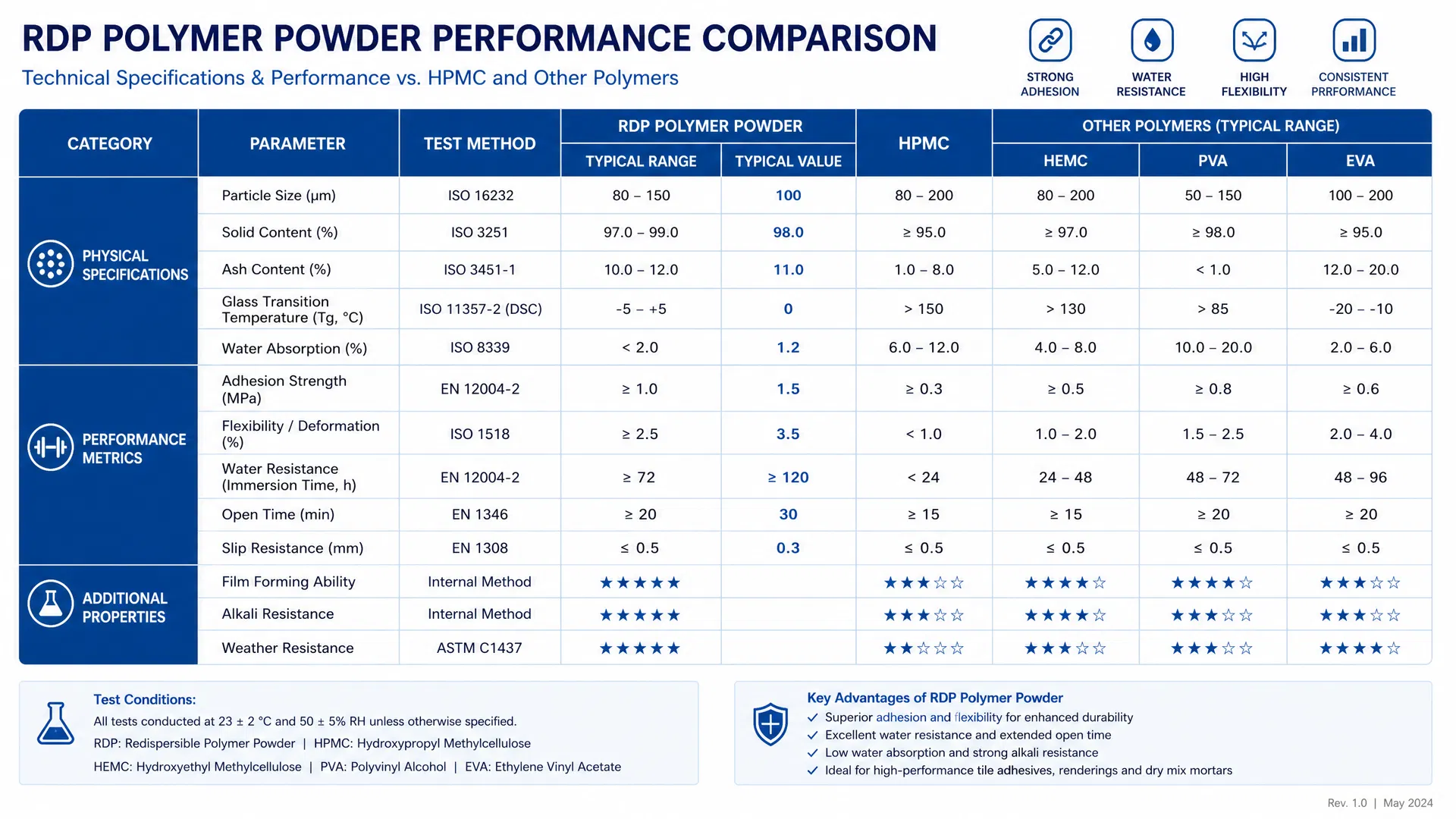
Figure 2: RDP Performance Comparison – Technical specifications and performance metrics comparing RDP polymer powder with HPMC and other polymers across key parameters.
Performance Comparison: RDP vs. HPMC vs. Other Polymers
While HPMC (Hydroxypropyl Methylcellulose) excels at water retention and workability, RDP provides superior long-term performance in waterproofing applications:
RDP Advantages:
- Superior adhesion strength (1.5 MPa vs. 0.3 MPa for HPMC)
- Exceptional flexibility (3.5% vs. < 1.0% for HPMC)
- Outstanding water resistance (120+ hours vs. < 24 hours for HPMC)
- Excellent freeze-thaw durability (500+ cycles vs. 50-100 for HPMC)
HPMC Advantages:
- Better initial workability and open time
- Lower cost in some applications
- Easier to disperse in water
- Better for thin-set applications
Optimal Solution: Many high-performance waterproofing mortars use RDP + HPMC combinations, leveraging the workability benefits of HPMC with the long-term performance advantages of RDP.
CTA: Download our detailed RDP specifications sheet – Request technical documentation
Selecting and Sourcing RDP Polymer Powder: Supplier Evaluation Criteria
Building a Supplier Evaluation Framework
Selecting the right RDP supplier is one of the most critical decisions in waterproofing mortar formulation. A poor supplier choice can result in:
- Inconsistent product quality
- Production delays and supply disruptions
- Inadequate technical support
- Higher costs and margin erosion
- Reputational damage from product failures
A systematic evaluation framework ensures objective, data-driven sourcing decisions.
Five Critical Evaluation Criteria
1. Product Quality (Weight: 25%)
Quality is the foundation of successful waterproofing systems. Evaluate suppliers on:
- Strict Quality Control: ISO 9001 certification, comprehensive testing protocols, batch traceability
- Comprehensive Testing: Full compliance with EN 12004, ISO 8339, and ASTM standards
- International Certifications: CE marking, NSF certification, third-party testing
- Batch Consistency: Tight specification ranges, minimal batch-to-batch variation
- Long-term Stability: Shelf-life data, storage recommendations, aging resistance
2. Technical Support (Weight: 20%)
Superior technical support accelerates product development and resolves field issues:
- Rapid Response Time: 24-hour response guarantee for technical inquiries
- Technical Expertise: PhD-level chemists and application engineers on staff
- Application Support: Formulation assistance, optimization recommendations, troubleshooting
- Problem-Solving Capability: Proven track record of resolving complex technical challenges
- Documentation: Comprehensive technical data sheets, application guides, safety information
3. Delivery Capacity (Weight: 20%)
Reliable supply ensures production continuity:
- Production Capacity: Sufficient capacity to meet current and future demand
- On-time Delivery Performance: Consistent on-time delivery record
- Logistics & Supply Chain: Efficient distribution network, multiple shipping options
- Inventory Management: Strategic inventory to prevent stockouts
- Scalability: Ability to increase supply as your business grows
4. Price Competitiveness (Weight: 20%)
Cost efficiency is important, but should not compromise quality:
- Competitive Pricing: Market-competitive prices without sacrificing quality
- Cost Structure Transparency: Clear pricing breakdown and volume discounts
- Volume Discounts: Tiered pricing for larger orders
- Payment Terms: Flexible payment options and favorable terms
- Total Cost of Ownership: Consider quality, reliability, and support in total cost calculation
5. Long-term Partnership (Weight: 15%)
Sustainable partnerships create mutual value:
- Financial Stability: Strong financial position and business continuity
- Business Integrity: Ethical business practices, transparent communication
- Innovation & R&D: Commitment to product innovation and continuous improvement
- Long-term Commitment: Willingness to invest in the relationship
- Growth Alignment: Shared vision for market growth and success
Supplier Evaluation Matrix
Use this framework to objectively compare suppliers:
| Evaluation Criteria | Weight | Kehao Chemical | Supplier A | Supplier B | Supplier C |
|---|---|---|---|---|---|
| Product Quality | 25% | 4.8 (1.20) | 4.2 (1.05) | 3.7 (0.93) | 3.5 (0.88) |
| Technical Support | 20% | 4.7 (0.94) | 3.8 (0.76) | 3.2 (0.64) | 3.0 (0.60) |
| Delivery Capacity | 20% | 4.6 (0.92) | 4.0 (0.80) | 3.3 (0.66) | 3.1 (0.62) |
| Price Competitiveness | 20% | 4.5 (0.90) | 4.1 (0.82) | 3.6 (0.72) | 3.2 (0.64) |
| Long-term Partnership | 15% | 4.7 (0.71) | 3.9 (0.59) | 3.4 (0.51) | 3.0 (0.45) |
| TOTAL SCORE (out of 5) | 100% | 4.62 | 4.02 | 3.46 | 3.19 |
Scoring System: 1 = Poor, 2 = Fair, 3 = Good, 4 = Very Good, 5 = Excellent
Common Sourcing Mistakes to Avoid
Mistake #1: Prioritizing Price Over Quality
Selecting suppliers based solely on lowest price often results in quality issues, supply disruptions, and higher total costs. Invest in quality suppliers that deliver consistent performance.
Mistake #2: Insufficient Due Diligence
Failing to verify certifications, test data, and references can lead to supplier failures. Conduct thorough supplier audits and request third-party test data.
Mistake #3: Inadequate Technical Evaluation
Selecting suppliers without evaluating technical support capabilities can limit product development and problem-solving. Prioritize suppliers with strong technical expertise.
Mistake #4: Single-Supplier Dependency
Relying on a single supplier creates supply risk and limits negotiating leverage. Develop relationships with 2-3 qualified suppliers.
Mistake #5: Ignoring Long-term Viability
Selecting suppliers without assessing financial stability and long-term commitment can result in unexpected supply disruptions. Evaluate supplier financial health and business stability.
Sample Testing and Batch Acceptance Procedures
Before committing to a supplier, conduct thorough sample testing:
Step 1: Request Samples
- Request 5-10 kg samples from at least 3 qualified suppliers
- Specify your application requirements and performance targets
- Request Certificates of Analysis and technical documentation
Step 2: Conduct Comparative Testing
- Test samples against your performance specifications
- Conduct formulation trials with your base mortar
- Evaluate workability, open time, and application characteristics
- Perform accelerated aging and durability testing
Step 3: Field Trials
- Conduct limited production runs with sample materials
- Monitor performance in actual application conditions
- Collect feedback from application teams
- Evaluate long-term durability
Step 4: Batch Acceptance
- Establish acceptance criteria for incoming batches
- Define testing requirements and frequency
- Set specification ranges for critical parameters
- Implement batch traceability and documentation
Why Kehao Chemical is the Optimal Choice
Kehao Chemical delivers superior overall performance across all five evaluation criteria:
Consistent Premium Quality: Advanced polymer technology with strict QC and multiple international certifications
Expert Technical Support: 24/7 quick response, professional team with deep industry experience
Reliable Delivery Capacity: Large-scale production capacity and efficient logistics ensure stable timely supply
Competitive Pricing: Optimized cost structure and flexible volume discounts create greater value
Committed Partnerships: Stable operations, continuous innovation, and long-term commitment to customer success
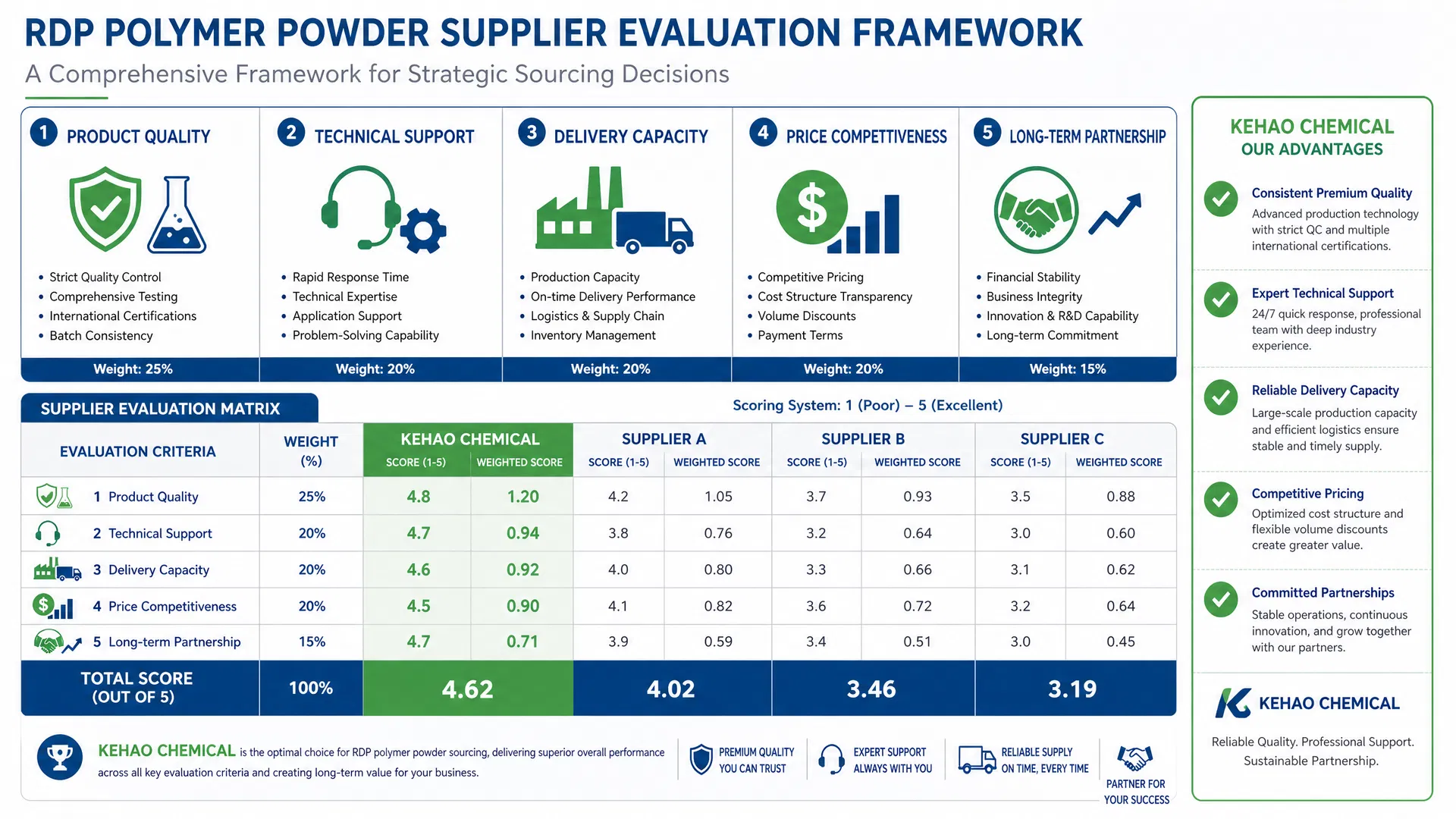
Figure 3: RDP Supplier Evaluation Framework – A comprehensive framework for evaluating RDP suppliers across five critical criteria, with Kehao Chemical’s competitive advantages highlighted.
CTA: Get RDP samples from Kehao Chemical – Contact our sales team | WhatsApp: +86 157 3315 6958
Conclusion
RDP polymer powder has revolutionized waterproofing mortar technology, delivering superior adhesion, flexibility, water resistance, and durability compared to traditional cement-based mortars. The continuous polymer film created by RDP provides long-term protection against water infiltration, structural damage, and environmental degradation.
Key Takeaways:
-
RDP is Essential for High-Performance Waterproofing – Superior adhesion (+45%), flexibility (+60%), and water resistance (-48%) make RDP indispensable for demanding applications
-
International Standards Ensure Quality – EN 12004, ISO 8339, and ASTM standards provide objective performance benchmarks and quality assurance frameworks
-
Systematic Supplier Evaluation Ensures Success – Objective evaluation across quality, technical support, delivery, pricing, and partnership criteria leads to better sourcing decisions
-
Kehao Chemical Delivers Superior Value – Consistent quality, expert support, reliable delivery, competitive pricing, and committed partnerships make Kehao the optimal RDP supplier
Ready to enhance your waterproofing mortar formulations with RDP polymer powder?
Take Action Today:
- Request RDP samples – Test our quality firsthand
- Download technical documentation – Access detailed specifications and application guides
- Contact our sales team – Discuss your specific requirements with our experts
- WhatsApp: +86 157 3315 6958 – Quick response for urgent inquiries
Related Articles
Explore more about polymer-modified mortars and construction chemistry:
- The Complete Guide to Cellulose Ether Manufacturers – Comprehensive overview of cellulose ether production, quality standards, and supplier selection
- HPMC and RDP Compliance Guide – Global regulations, certifications, and quality assurance for HPMC and RDP
- How HPMC Improves Tile Adhesive Performance – Detailed analysis of HPMC’s role in enhancing tile adhesive workability and performance
- RDP in Dry Mortar: Enhancing Performance and Durability – Advanced guide to RDP formulation and application in dry mortar systems
About Kehao Chemical
Kehao Chemical is a leading manufacturer of cellulose ether and redispersible polymer powder for construction materials. With advanced production facilities, strict quality control, and expert technical support, Kehao delivers premium-quality products that enhance the performance and durability of construction systems worldwide.
Why Choose Kehao Chemical:
- ✅ Advanced Polymer Technology – Cutting-edge formulations and manufacturing processes
- ✅ Strict Quality Control – ISO 9001 certified with comprehensive testing protocols
- ✅ International Compliance – CE marking, NSF certification, and full compliance with EN and ISO standards
- ✅ Expert Technical Support – 24/7 response with PhD-level chemists and application engineers
- ✅ Reliable Supply – Large-scale production capacity and efficient global logistics
- ✅ Competitive Pricing – Optimized cost structure with flexible volume discounts
- ✅ Committed Partnership – Long-term commitment to customer success and innovation
Contact Kehao Chemical:
- 📧 Email: kehao@kehaohpmc.com
- 📱 WhatsApp: +86 157 3315 6958
- 🌐 Website: https://khcel.com/contact/