
You spec a tile adhesive formula, source HPMC from a supplier, and the first batch fails on site — tiles slip, open time is too short, or the mortar skins over before the tiler can work. Every tile adhesive manufacturer faces this risk. The root cause is almost always the same: the wrong cellulose ether grade.
Selecting HPMC for tile adhesive depends on three factors: viscosity grade (40,000–100,000 mPa·s), which controls open time and sag resistance; key quality parameters like gel temperature (65–75°C) and ash content; and climate-specific formulation needs, where hot regions demand higher gel temperature and modified grades. Always request a Certificate of Analysis and test samples before ordering.
At KEHAO, we manufacture cellulose ethers for tile adhesive producers across 60+ countries. We know what happens when the wrong grade hits the mixer. Below we break down the three decisions every buyer must get right before placing an HPMC order.
1. How HPMC Viscosity Grades Affect Open Time, Sag Resistance, and Workability
A formulator picks a high-viscosity HPMC thinking it will boost water retention. The result is mortar too stiff to trowel, and the tiler adds water on site — destroying the mix design. Viscosity selection is a balance, not a race to the highest number.
HPMC viscosity directly determines tile adhesive performance: 40,000–60,000 mPa·s grades provide excellent workability for standard wall tiles; 75,000–100,000 mPa·s grades deliver high water retention and sag resistance for large-format tiles and external applications. Higher viscosity improves water retention but reduces trowelability. Most commercial formulations use HPMC in the 50,000–75,000 mPa·s range for the best balance.
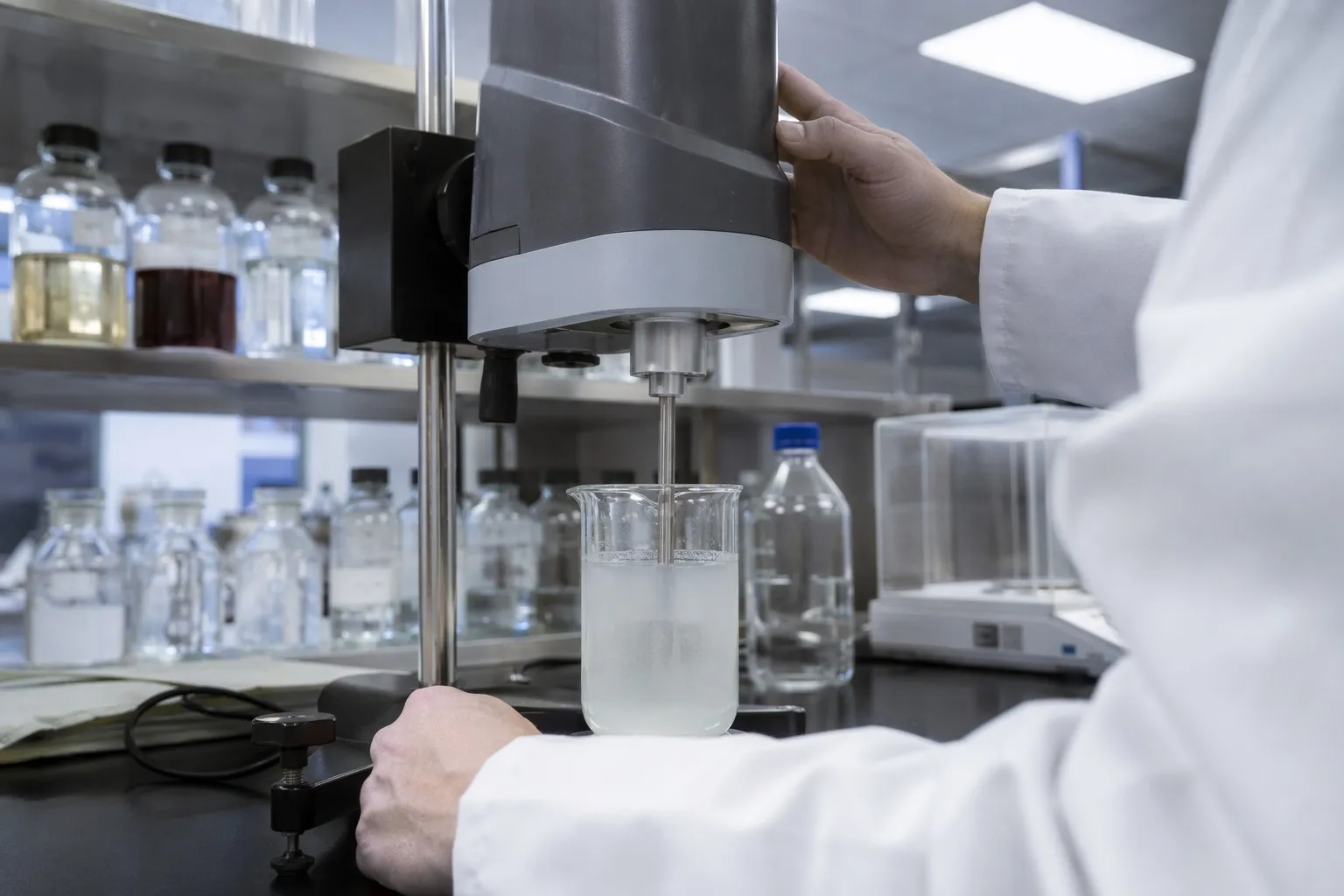
Viscosity is not a quality grade — it is a performance characteristic. When a buyer asks for "high-viscosity HPMC," we always ask: what tile format, what substrate, and what climate?
For small-format ceramic wall tiles (up to 300×300 mm) on absorbent substrates, a 40,000–60,000 mPa·s HPMC works well. The mortar needs to be easy to spread, and the substrate pulls moisture fast enough that extreme water retention is not critical. This range keeps troweling smooth while maintaining a 20–25 minute open time.
For large-format porcelain tiles (600×600 mm and above), we recommend 75,000–100,000 mPa·s. Heavy tiles demand high sag resistance — without it, the tile creeps downward after placement. Higher viscosity HPMC builds internal structure in the wet mortar, holding the tile in place. Water retention also rises because large tiles block substrate absorption. Read more in our guide to optimizing HPMC performance in tile adhesive formulations.
If you increase HPMC viscosity from 40,000 to 100,000 mPa·s, you gain 15–20% more open time but need 3–5% more mixing water — which weakens final strength. Additional resources: HPMC water retention in tile adhesives and HPMC workability optimization.
| Tile Format | Recommended Viscosity | Key Benefit |
|---|---|---|
| Small ceramic wall tiles (≤300mm) | 40,000–60,000 mPa·s | Easy troweling, adequate open time |
| Standard floor tiles (300–600mm) | 50,000–75,000 mPa·s | Balanced workability and water retention |
| Large-format porcelain (≥600mm) | 75,000–100,000 mPa·s | Maximum sag resistance, extended open time |
| Exterior / ventilated facades | 75,000–100,000 mPa·s | High water retention under wind and sun |
2. Evaluating HPMC Quality: Key Testing Parameters Every Buyer Should Check
You receive HPMC at a competitive price. The viscosity on paper matches your spec. But on site, the mortar skins over in 10 minutes instead of 30. The gel temperature is too low, and ash content reveals poor purification. Price alone does not predict performance.
Before purchasing HPMC, verify five parameters: methoxy content (19–30%), hydroxypropyl content (4–12%), gel temperature (65–75°C for standard grades), ash content (below 5%), and moisture content (below 5%). Low gel temperature and high ash content are the most common causes of field failure. Always compare the supplier’s COA against your own lab test results.
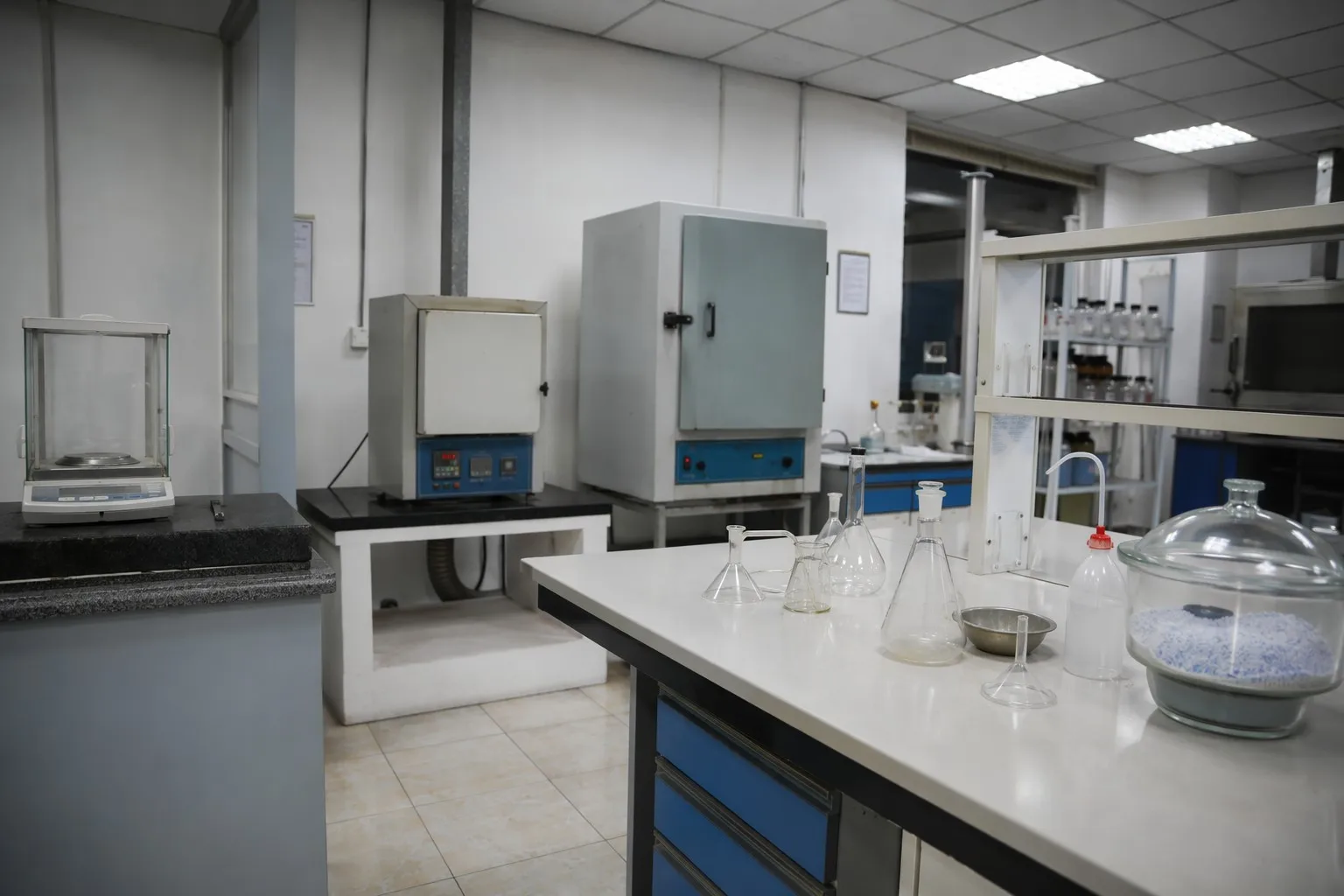
The cellulose ether market has wide quality variation. We routinely test competitor samples and find products labeled "75,000 mPa·s" that measure 45,000 or 110,000. Worse, we find gel temperatures as low as 55°C — far below the 65°C minimum for reliable performance.
Methoxy and hydroxypropyl content determines the substitution pattern. For tile adhesive, methoxy should be 19–30% and hydroxypropyl 4–12%. This ratio controls water solubility and how the polymer interacts with cement particles during hydration. Uneven substitution from rushed etherification causes lumps and inconsistent water retention.
Gel temperature is the point where HPMC loses its water-retaining function. Standard construction-grade HPMC needs a minimum of 65°C. In hot climates, we recommend 70–75°C minimum. For a complete supplier evaluation framework, see our HPMC manufacturer quality standards guide.
Ash content reveals purification quality. Pure cellulose ether has near-zero ash; high ash means residual production salts that weaken mortar and cause efflorescence. Accept no more than 5% ash for tile adhesive grade HPMC.
| Quality Parameter | Target Range | Red Flag |
|---|---|---|
| Methoxy content | 19–30% | Below 18% or above 32% |
| Hydroxypropyl content | 4–12% | Inconsistent batch-to-batch |
| Gel temperature | 65–75°C | Below 60°C |
| Ash content | ≤5% | Above 8% |
| Moisture content | ≤5% | Above 8% |
3. How Climate and Formulation Requirements Determine Your HPMC Specification
A tile adhesive that performs perfectly in Germany fails in Saudi Arabia. Same formula, same HPMC. The variable is climate — temperature, humidity, substrate absorption. Choosing HPMC without accounting for application conditions guarantees field complaints.
Climate determines HPMC specification: hot regions (30–45°C) require gel temperature ≥70°C and higher dosage (0.3–0.5%); cold regions need fast-hydrating grades with lower gel temperature (60–65°C); humid coastal areas benefit from modified HPMC with enhanced anti-skinning properties. Always test your formulation under the actual jobsite conditions of your target market.
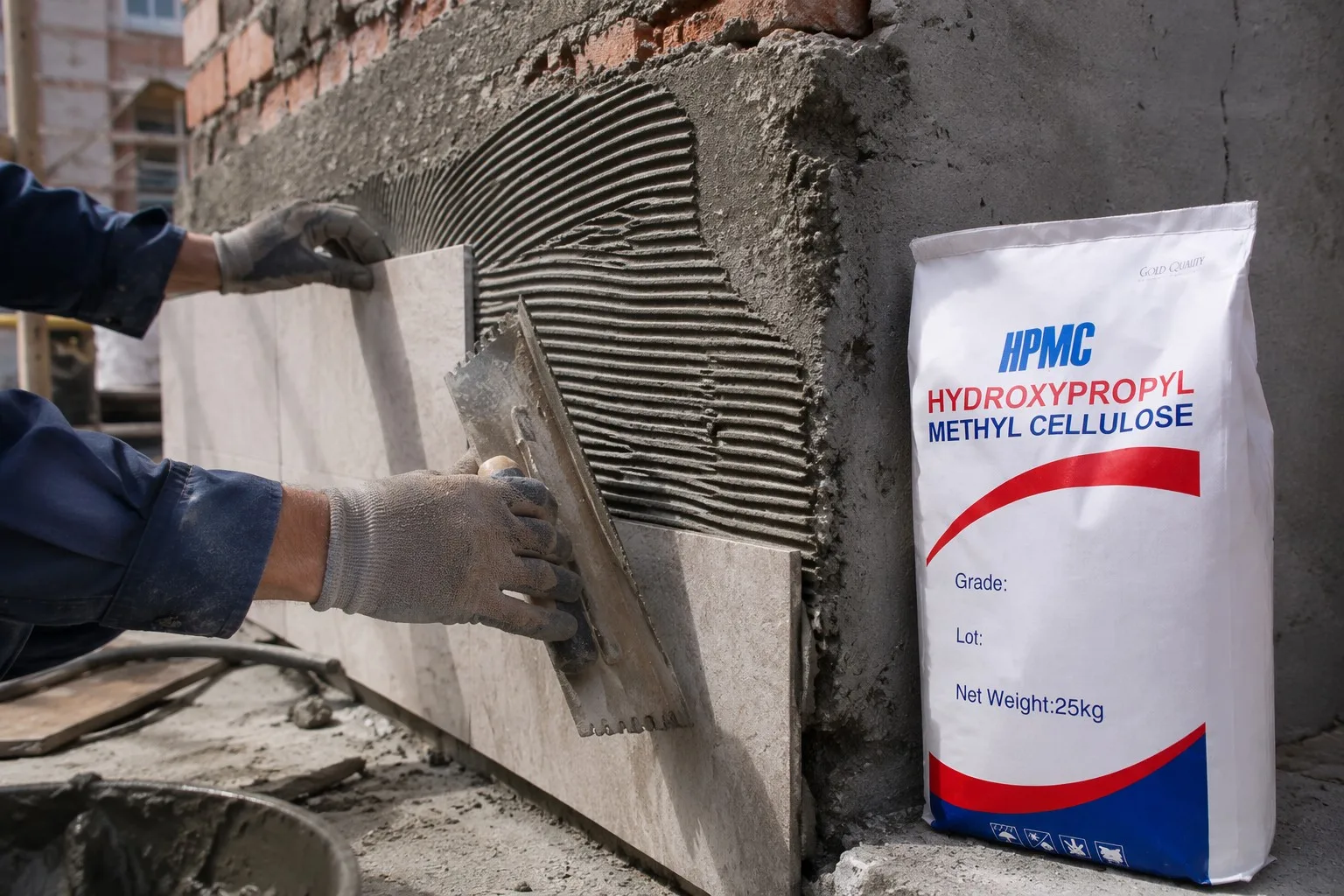
We supply manufacturers across four continents. A formulation for Germany will not automatically work for their distributor in Nigeria.
In hot, dry climates — the Middle East, North Africa, parts of India — mortar loses water to evaporation before cement hydrates. You need higher HPMC dosage (0.3–0.5% vs. standard 0.2–0.3%) and a higher gel temperature grade (≥70°C). We also recommend combining HPMC with RDP at 1.5–3.0% to maintain flexibility under thermal cycling.
For cold climates — Northern Europe, Russia, Canada — slow cement hydration is the issue. Use lower-viscosity HPMC (40,000–60,000 mPa·s) that dissolves quickly. Some manufacturers blend MHEC for improved early water retention without sacrificing dissolution speed. See construction-grade HPMC performance for more.
In humid coastal regions — Southeast Asia, Brazil, West Africa — modified HPMC grades with controlled air entrainment improve workability. The grade must resist skinning, the dry film formation that prevents proper tile bonding.
| Climate Type | HPMC Gel Temp | HPMC Dosage | Key Additives |
|---|---|---|---|
| Hot & dry (30–45°C) | ≥70°C | 0.3–0.5% | RDP 1.5–3.0% |
| Cold (0–15°C) | 60–65°C | 0.2–0.3% | Cement accelerator |
| Humid coastal | 65–70°C | 0.25–0.35% | Anti-skinning modified grade |
| Temperate (15–25°C) | 65–70°C | 0.2–0.3% | Standard formulation |
Conclusion
Choosing HPMC for tile adhesive comes down to three technical decisions: the right viscosity for your tile format, verified quality parameters, and a grade matched to your market’s climate. Get these right and your formulation performs consistently. We send free HPMC samples with full COA documentation — contact KEHAO to start your evaluation.
FAQ
Q: What is the most common mistake when choosing HPMC for tile adhesive?
A: Selecting viscosity based on price rather than performance. Cheap HPMC often has poor substitution uniformity, causing inconsistent water retention and lumping. Always test a sample before committing to bulk supply, and verify gel temperature alongside viscosity.
Q: Can I use the same HPMC grade for wall and floor tile adhesives?
A: Usually not. Wall adhesives need high sag resistance (75,000+ mPa·s), while floor adhesives prioritize workability (40,000–60,000 mPa·s). A universal C1 formulation can use 50,000–75,000 mPa·s as a compromise, though it will not be optimal for either application.
Q: How do I verify HPMC quality before bulk purchasing?
A: Request a Certificate of Analysis from the supplier, then send a 500g sample to an independent third-party lab. Compare methoxy content, gel temperature, 2% Brookfield viscosity at 20°C, and ash content. If the supplier’s COA deviates more than ±10% from your test results, reject the batch.
CTA
Need technical guidance on the right HPMC grade for your tile adhesive production? Contact KEHAO for free samples, customized recommendations, and factory-direct pricing. Our R&D team will match the right grade to your formulation and market.